
Preparation method of composite photocatalytic material for fresh-keeping of fruit and vegetable
A technology of composite photocatalysis and catalytic materials, applied in the field of preparation of catalytic materials, can solve the problems of low photocatalytic efficiency, weak bonding between titanium dioxide and carrier, poor adsorption capacity, etc., achieve uniform composite, improve photocatalytic efficiency, improve adhesive effect
Patent Information
- Authority / Receiving Office
- CN · China
- Patent Type
- Applications(China)
- Current Assignee / Owner
- Publication Date
- 2010-07-07
- Estimated Expiration
- Not applicable · inactive patent
Smart Images
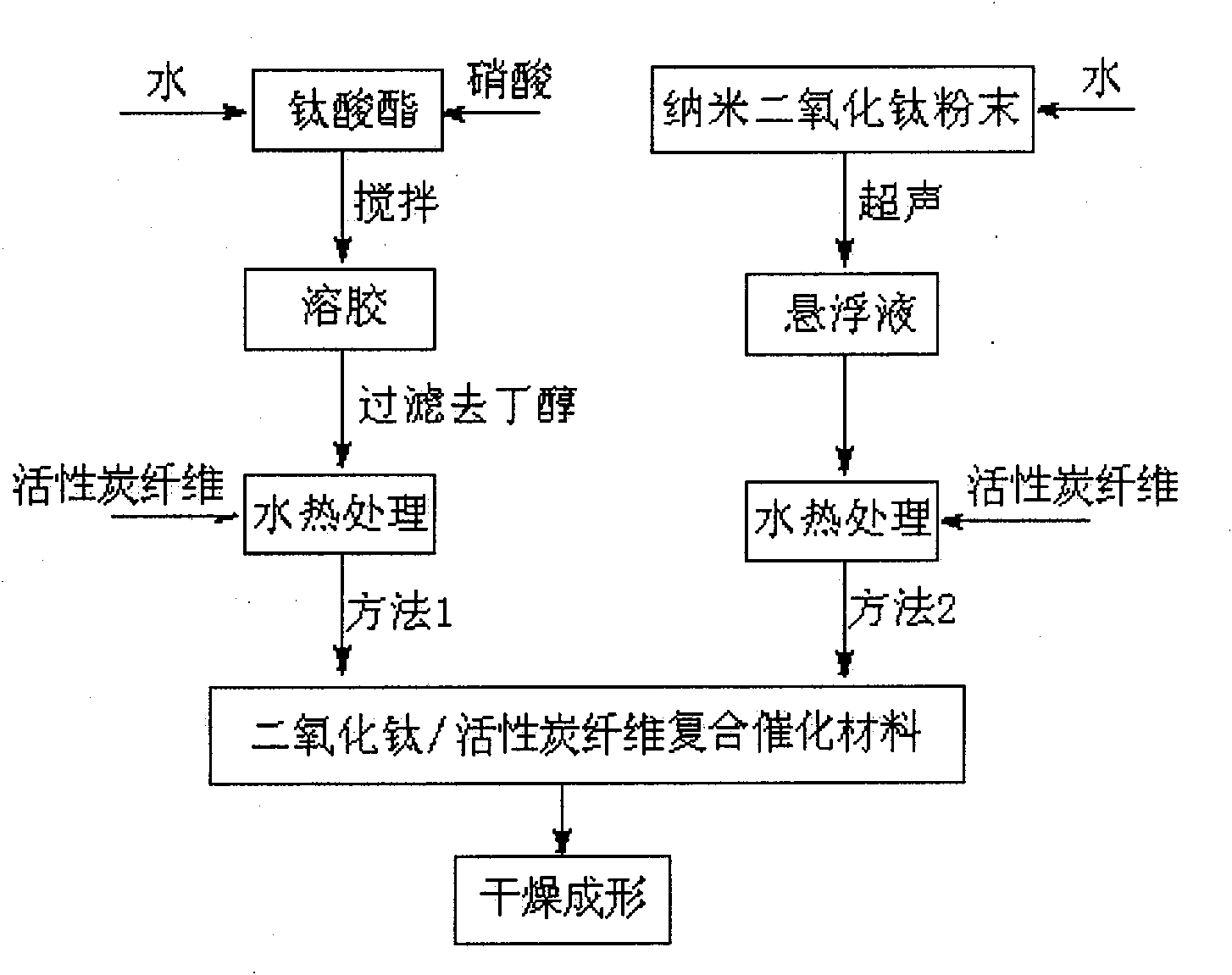
Figure 1 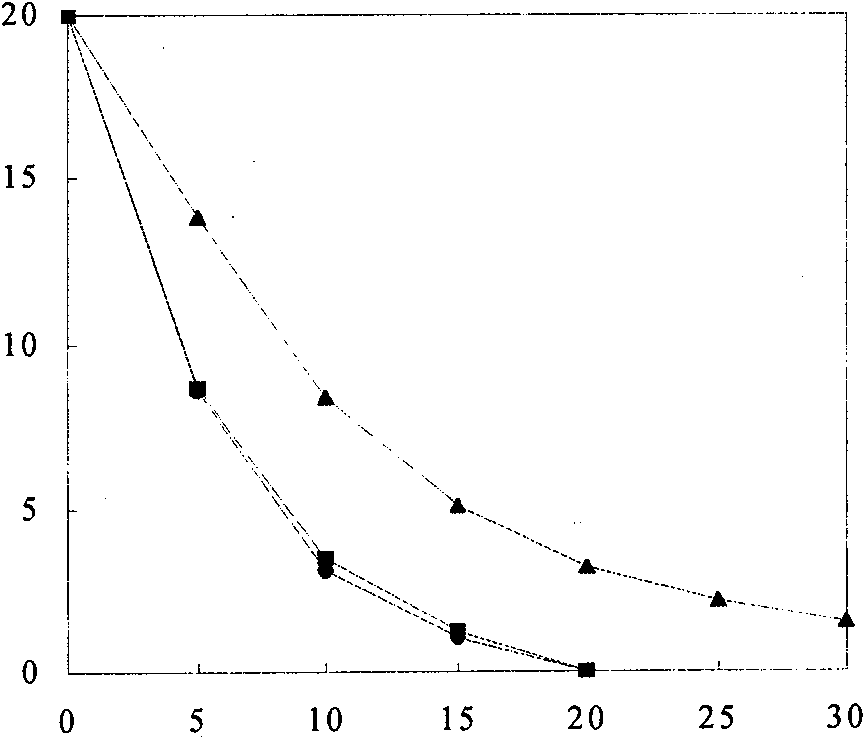
Figure 2 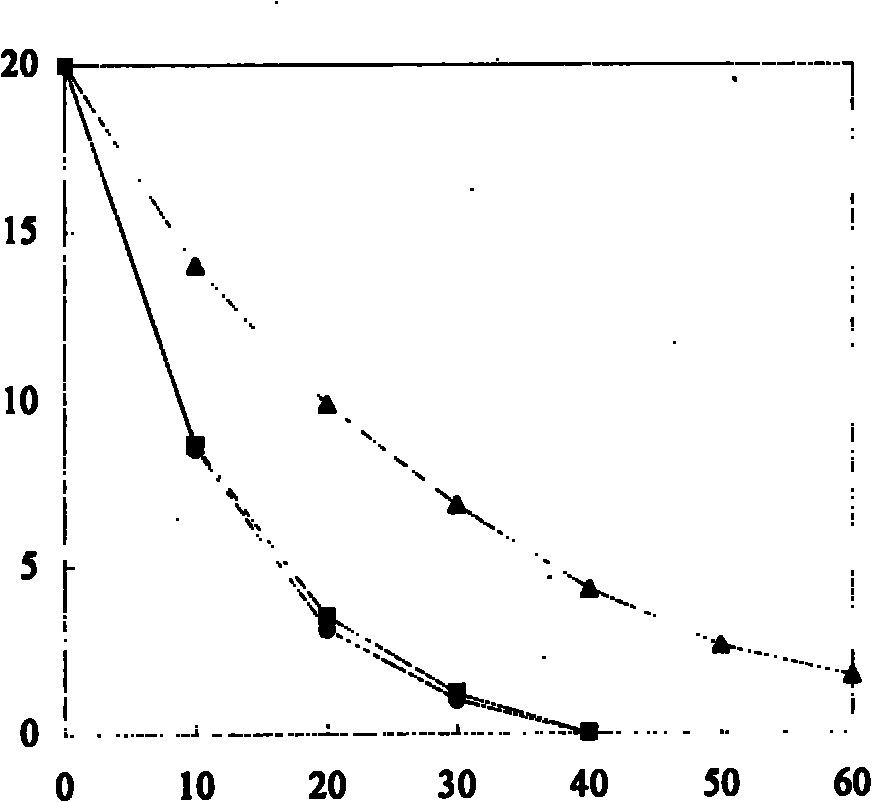
Figure 3
Abstract
Description
Technical field:
[0001] The technical field of the invention is the preparation of catalytic materials, in particular, it belongs to a preparation method of a composite photocatalytic material used for fresh-keeping of fruits and vegetables. Background technique:
[0002] Nano-semiconductor photocatalytic technology has made great progress in recent years, many nano-semiconductor materials, such as titanium dioxide (TiO 2 ), zinc oxide (ZnO), tin dioxide (SnO 2 ), cadmium sulfide (CdS), etc. have been found to effectively degrade organic or inorganic pollutants, among which titanium dioxide has the advantages of stable chemical properties, strong redox, anti-corrosion of photocathode, insoluble, non-toxic, and low cost. The literature on the degradation of pollutants using titanium dioxide as a photocatalyst includes Alberici R.M., Jardim W.F. "Photocatalytic destruction of VOCs in the gas-phase using Titanium Dioxide" published in "Applied Catalysis". .Appl.Catal.B: Envir...
Examples
Embodiment 1
[0020] Embodiment 1: Preparation of titanium dioxide / activated carbon fiber composite catalytic material by sol
[0021] Add 0.1mol (34g) tetrabutyl titanate dropwise to 360ml, 1M aqueous nitric acid solution under stirring at room temperature, drop and stir while controlling the dropping and stirring speed, continue stirring for 2 hours after dropping, tetrabutyl titanate The ester is hydrolyzed to form a slightly light yellow transparent sol. After standing for several hours, the decomposed butanol is layered with the sol, and floats on the upper layer in a light yellow color. The butanol layer is separated to obtain a nearly colorless sol. Add 3g of activated carbon fibers to the prepared sol and put it into a pressure-resistant container. After hydrothermal treatment at 160°C for 10 hours, take out the activated carbon fibers containing titanium dioxide, and obtain sample 1 after drying.
Embodiment 2
[0022] Embodiment 2: Preparation of titanium dioxide / activated carbon fiber composite catalytic material by titanium dioxide powder
[0023] Add 8g of nano-titanium dioxide powder to 340mL of water, and ultrasonically disperse for 20min to obtain a white suspension. Add 3g of activated carbon fiber and put it into a pressure-resistant container. After hydrothermal treatment at 160°C for 5 hours, the same operation as in Example 1 was used to obtain sample 2.
Embodiment 3
[0024] Embodiment 3: prepare titania catalytic material by sol
[0025] Titanium dioxide sol was prepared by the same method as in Example 1, sprayed on a glass plate after hydrothermal treatment, and control sample 3 was obtained without adding activated carbon.