
Heterocyclic-sulfur fused naphthalenetetracarboxylic acid diimide derivatives, preparation method and application thereof
A technology of naphthalene tetracarboxylic acid diimide and tetrabromonaphthalene tetracarboxylic acid diimide, which is applied in the field of naphthalene tetracarboxylic acid diimide derivatives, and can solve the problem of difficult formation of π-π stacking and OTFT devices Low electron mobility and other problems, to achieve the effect of low synthesis cost, simple and effective synthesis method, high purity
Patent Information
- Authority / Receiving Office
- CN · China
- Current Assignee / Owner
- Publication Date
- 2010-11-17
- Estimated Expiration
- Not applicable · inactive patent
Smart Images
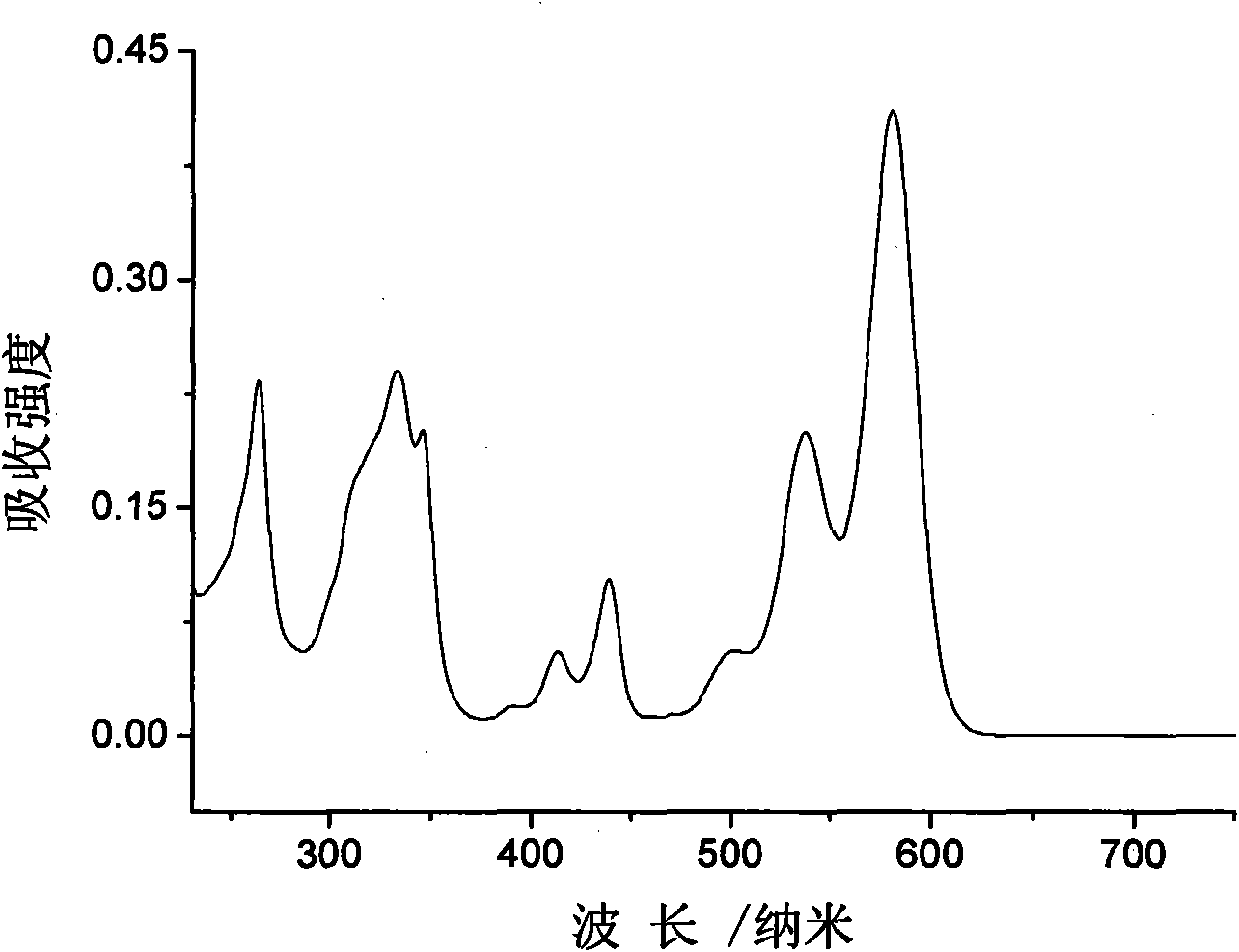
Figure 1 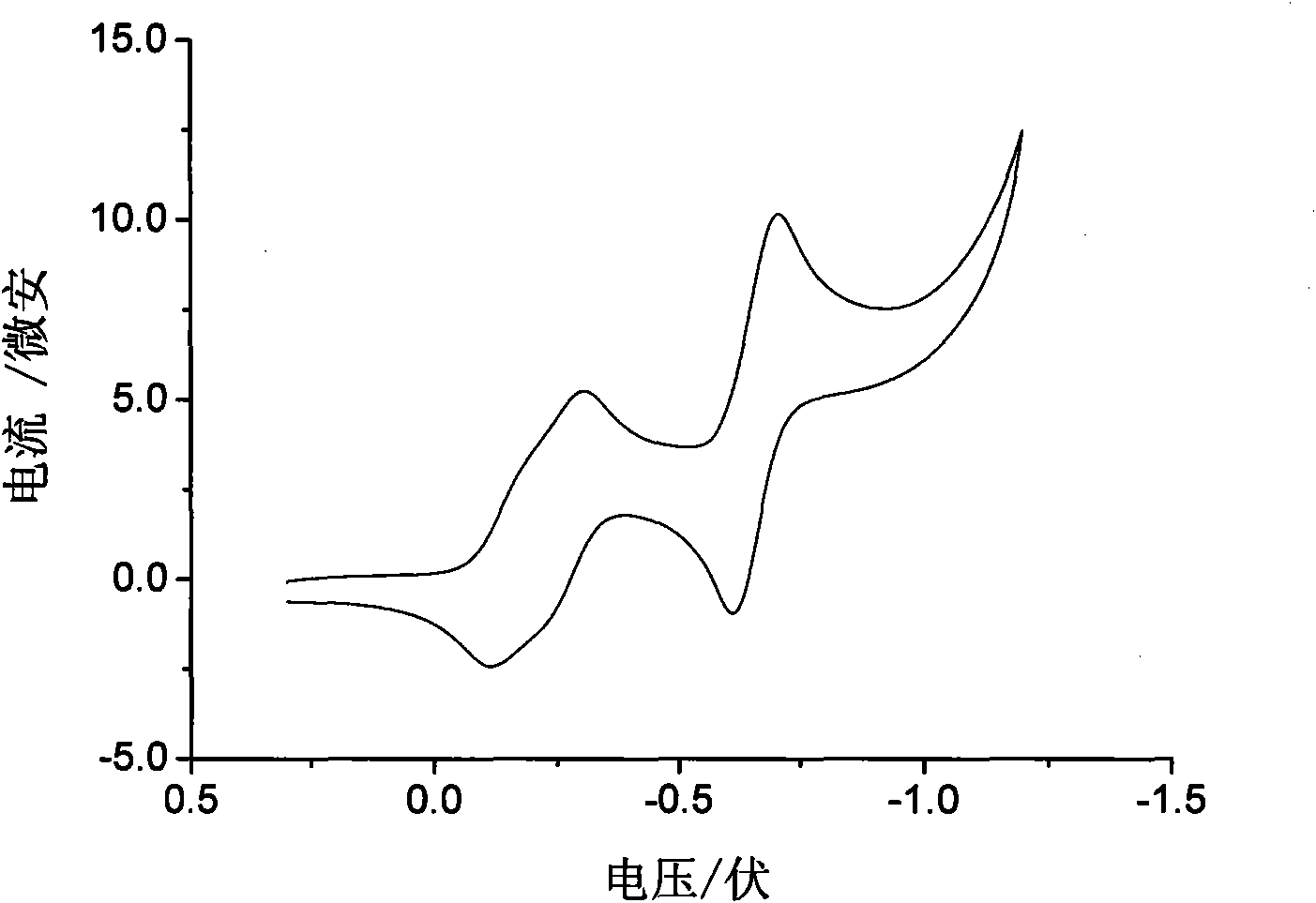
Figure 2 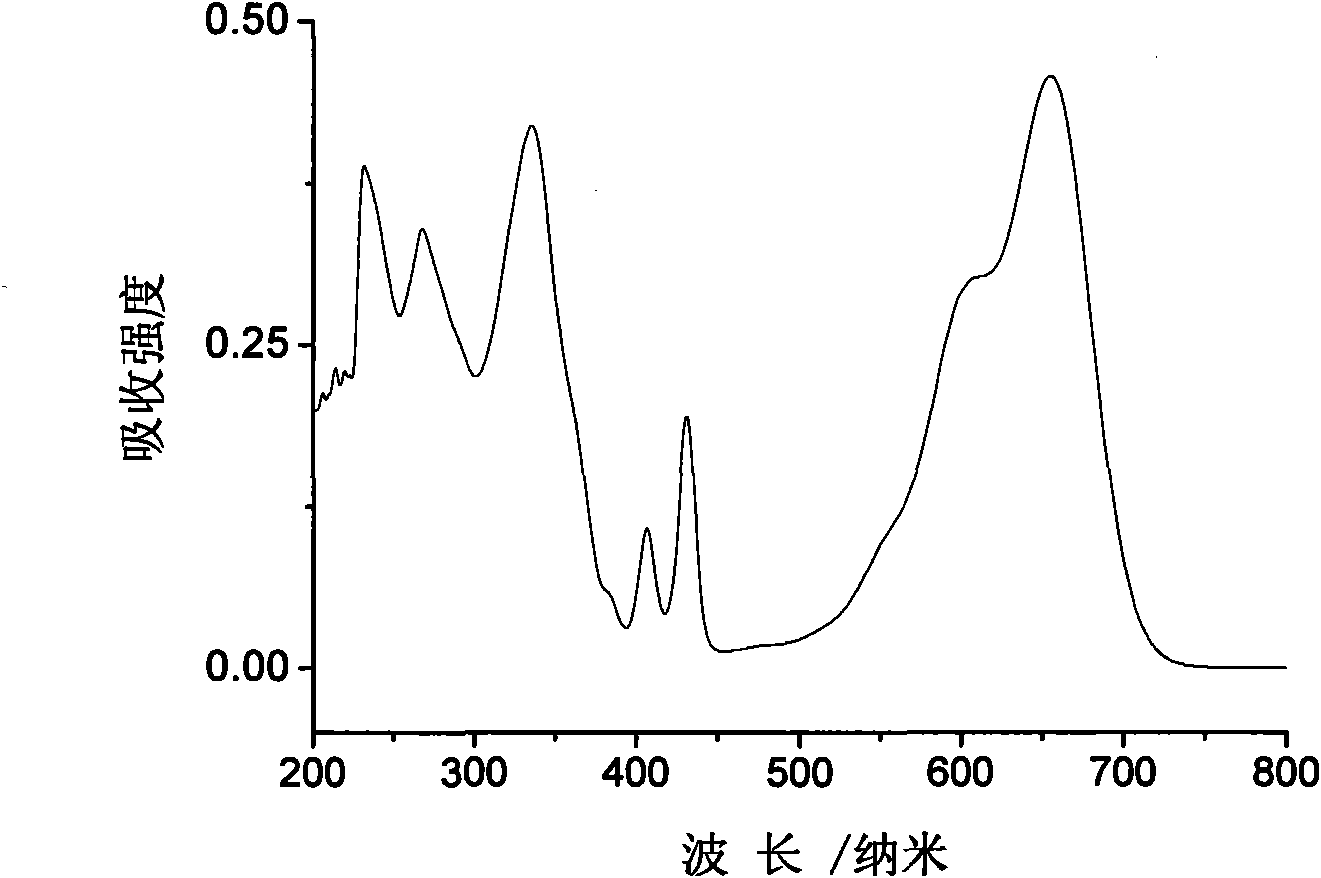
Figure 3
Abstract
Description
technical field
[0001] The invention relates to a sulfur heterocyclic fused naphthalene tetracarboxylic acid diimide organic semiconductor material, in particular to four types of sulfur heterocyclic fused naphthalene tetracarboxylic diimide derivatives, a preparation method and as Application of n-type organic semiconductor materials in organic thin film field effect transistors, etc. Background technique
[0002] Compared with inorganic semiconductor materials (silicon, oxides, etc.), organic semiconductor materials have the advantages of simple preparation process, low cost, light weight, flexibility, and good compatibility with plastic substrates. (ORFID), organic sensors, and organic solar cells have broad application prospects (Forrest, S.R.Nature.2004, 428, 911-918; Korzhov, M.et al.Physics Word.2008, 29-33; Leenen, M.A.M. et al.Phys.Status Solidi A.2009, 2006, 588-597; Special issue: Organic Electronics and Optoelectronics, Forrest, S.R.; Thompson, M.E.ed.Chem.Rev.2...
Examples
Embodiment 1
[0060] Example 1: N, N'-bis(2-octyl-dodecyl)-[2,3-d:6,7-d']-bis[2-cyano-2-(1,3 -Synthesis of ethyl dithiacyclopentene-2-ylidene)acetate]-naphthalene-1,4,5,8-tetracarboxylic diimide (1).
[0061] Concrete synthetic steps are:
[0062] Ethyl cyanoacetate (CNCH 3 COOEt, 297mg, 2.63mmol) and carbon disulfide (CS 2 , 0.16mL, 2.63mmol) was dissolved in 25mL THF, and at 0-5°C, under the protection of nitrogen, slowly added the above solution dropwise to a container containing 132mg (5.3mmol) sodium hydride (NaH, 96%) and 5mL THF In the there-necked flask, after 0.5 hours, the reaction solution was raised to room temperature, and the stirring reaction was continued for 4 hours, and 300 mg (0.26 mmol) of N,N'-bis(2-octyl-dodecyl)- 2,3,6,7-Tetrabromonaphthalene tetracarboxylic acid diimide, at room temperature, continue to react for 0.5 hours, and spin off the solvent under reduced pressure. The crude product was purified by silica gel chromatography (eluent: dichloromethane / petrole...
Embodiment 2
[0066]Example 2: N, N'-bis(2-octyl-dodecyl)-[2,3-d:6,7-d']-bis[2-cyano-2-(1,3 Synthesis of -dithiacyclopentene-2-ylidene)-n-hexyl acetate]-naphthalene-1,4,5,8-tetracarboxylic diimide (2).
[0067] Concrete synthetic steps are:
[0068] Using n-hexyl cyanoacetate instead of ethyl cyanoacetate, the synthesis method was the same as that in Example 1, and a dark brown solid (2) was prepared with a yield of 59%.
[0069] Mass Spectrum: [MS(TOF)]m / z: 1308.7(M + ).
[0070] Elemental analysis: Molecular formula: C 74 h 108 N 4 o 8 S 4 ; Theoretical: C, 67.85; H, 8.31; N, 4.28; Found: C, 67.87; H, 8.57; N, 3.85.
[0071] H NMR spectrum: 1 H-NMR (300MHz, CDCl 3 )δ (ppm): 0.854-0.942 (m, 9H, CH 3 ), 1.223-1.368 (m, 38H, CH 2 ), 1.741-1.832 (m, 2H, CH 2 ), 2.043 (b, 1H, CH), 4.227-4.251 (d, J=7.2Hz, 2H, -CH 2 -N), 4.335-4.378(t, J=6.5Hz, 2H, -CH 2 -O).
Embodiment 3
[0072] Example 3: N, N'-bis(n-octyl)-[2,3-d:6,7-d']-bis[2-cyano-2-(1,3-dithiecyclopentene Synthesis of -2-ylidene)acetate 2-ethylhexyl]-naphthalene-1,4,5,8-tetracarboxylic diimide (3).
[0073] Concrete synthetic steps are:
[0074] Replace ethyl cyanoacetate and N, N'-two (2-octyl-dodecyl)-2,3,6,7-tetrabromonaphthalene tetracarboxylic acid diimide, synthetic method is the same as step in embodiment 1, prepares deep Brown solid (3), 40.8% yield.
[0075] Mass Spectrum: [MS(TOF)]m / z: 1051.1(M + +Na), 1074.1 (M + +2Na).
[0076] Elemental analysis: Molecular formula: C 54 h 68 N 4 o 8 S 4 ; Theoretical: C, 63.01; H, 6.66; N, 5.44; Found: C, 63.03; H, 6.61; N, 5.34.
[0077] H NMR spectrum: 1 H-NMR (300MHz, CDCl 3 )δ (ppm): 0.926-0.932 (m, 9H, CH 3 ), 1.302(b, 18H, CH 2 ), 1.784-1.1.814 (m, 3H, overlapped, (CH 3 )CH 2 (CH) and CH), 4.282-4.295 (m, 4H, overlapped, -CH 2 -N and -CH 2 -O).
[0078] The synthetic route of embodiment 4 and 5 is shown in the followi...