
Two-component crosslinking agent and its preparation method and use
A crosslinking agent and two-component technology, which is applied in the field of two-component crosslinking agent and its preparation, can solve the problems of high curing temperature and affecting device performance, and achieve the effect of low cost, simple and effective method, and easy raw materials
Patent Information
- Authority / Receiving Office
- CN · China
- Patent Type
- Patents(China)
- Current Assignee / Owner
- Publication Date
- 2017-06-13
- Estimated Expiration
- Not applicable · inactive patent
Smart Images
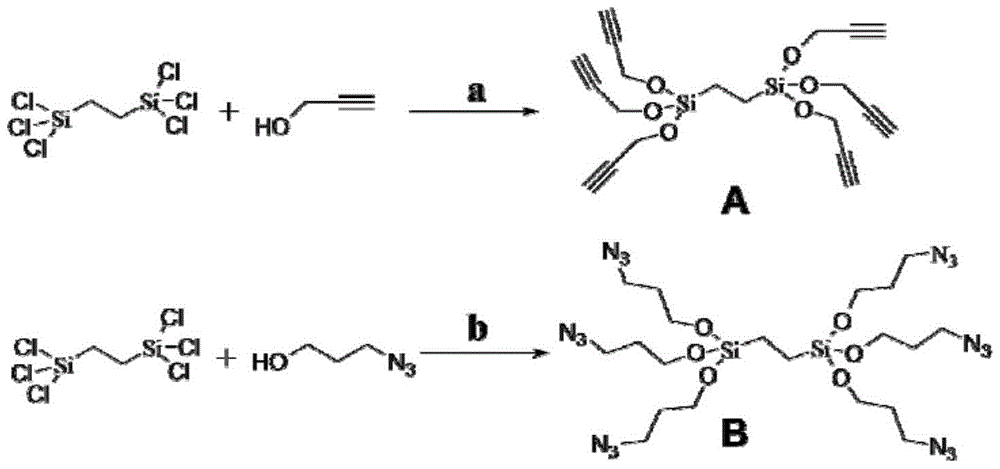
Figure 1 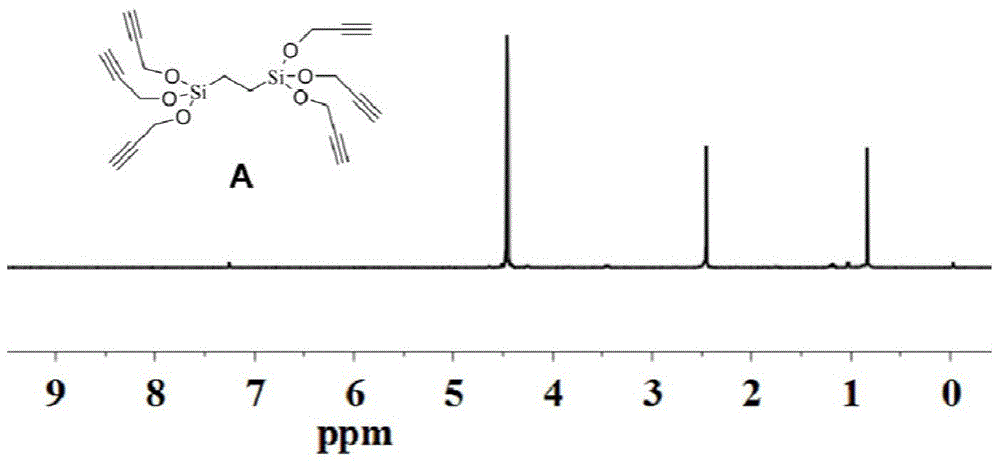
Figure 2 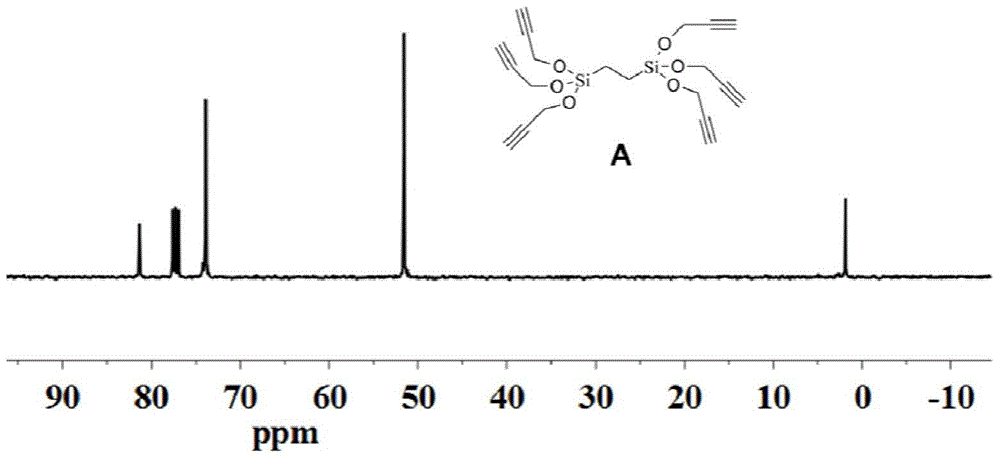
Figure 3
Abstract
Description
technical field
[0001] The invention relates to a two-component crosslinking agent and its preparation method and application. Background technique
[0002] Organic field-effect transistors (OFETs) are transistor devices with organic semiconductor materials as the active layer, and are one of the important organic semiconductor devices. Compared with non-field effect transistors, organic field effect transistors have many advantages: 1. They are mechanically flexible, compatible with plastic substrates, and can be used in foldable products; 2. The manufacturing process is simple and does not require high temperature and high vacuum and complex lithography technology; 3. The preparation process is simple and the cost is low; 4. The organic matter is easy to obtain, and the performance of the field effect transistor can be easily adjusted through the chemical modification of the organic molecule; 5. It can realize large-scale, large-scale scale bending etc. The characteristi...
Examples
Embodiment 1
[0063] Embodiment 1, the preparation method of linking agent
[0064] This example provides a preparation method for a crosslinking agent, the crosslinking agent includes silane compounds containing acetylenic bonds and silane compounds containing azide groups, its structure is shown in the following formula (I), its synthetic route see figure 1 .
[0065]
[0066] 1.1, preparation of silane compound (A) containing acetylenic bond
[0067] The structural formula of the silane compound A containing an acetylenic bond is as follows, and its preparation method is as follows:
[0068]
[0069] See figure 2 It is the H NMR spectrum of the silane compound A containing alkyne bond ( 1 H-NMR); image 3 It is the carbon nuclear magnetic resonance spectrum ( 13 C-NMR); Figure 4 It is the infrared absorption spectrum (FT-IR) of silane compound A containing alkyne bond.
[0070] Its preparation method is: add propynyl alcohol (1.12g, 21.0mmol) and pyridine (1.60mL, 21.0...
Embodiment 2
[0081] Embodiment 2, infrared absorption spectrum, differential calorimetry scanning analysis and thermogravimetric analysis of cross-linked polystyrene material
[0082] The crosslinking agent used in this example is the crosslinking agent prepared in Example 1, which is blended with polystyrene; the weight ratio of polystyrene, silane compound containing acetylenic bond, and silane compound containing azide group is 20 :10:10, the solvent is dichloromethane) after spin-coating on the silicon wafer, the characterization of infrared absorption spectrum is carried out; the solid obtained after the mixed solution is vacuum-dried is used for differential calorimetry scanning analysis and thermogravimetric analysis.
[0083] Figure 8 The infrared absorption spectrum of the thermally crosslinked polystyrene material after spin-coating is given, and the spectrum is 2100cm -1 and 3290cm -1 The absorption peaks are the characteristic absorption peaks of azide group and alkyne bon...
Embodiment 3
[0084] Infrared absorption spectrum, differential calorimetry scanning analysis and thermal analysis of the polymethyl methacrylate material of embodiment 3, crosslinking reanalysis
[0085] The cross-linking agent used in this example is the cross-linking agent prepared in Example 1, blended with polymethyl methacrylate; polymethyl methacrylate, acetylenic bond-containing silane compound, azide group-containing The weight ratio of the compound is 20:10:10, the solvent is dichloromethane) and the characterization of the infrared absorption spectrum is carried out after spin-coating on the silicon wafer; analyze.
[0086] Figure 11 The infrared absorption spectrum of the thermally crosslinked polymethyl methacrylate material after spin-coating and film formation is given, in the spectrum at 2100cm -1 and 3290cm -1 The absorption peaks are the characteristic absorption peaks of azide group and alkyne bond, respectively, indicating that the prepared polymethyl methacrylat...