

Micro/nano-fiber bone repairing scaffold and production method thereof
A technology for micro-nano fiber and bone repair, which is applied in fiber processing, spinning solution preparation, medical science, etc., can solve the problems such as the decline of repair effect, and achieve the effect of being conducive to repair, high activity, and optimized release conditions
Patent Information
- Authority / Receiving Office
- CN · China
- Patent Type
- Patents(China)
- Current Assignee / Owner
- Publication Date
- 2015-01-21
Smart Images
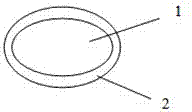
Figure 1 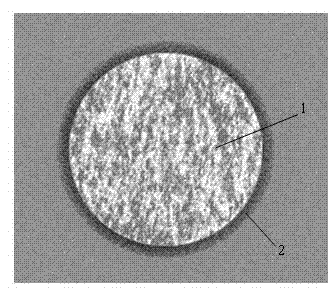
Figure 2
Abstract
Description
technical field
[0001] The invention relates to a tissue repair material, in particular to a micro-nano fiber bone repair bracket embedded with composite particles and a preparation method thereof. Background technique
[0002] Bone defects due to disease and trauma are a common orthopedic problem. Autologous bone, allogeneic bone and artificial bone filling tissue engineering materials are three types of materials commonly used in bone repair surgery. Autologous bone has a good repair effect without rejection, but autologous bone filling needs to be collected from healthy bone tissue, which has the disadvantages of damage and insufficient bone mass. Especially when large-scale bone filling is required, it is difficult to harvest autogenous bone of appropriate size and shape. In the prior art, natural bovine bone or other animal bones are used as materials, the antigenicity of cartilage and bone are removed by decellularization, and a scaffold suitable for bone tissue gro...
Examples
Embodiment 1
[0062] Preparation of the internal oil phase: Weigh 10 μg of growth factor BMP-2 and fully dissolve it in 1 g of aqueous solution; weigh 0.5 g of polylactic acid and dissolve it in 10 g of oil phase with a volume ratio of dichloromethane to acetone of 2 / 1. Mix the two solutions of water phase and oil phase to form a mixture, and fully emulsify with a high-speed homogenizer for 1 min. Add the emulsion to 50 g aqueous solution of polyethylene glycol containing 0.3 g, slowly add and ultrasonically disperse, and then stir at a low speed for 3 hours in an environment of 25° C. to volatilize the organic solvent to obtain polylactic acid particles containing growth factors.
[0063] Put the polylactic acid particles into a 25% isopropanol mixed aqueous solution containing 350 mM sodium chloride, 15 mM calcium chloride, 10 mM disodium hydrogen phosphate, 20 mM sodium bicarbonate, and 15 mM magnesium chloride. After standing for 24 hours, a layer of calcium phosphate shell was formed o...
Embodiment 2
[0067] a, the preparation sodium dodecyl sulfonate content is 20mM, the solution that chitosan or gelatin content is 0.15g / L, adjusts pH value to 10.5, obtains solution A;
[0068] b. Prepare a calcium salt solution with a calcium ion concentration of 500 mM, adjust the pH value to 10.5, and obtain solution B;
[0069] c. Prepare a sodium dihydrogen phosphate solution with a sodium dihydrogen phosphate content of 500 mM, add 0.3 times the relative volume of isopropanol, adjust the pH value to 10.5, and obtain solution C;
[0070] d. According to the volume ratio A:B:C=2:1:1, add solution B into solution A, after stirring evenly, slowly add solution C dropwise, the addition speed of solution C is 1ml / min, the dropwise addition process The middle stirring speed is controlled to 500rpm until no more precipitation occurs, and the precipitation is the polymer particles with an intercalation structure.
[0071] Put the polymer particles with intercalation structure into sod...
Embodiment 3
[0075] a, preparing sodium dodecyl sulfonate content is 20mM, chitosan or gelatin content is 0.15g / L solution, and add the growth factor of BMP-7, adjust pH value to 10.5, obtain solution A;
[0076] b. Prepare a calcium salt solution with a calcium ion concentration of 500 mM, adjust the pH value to 10.5, and obtain solution B;
[0077] c. Prepare a sodium dihydrogen phosphate solution with a sodium dihydrogen phosphate content of 500 mM, add 0.3 times the relative volume of isopropanol, adjust the pH value to 10.5, and obtain solution C;
[0078] d. According to the volume ratio A:B:C=2:1:1, add solution B into solution A, after stirring evenly, slowly add solution C dropwise, the addition speed of solution C is 1ml / min, the dropwise addition process The middle stirring speed is controlled to 500rpm until no more precipitation occurs, and the precipitation is the polymer particles with an intercalation structure.
[0079] Put the polymer particles with intercalation ...