
Synthetic method of potentiometric pesticide sensor
A synthesis method and sensor technology, applied in instruments, scientific instruments, material analysis through electromagnetic means, etc.
Patent Information
- Authority / Receiving Office
- CN · China
- Patent Type
- Applications(China)
- Current Assignee / Owner
- Publication Date
- 2015-06-03
Smart Images
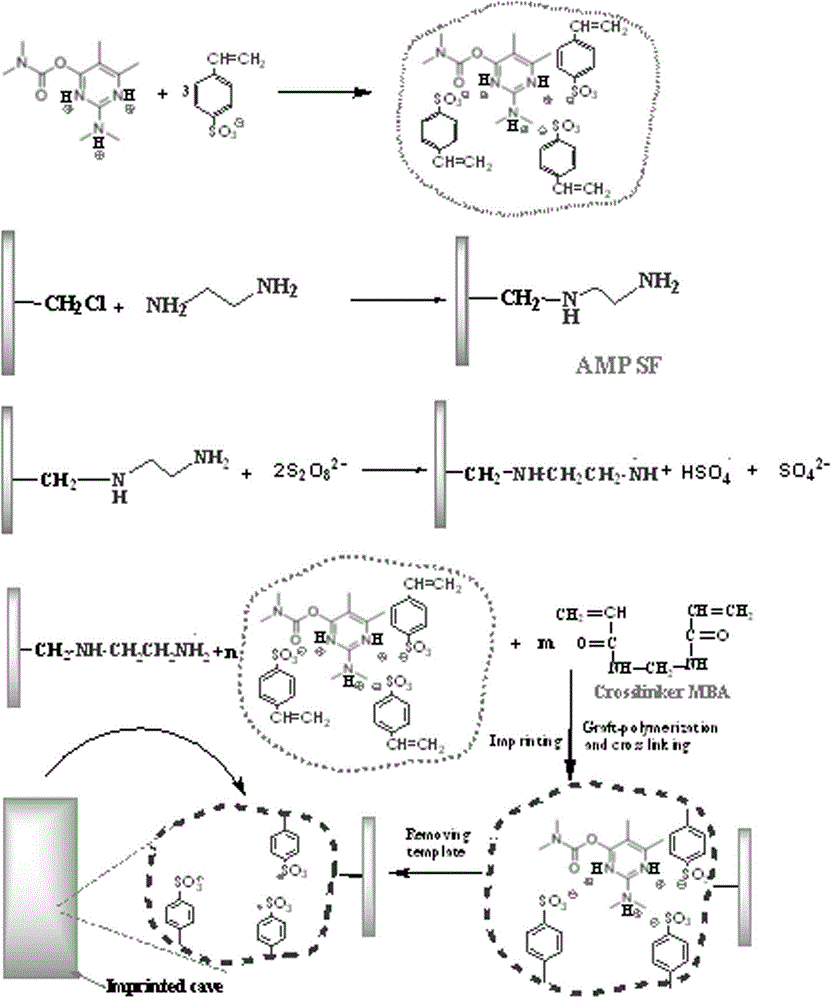
Figure 1 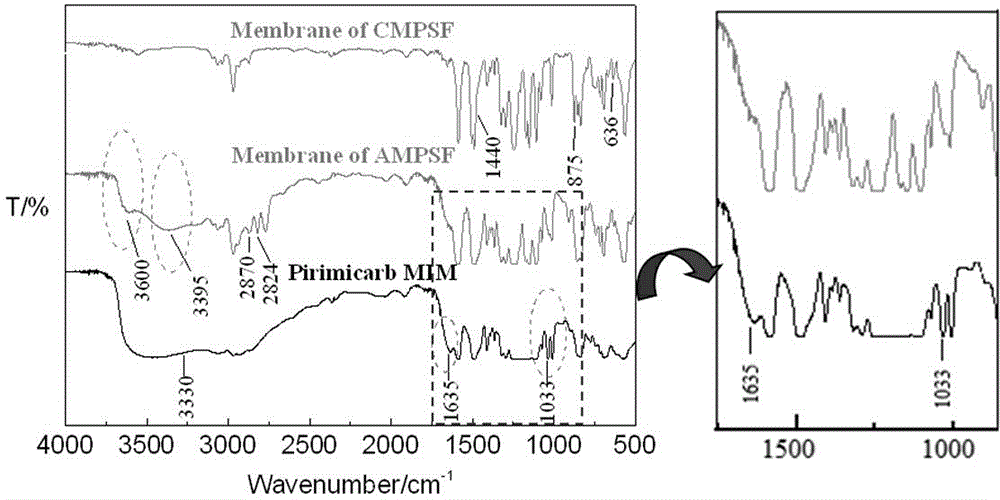
Figure 2 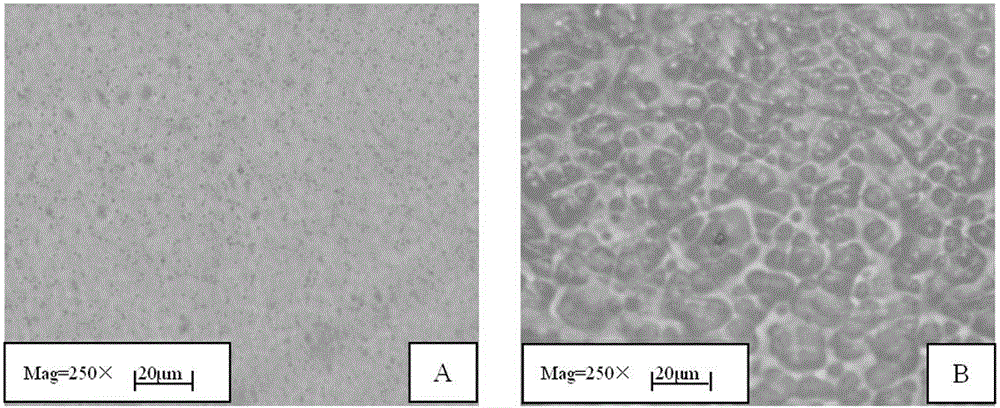
Figure 3
Abstract
Description
technical field
[0001] The invention belongs to molecular imprinting technology, in particular to a method for synthesizing identification materials of pesticide potential type sensors. Background technique
[0002] With the development of modern agricultural technology, various high-efficiency insecticides and herbicides are widely used, and pesticide compounds are generally difficult to degrade, resulting in a large accumulation of pesticide residues in the soil, and then through various natural processes (such as irrigation and Precipitation) migrates into water bodies, causing serious pollution of surface water and groundwater. At present, pesticide residues are one of the important sources of water pollution, posing a great threat to human health and the aquatic ecological environment; although a variety of methods have been used to effectively control pesticide residues in water media, but , the concentration of pesticide residues in water also needs to be strictly mo...
Examples
Embodiment 1
[0061] A method for synthesizing a pesticide potential type sensor identification material, comprising the following steps:
[0062] (1) Preparation and ammoniation of chloromethylated polysulfone-based membrane
[0063] Dissolve 0.8 g CMPSF in 50 mL dichloromethane, then add 0.04 g TDMAC, pour the casting solution into a glass Petri dish, cast it into a film, let it stand for defoaming, and after the solvent is completely volatilized, the obtained thickness is about 60 μm translucent CMPSF membrane, soak the membrane in ethylenediamine for surface amination treatment, and prepare an ammoniated polysulfone (AMPSF) membrane with amino groups on the surface, the amino group content on the surface of the AMPSF membrane is 18.16 μmmol / cm 2 ;
[0064] (2) Preparation of pirimicarb molecularly imprinted membrane
[0065] Add 50 mL of anhydrous methanol and 30 mL of distilled water dissolved with 8 g of sodium styrene sulfonate (SSS) into a four-neck flask, then add 2.5 g o...
Embodiment 2
[0070] A method for synthesizing a pesticide potential type sensor identification material, comprising the following steps:
[0071] (1) Preparation and ammoniation of chloromethylated polysulfone-based membrane
[0072] Dissolve 0.8 g of CMPSF in 50 mL of dichloromethane, then add 0.04 g of TDMAC, pour this casting solution into a glass petri dish, cast it into a film, let it stand for defoaming, and after the solvent is completely volatilized, a thickness of 65 μm is obtained. A translucent CMPSF membrane was soaked in ethylenediamine for surface amination treatment to obtain an aminated polysulfone (AMPSF) membrane with amino groups on the surface. The amino group content on the surface of the AMPSF membrane was 18.16 μmmol / cm 2 ;
[0073] (2) Preparation of pirimicarb molecularly imprinted membrane
[0074] Add 50 mL of anhydrous methanol and 35 mL of distilled water dissolved with 8 g of sodium styrene sulfonate (SSS) into a four-neck flask, then add 2.5 g of pi...
Embodiment 3
[0079] A method for synthesizing a pesticide potential type sensor identification material, comprising the following steps:
[0080] (1) Preparation and ammoniation of chloromethylated polysulfone-based membrane
[0081] Dissolve 0.8 g of CMPSF in 50 mL of dichloromethane, and then add 0.04 g of TDMAC. The casting solution is poured into a glass petri dish, cast into a film, and left to defoam. After the solvent is completely evaporated, a thickness of 55 μm is obtained. A translucent CMPSF membrane was soaked in ethylenediamine for surface amination treatment to obtain an aminated polysulfone (AMPSF) membrane with amino groups on the surface. The amino group content on the surface of the AMPSF membrane was 18.16 μmmol / cm 2 ;
[0082] (2) Preparation of pirimicarb molecularly imprinted membrane
[0083] Add 50 mL of anhydrous methanol and 35 mL of distilled water dissolved with 8 g of sodium styrene sulfonate (SSS) into a four-neck flask, then add 2.5 g of pirimicarb...