
3D model constructed in vitro by means of serum-free culture medium as well as construction method of 3D model
A serum-free culture, serum-free culture medium technology, applied in the field of 3D model and its construction, can solve the problems of long construction time and affect the stability of the model, achieve good repeatability, simplify the gas-liquid surface culture stage, and inhibit cell apoptosis. the effect of death
Patent Information
- Authority / Receiving Office
- CN · China
- Patent Type
- Applications(China)
- Current Assignee / Owner
- Publication Date
- 2017-11-07
Smart Images
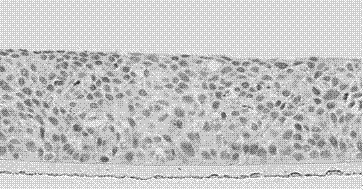
Figure 1 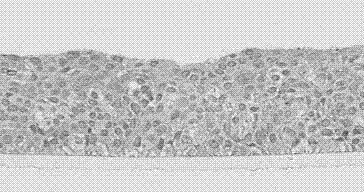
Figure 2 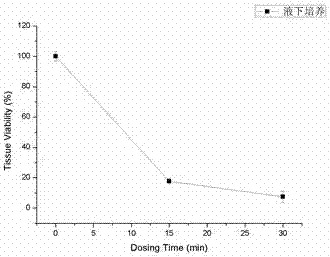
Figure 3
Abstract
Description
Technical field
[0001] The invention belongs to the technical field of tissue engineering biomaterials, and specifically relates to a 3D model constructed in vitro using a serum-free culture system and a construction method thereof. Background technique
[0002] The 3D model in the present invention is constructed by applying the principles of cell biology and engineering to a small number of seed cells after in vitro amplification. Its structure is highly similar to that of normal human corneal epithelium. The bottom-up structure is the basal layer, The spinous layer, granular layer, and spinous layer all have no stratum corneum, have a complete epithelial structure, and express corneal-associated keratin. The 3D model constructed in vitro is mainly used to detect eye irritation in vitro to evaluate the safety of small molecule compounds, active proteins, medical devices, chemicals, cosmetics and other products.
[0003] Direct contact with chemicals or exposure to the eyes can c...
Examples
Embodiment 1
[0047] This example focuses on the steps of the in vitro construction method of a 3D model constructed in vitro using primary corneal epithelial cells:
[0048] Step 1: cell preparation
[0049] Take primary corneal epithelial cells, resuscitate and expand, use P7 generation cells, trypsinize them to make a single cell suspension, adjust the cell density to 5.0×10 4 Cells / mL, inoculate in a culture flask, add culture medium I to culture, gently shake the culture flask to disperse the cells evenly, and place at 37℃, 5% CO 2 Culture under conditions;
[0050] The culture solution I is DMEM, which contains a glucose content of 1.0 g / L and a glutamine content of 0.2 g / L.
[0051] Step 2: Submerged inoculation and culture of 3D model
[0052] Take the logarithmic growth phase cells and prepare a single cell suspension with culture medium II, adjust the cell density to 5.0×10 4 Pcs / mL, 200μL / chamber volume, inoculate into the small room, place the small room in the model petri dish, add appro...
Embodiment 2
[0059] This example focuses on the steps of the in vitro construction method of a 3D model constructed in vitro using immortalized corneal epithelial cells:
[0060] Step 1: cell preparation
[0061] Take immortalized corneal epithelial cells, recover and expand, use P20 generation cells, trypsinize them to make a single cell suspension, adjust the cell density to 5.0×10 5 Cells / mL, inoculate in a culture flask, add culture medium I to culture, gently shake the culture flask to disperse the cells evenly, and place at 37℃, 5% CO 2 Culture under conditions;
[0062] The culture solution I is DMEM, which contains a glucose content of 1.0 g / L and a glutamine content of 0.2 g / L.
[0063] Step 2: Submerged inoculation and culture of 3D model
[0064] Take the logarithmic growth phase cells and prepare a single cell suspension with culture medium II, adjust the cell density to 5.0×10 5 Pcs / mL, 200μL / chamber volume, inoculate into the small room, place the small room in the model petri dish, ad...
Embodiment 3
[0071] This example focuses on the in vitro construction method steps of a 3D model constructed in vitro using the oral mucosal squamous carcinoma cell line TR146:
[0072] Step 1: cell preparation
[0073] Take the oral mucosal squamous carcinoma cell line TR146, after resuscitation and expansion, use P14 generation cells, trypsinize to make a single cell suspension, adjust the cell density to 5.0×10 6 Cells / mL, inoculate in a culture flask, add culture medium I to culture, gently shake the culture flask to disperse the cells evenly, and place at 37℃, 5% CO 2 Culture under conditions;
[0074] The culture solution I is DMEM, which contains a glucose content of 1.0 g / L and a glutamine content of 0.2 g / L.
[0075] Step 2: Submerged inoculation and culture of 3D model
[0076] Take the logarithmic growth phase cells and prepare a single cell suspension with culture medium II, adjust the cell density to 5.0×10 6 Pcs / mL, 200μL / chamber volume, inoculate into the small room, place the small r...