
Application of CTNNB1 gene in porcine ovarian granulosa cells
A technology of granulosa cells and ovaries, applied in the application field of CTNNB1 gene in porcine ovary granulosa cells, to achieve the effect of increasing the proliferation rate
Patent Information
- Authority / Receiving Office
- CN · China
- Patent Type
- Applications(China)
- Current Assignee / Owner
- Publication Date
- 2020-10-09
Smart Images
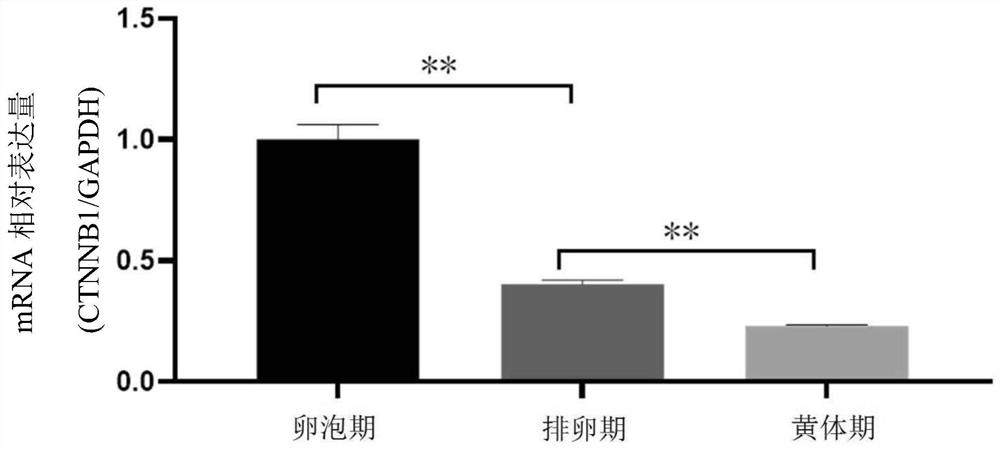
Figure 1 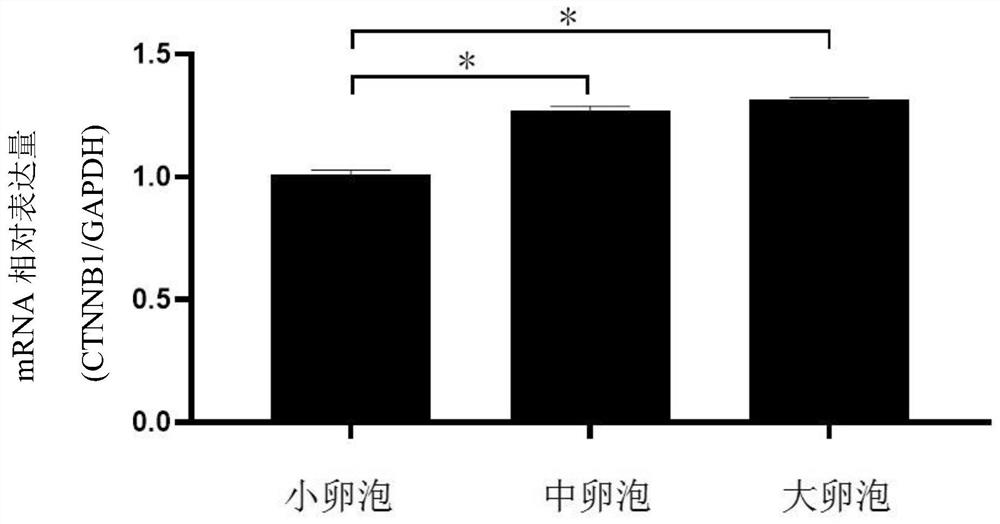
Figure 2 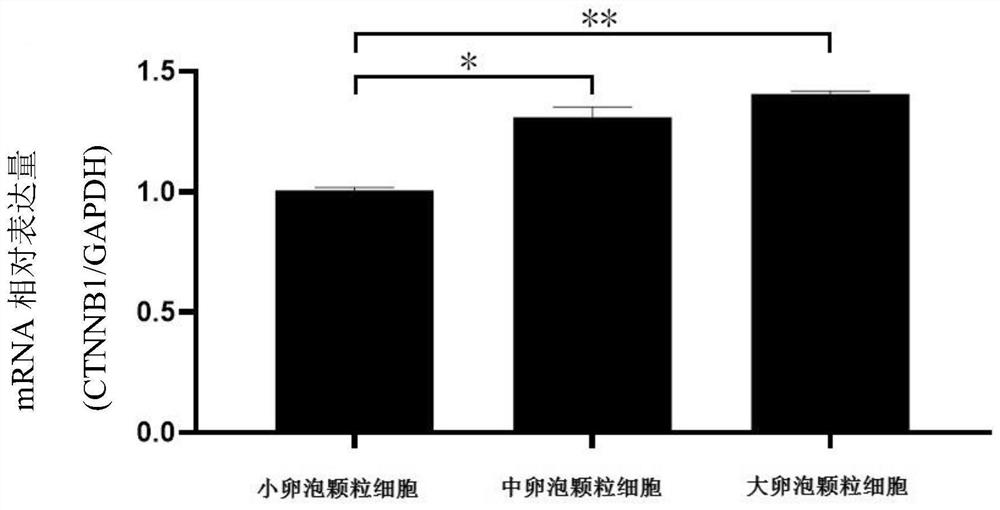
Figure 3
Abstract
Description
technical field
[0001] The invention belongs to the technical fields of cell engineering and genetic engineering, and specifically relates to the application of CTNNB1 gene in porcine ovarian granulosa cells. Background technique
[0002] The ovary is a key reproductive organ in mammals, and its main function is to produce and excrete eggs. After puberty in mammals, the growth and secretion function of the hypothalamus-pituitary-gonad axis gradually improves, and the level of gonadotropin secreted into the blood increases, and acts on the ovary to promote ovulation and reproductive hormone secretion. The follicle is the functional unit of the ovary, which is composed of oocytes, granulosa cells and theca cells. Its growth and development and selective ovulation process are regulated by endocrine, paracrine and autocrine factors. Follicles of different developmental stages exist in the ovarian cortex structure, follicles are recruited in the form of follicle waves, and gradu...
Examples
Embodiment 1
[0039] In Example 1, the ovarian tissues of sows at different periods were derived from the grown-up dual hybrid sows of Yangjiang Baojun Pig Farm; the follicles and granulosa cells were derived from commercial sows of Kongwangji Slaughterhouse in Baiyun District, Guangzhou City.
[0040] Example 1 total RNA extraction and reverse transcription
[0041]1. For tissue / cell RNA extraction, refer to the TRIzol operation manual of Takara Company. The specific operation steps are as follows:
[0042] (1) Grind ovarian tissue in the follicular phase, ovulation phase, and luteal phase with liquid nitrogen, add 50-100 mg of tissue to 1 mL TRIzol, and blow and mix repeatedly; large follicles (>6 mm), medium follicles (3 mm) -6mm) and small follicles (6mm), medium follicles (3mm-6mm) and small Follicle (2 Add 1 mL TRIzol directly to the bottom area of the cell culture plate.
[0043] (2) Let stand on ice for 10 minutes to fully lyse the tissues / cells, centrifuge at 12,000 rpm for 5 m...
Embodiment 2
[0053] Embodiment 2qRT-PCR
[0054] The cDNA of the reverse transcription product in Example 1 was detected for the relative gene expression level, referring to the instruction manual of the Maxima SYBR Green / ROX qPCR Master Mix (2X) reagent from ThermoScientific Company. In the experiment, the comparative Ct value method was used to calculate the relative expression of the target gene, and the specific calculation formula was as follows:
[0055] Relative gene expression = 2 -{〈﹙实验组目的基因Ct值﹚-﹙实验组内参基因Ct值﹚〉-〈﹙对照组目的基因Ct值﹚-﹙对照组内参基因Ct值﹚〉}
[0056] Wherein GAPDH is used as an internal reference gene, and the qRT-PCR primers used in the present invention are:
[0057] qRT-PCR-CTNNB1 Forward: 5′-GCTGTTCGCCTTCACTAC-3′;
[0058] Reverse: 5′-CTGATGAGCACGAACCAG-3′;
[0059] qRT-PCR-GAPDH Forward: 5′-TCGGAGTGAACGGATTTG-3′;
[0060] Reverse: 5'-TCACCCCATTTGATGTTGG-3'.
[0061] The results showed that, 1) the relative expression of CTNNB1 mRNA in the ovarian tissue of sow follicular ph...
Embodiment 3
[0062] Embodiment 3 constructs the overexpression vector of CTNNB1 gene
[0063] (1) The CDS region sequence NM_214367.1:201-2546 (SEQ ID NO.2) of the CTNNB1 gene (Gene ID: 397657) was analyzed by BioEdit software and found to have no KpnI and XhoI restriction endonuclease sites, The pcDNA3.1(+) vector (purchased from Invitrogen) has KpnI and XhoI restriction sites.
[0064] (2) Use the primer premier 5.0 software to design amplification primers for the CDS region of the CTNNB1 gene, and add KpnI and XhoI restriction site sequences to the upstream and downstream primers respectively. The primer sequences are as follows:
[0065] CTNNB1-F: 5'-GGGGTACCATGGCTACCCAAGCTGATTTG-3';
[0066] CTNNB1-R: 5'-CCGCTCGAGTTACAGGTCAGTATCAAACCAGGC-3'.
[0067] (3) Using porcine ovary granulosa cell cDNA (obtained by reverse transcription in step 2 of Example 1) as a template, PCR amplifies the target fragment. PCR reaction system: 0.5 μL cDNA, 5 μL 2×Taq Plus Master Mix, 0.3 μL upstream prim...