
Cosmetic and dermatological photoprotective formulations with a content of hydroxybenzophenones, triazine derivatives and/or benzotriazole derivatives
a technology of hydroxybenzophenones and photoprotective preparations, which is applied in the field of cosmetic and/or dermatological photoprotective preparations comprising hydroxybenzophenones besides triazine derivatives and/or benzotriazole derivatives, can solve the problems of skin “ageing” prematurely, uv-a radiation is far more hazardous, and chronic light-induced changes in the skin. , to achieve the effect of harming the effect of uv-
Patent Information
- Authority / Receiving Office
- US · United States
- Patent Type
- Applications(United States)
- Current Assignee / Owner
- Publication Date
- 2005-01-13
- Estimated Expiration
- Not applicable · inactive patent
Smart Images
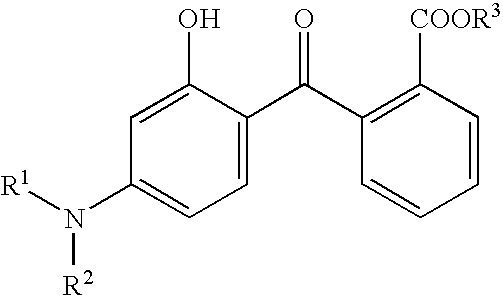
Figure 1 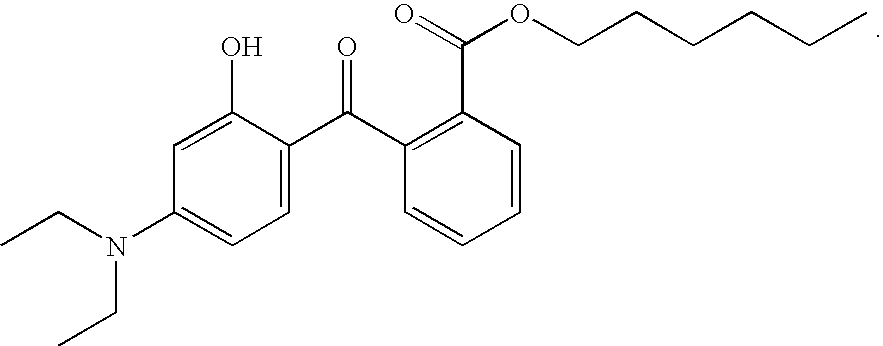
Figure 2 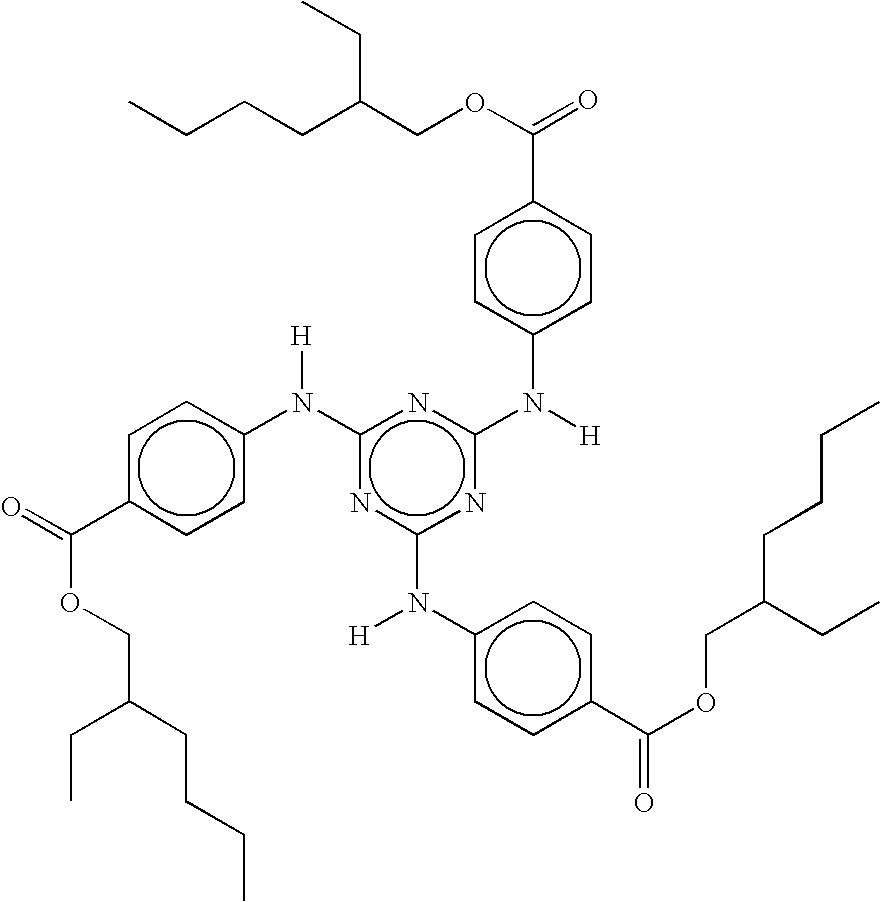
Figure 3
Abstract
Description
BACKGROUND OF THE INVENTION 1. Field of the Invention The present invention relates to cosmetic and / or dermatological photoprotective preparations comprising hydroxybenzophenones besides triazine derivatives and / or benzotriazole derivatives. 2. Discussion of Background Information The harmful effect of the ultraviolet part of solar radiation on the skin is generally known. Depending on their particular wavelength, the rays have different effects on the skin as an organ: UV-C radiation with a wavelength of less than 290 nm is absorbed by the ozone layer in the earth's atmosphere and therefore has no physiological significance. By contrast, rays in the range between 290 nm and 320 nm, the UV-B region, cause erythema, simple sunburn or even burns of greater or lesser severity. A maximum for the erythema activity of sunlight is given as the relatively narrow range around 308 nm. Numerous compounds are known for protecting against UV-B radiation; these are, for example, derivatives ...
Examples
examples
1. O / W sunscreen emulsions1234567Glycerol monostearate SE0.501.001.50Glyceryl stearate citrate3.001.002.004.00Stearic acid3.001.502.00PEG-100 stearate0.502.002.00Cetyl phosphate0.351.00Cetearyl sulfate0.500.75Stearyl alcohol3.002.000.50Cetyl alcohol2.501.001.500.502.00Aminobenzophenone2.001.500.751.002.004.505.00Bis-ethylhexyloxyphenol4.502.002.502.50methoxyphenyltriazineEthylhexyltriazone4.003.004.002.00Diethylhexylbutamidotriazone1.002.001.001.00Methylenebisbenzotriazolyltetramethylbutylphenol2.000.501.502.50Drometrizole trisiloxane0.501.00Ethylhexyl methoxycinnamate5.006.008.00Butylmethoxydibenzoylmethane2.002.001.50Disodium phenyldibenzimidazoletetrasulfonate2.500.502.000.30Octocrylene4.007.50Phenylbenzimidazolesulfonic acid0.503.00Ethylhexyl salicylate3.005.00Terephthalidenedicamphorsulfonic1.501.000.50acidDiethylhexyl 2,6-naphthalate4.00Titanium dioxide MT-100Z1.003.002.001.50Zinc oxide HP10.252.00C12-15 alkyl benzoate2.504.007.00Dicaprylyl ether3.502.00Butylene glycol dicapry...