
Catalysts comprising silicon modified nickel
Patent Information
- Authority / Receiving Office
- US · United States
- Current Assignee / Owner
- Publication Date
- 2019-09-12
Smart Images
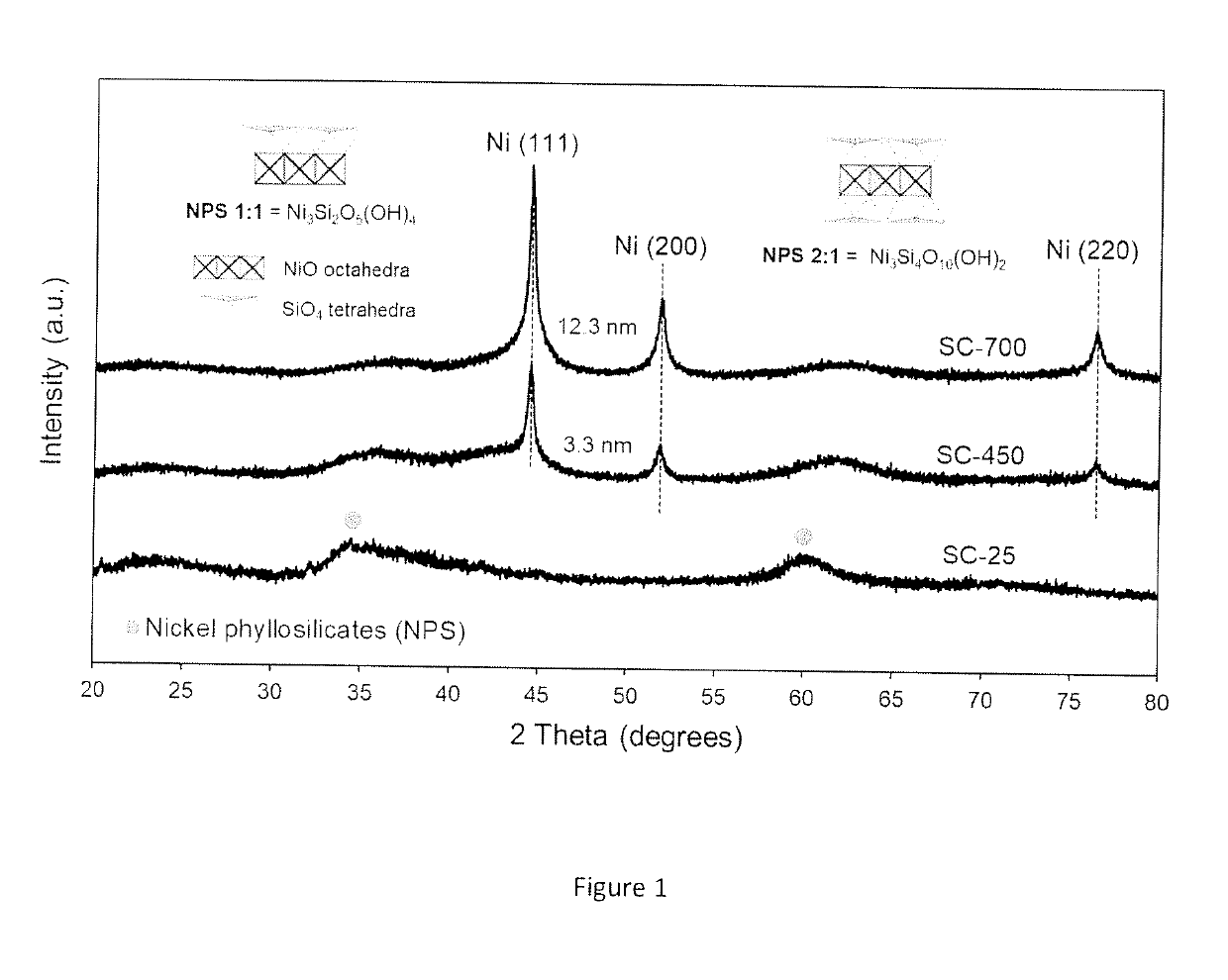
Figure 1 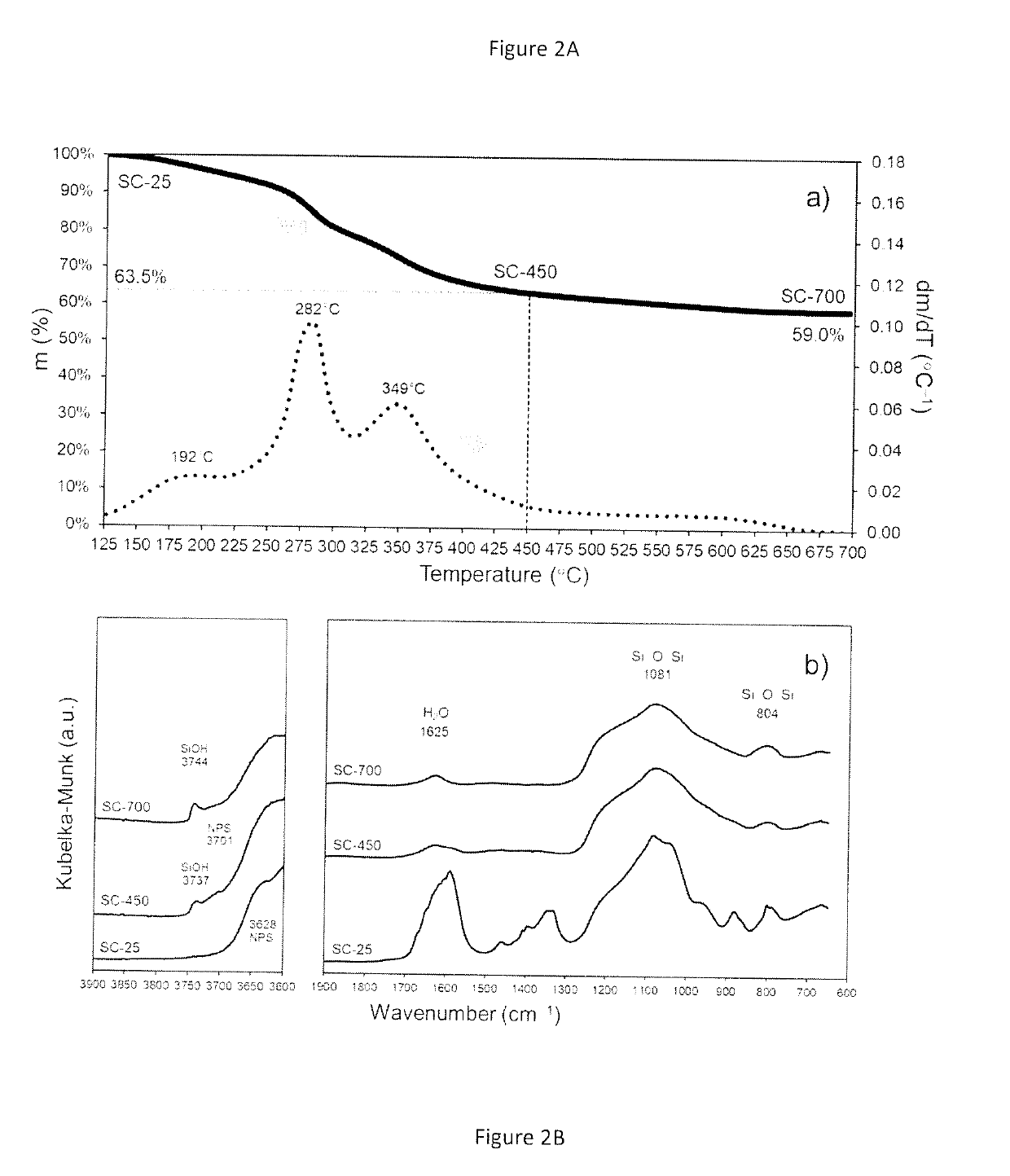
Figure 2 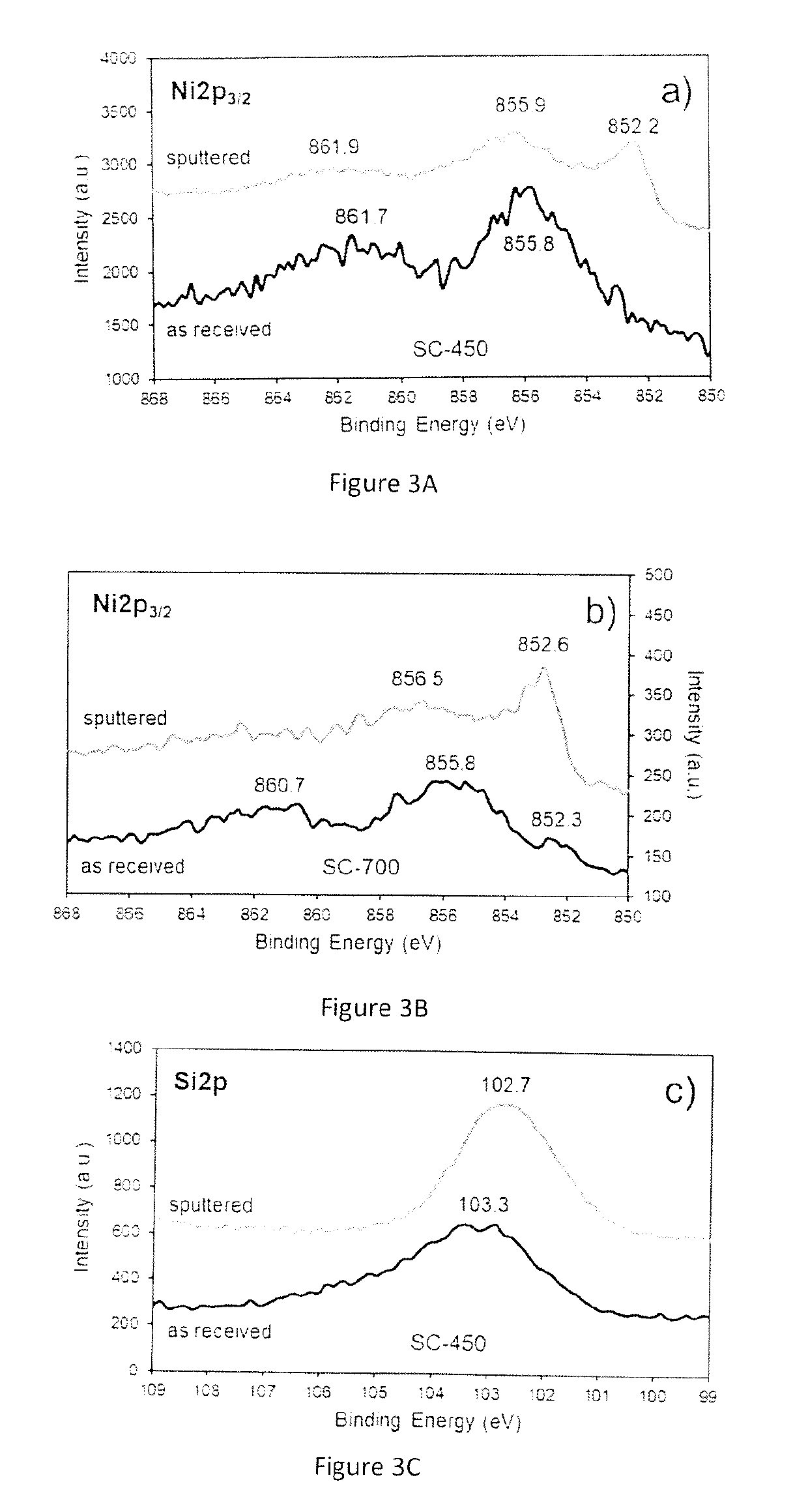
Figure 3
Abstract
Description
CROSS-REFERENCE TO RELATED APPLICATIONS
[0001] This application claims benefit of U.S. provisional patent application 62 / 641,526, filed Mar. 12, 2018.FIELD OF INVENTION
[0002] The invention relates to nickel-based catalysts. In particular, the invention relates to catalysts comprising silicon modified nickel (nickel silicate) that are used, for example, to convert methane to oxygenated hydrocarbons under moderate conditions and in a single step.BACKGROUND OF THE INVENTION
[0003] Efforts to use natural gas in transportation, either directly or by conversion to a liquid fuel, have been spurred by recent increases in available supply and a growing price spread between natural gas and petroleum, especially in the United States. Current natural gas-to-liquids (GTL) approaches generally operate on scales similar to those of petroleum refineries and suffer from low energy and carbon efficiencies, as well as high capital cost [1]. These plants are economically viable only for plants producing at ...
Examples
example 1
References for Example 1
[0088]1. R. Conrado et al., Science, 343 (2014) 621-623.[0089]2. R. Lipski, Gas Processing & LNG, October 2013.[0090]3. E. Lim et al., Can J Chem Eng 94 (2016) 623-635.[0091]4. J. Piña et al., Latin America Applied Research 36 (2006) 289-294.[0092]5. S. Rabe et al., Appl Catal A: Gen 292 (2005) 177-188.[0093]6. Z. Boukha et al., Appl Catal A: Gen 556 (2018) 191-203.[0094]7. R. K. Singha et al., Appl Catal B: Env 202 (2017) 473-488.[0095]8. Y. Zhu et al., ACS Catal 3 (2013) 2627-2639.[0096]9. L. Yan et al., Green Chem, 19 (2017) 4600-4609.
example 2
[0097]It is advantageous to use inexpensive oxidizing agents to carry out the oxidation of methane. Air is abundant and readily available and, thus, it is considered the most suitable oxidizing agent from an economical point of view. Although H2O and CO2 can also oxidize CH4, their use is practical only if it leads to an enhancement in the overall efficiency of the process. Thermodynamic calculations indicate that by increasing the amount of oxygen, a high conversion of CH4 can be achieved, although with a high selectivity to CO2 as the penalty. Since the reactor system is operated away from equilibrium conditions, the selectivity toward unwanted CO2 production (while maintaining the high CH4 conversion) should be minimized. Hence, the maximum amount of oxygen to be used can be estimated based on process safety considerations.
[0098]FIG. 8 shows a ternary flammability diagram for the system CH4—O2—N2. As can be seen, the partial oxidation line (associated to the partial oxidation or ...
example 3
Synthesis and Characterization of the Catalytic Material
[0099]The chemicals used for the preparation of the catalytic materials include nickel formate dihydrate and tetraethyl orthosilicate (TEOS) as nickel (Ni) and silica (SiO2) precursors, respectively. A benefit of using nickel formate dihydrate is that this precursor can be directly converted to metallic nickel upon heating under inert environments. An important aspect to be appreciated is that no hydrogen is required at any stage of the process to prepare the catalytic material.
[0100]The catalyst synthesis was carried out using a sol-gel approach, which usually involves the use of acids or bases as catalysts to accelerate the polymerization of the silicon-containing species. However, the procedure here described does not require acids or bases as catalysts and can take place in presence of the nickel formate precursor alone. The presence of the nickel formate species drives the polymerization process to produce a catalytic mate...