
Driving circuit for backlight system of light-emitting diode
A technology of light-emitting diodes and driving circuits, which is applied to the layout of electric lamp circuits, light sources, electric light sources, etc., can solve problems such as changes in the brightness of light-emitting diodes, achieve the effects of reducing current differences, reducing circuit complexity and cost, and avoiding changes
- Summary
- Abstract
- Description
- Claims
- Application Information
AI Technical Summary
Problems solved by technology
Method used
Image

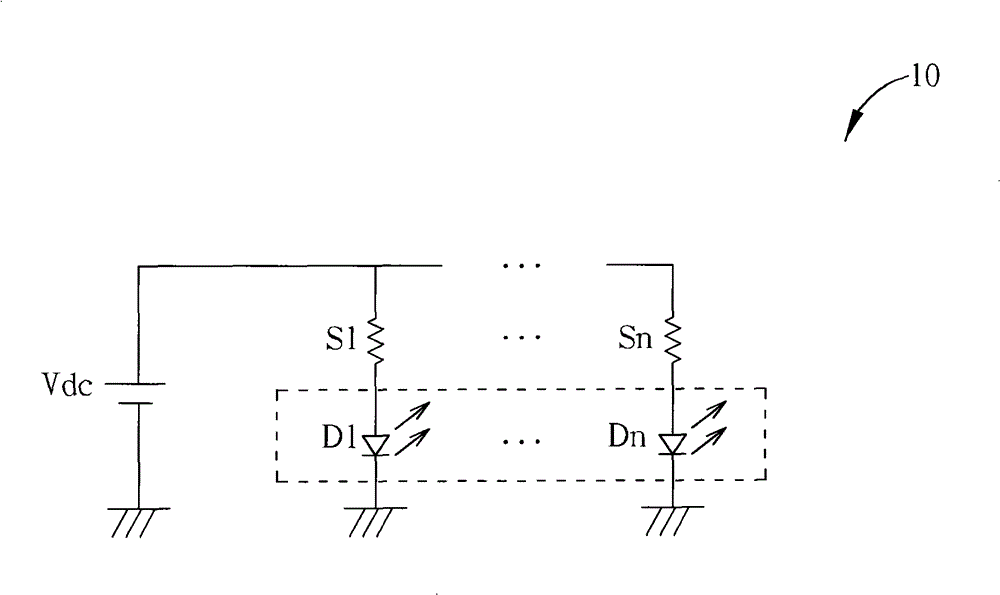
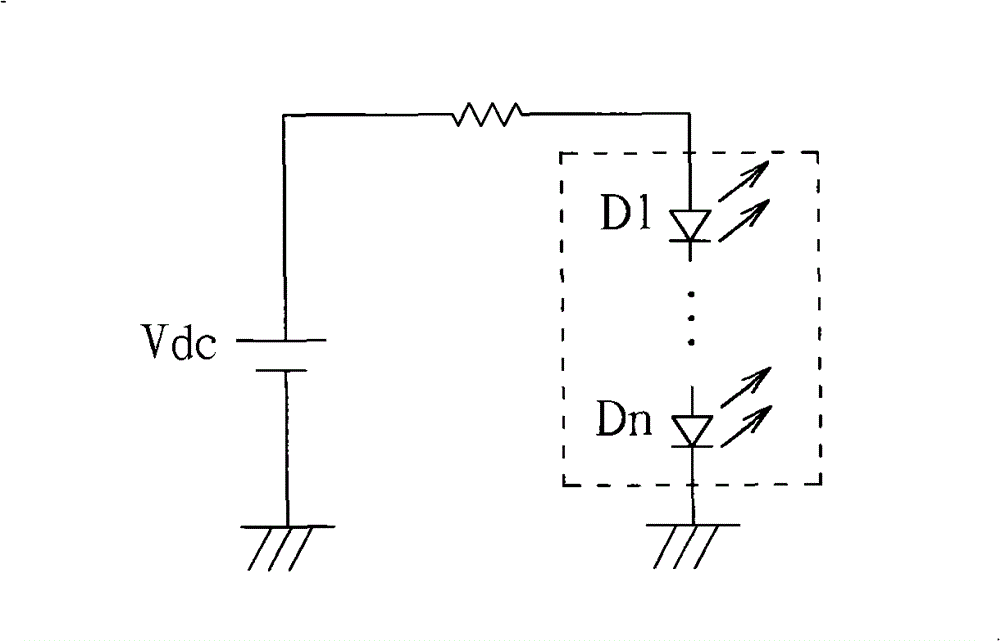
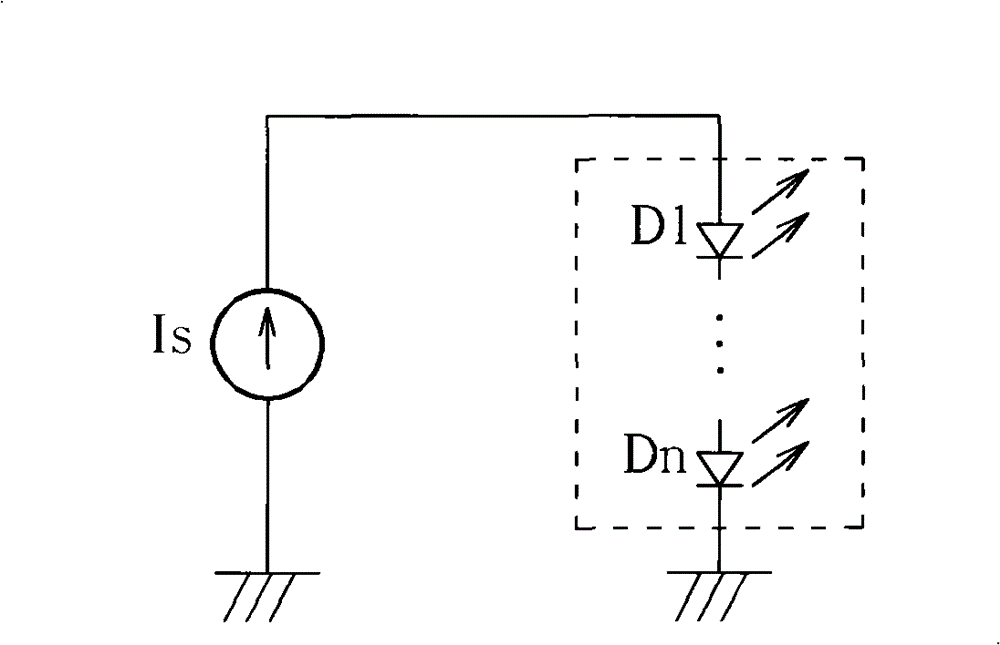
Examples
Embodiment Construction
[0028] Certain terms are used throughout the description and claims to refer to particular components. Those of ordinary skill in the art will appreciate that manufacturers may refer to the same component by different terms. The specification and claims do not use the difference in name as a way to distinguish components, but use the difference in function of components as a basis for distinction. The "comprising" mentioned in the entire description and the following claims is an open-ended term, so it should be interpreted as "including but not limited to". In addition, the term "electrical connection" here includes any direct and indirect electrical connection means. Therefore, if it is described in the text that a first device is electrically connected to a second device, it means that the first device can be directly connected to the second device, or indirectly connected to the second device through other devices or connection means.
[0029] Please refer to Figure 4 ...
PUM
 Login to View More
 Abstract
Description
Claims
Application Information
 Login to View More