Controllable magnetic focusingdevice for magnetic labeled cells targeting transplantation for treating articular cartilage defect

A cell-targeting, articular cartilage technology, applied in treatment, magnetic therapy, electrotherapy, etc., can solve problems such as synovial hyperplasia, and achieve the effect of easy control, simple operation, and simple structure

CN102302822BInactive Publication Date: 2012-07-18THE FIRST AFFILIATED HOSPITAL OF THIRD MILITARY MEDICAL UNIVERSITY OF PLA
0 Cites 0 Cited by

Patent Information

Authority / Receiving Office
CN · China
Patent Type
Patents(China)
Current Assignee / Owner
Publication Date
2012-07-18
Estimated Expiration
Not applicable · inactive patent

Smart Images

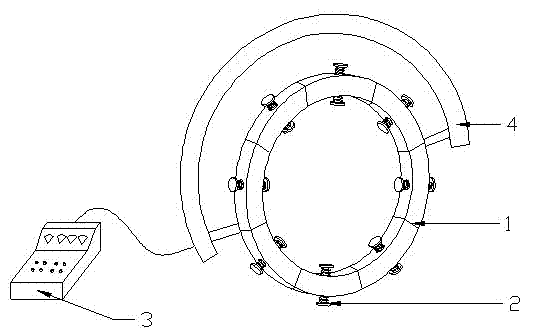
  • Figure 1
    Figure 1
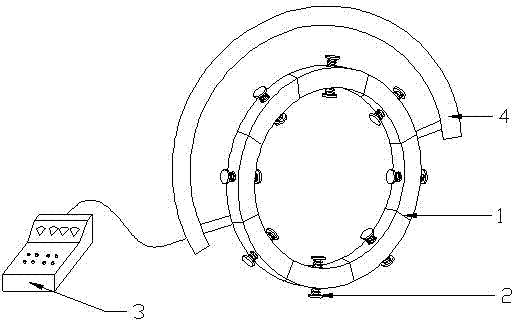
  • Figure 2
    Figure 2
Patent Text Reader

Abstract

The invention discloses a magnetically marked cell targeted transplantation controlled magnetic focusing instrument for treating an articular cartilage defect, including a ring magnetic coil support; magnetic coils evenly distributed on the ring magnetic coil support, and arranged on the magnetic coil support in a rotatable manner; a controller for controlling a magnetic coil current and electrically connected to each magnetic coil through a wire and controlling each magnetic coil winding magnetic field and exciting current according to each magnetic coil winding magnetic field strength superposition principle; and a holder on which the ring magnetic coil support can be arranged in a rotatable manner; wherein by controlling the energization state, size and direction of the magnetic force of each magnetic coil, the motion track of the stem cells which are performed super paramagnetic ferric oxide SPIO marker is accurately controlled. In the invention the characteristic that SPIO marked stem cells have magnetic property is utilized, and the transmission path of the stem cells is controlled under the action of magnetic forces in different directions and SPIO, so that the stem cells are accurately transplanted to a position with a cartilage cell defect, and the aim of treatment is fulfilled.
Need to check novelty before this filing date? Find Prior Art

Description

technical field

[0001] The invention relates to a treatment method for articular cartilage defect and a controllable magnetic focuser specially used in the method for targeted implantation of magnetically labeled cells. Background technique

[0002] Articular cartilage defects are common in clinic, but there is no "gold standard" treatment path at present. The discovery of the pluripotency of bone marrow mesenchymal stem cells (BMSCs) has initiated the exploration of tissue regenerative medicine and provided new ideas for clinical medicine. Intra-articular injection of mesenchymal stem cells is currently one of the most minimally invasive treatment approaches. However, because exogenous BMSCs cannot specifically gather in the cartilage defect area, they are easily diluted by joint fluid and attached to the synovial tissue, causing synovial hyperplasia, free body formation and other complications, which makes cell therapy urgently needed. One of the problems addressed is: o...

Examples

Embodiment Construction

[0020] A kind of method for the treatment of articular cartilage defect of the present embodiment, comprises the following steps:

[0021] a, Prepopulated stem cells were labeled with superparamagnetic iron oxide (SPIO) to make them magnetic;

[0022] b, using a magnetic resonance scanner to scan the joint to determine the cartilage defect site, this embodiment uses a 1.5T MRI scanner for joint scanning;

[0023] c, The SPIO-labeled stem cells were injected into the joint cavity with cartilage defect; the SPIO-labeled stem cells were driven from different directions by external magnetic force, so that they could reach the articular cartilage defect accurately.

[0024] The invention utilizes the magnetic properties of the SPIO-labeled stem cells, so that the magnetic force in different directions interacts with the SPIO to control the transfer route of the stem cells, so that they can be accurately transplanted to the cartilage defect position to achieve the purpose of treatme...