
Solar elevation tester
A technology for measuring instrument and elevation angle, which is applied in the field of solar elevation angle measuring instrument, can solve problems such as hindering the development of solar energy industry, high price, and lack of instruments
Patent Information
- Authority / Receiving Office
- CN · China
- Current Assignee / Owner
- Publication Date
- 2012-03-21
- Estimated Expiration
- Not applicable · inactive patent
Smart Images
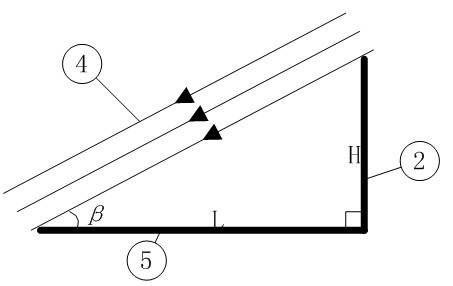
Figure 1 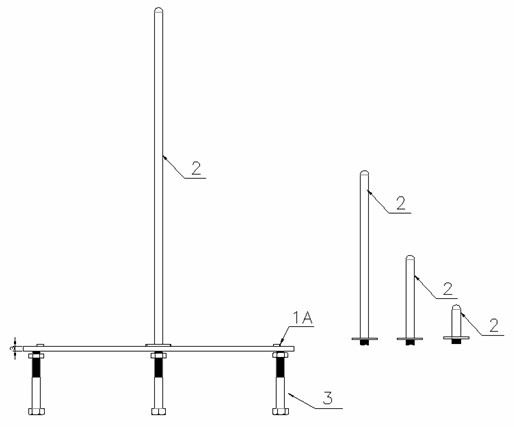
Figure 2 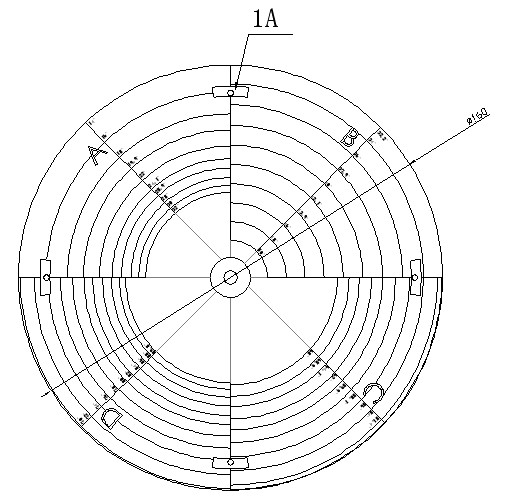
Figure 3
Abstract
Description
technical field
[0001] The invention relates to a device for measuring the elevation angle of the sun, in particular to an instrument for measuring the elevation angle of the sun. Background technique
[0002] In recent years, solar energy has attracted more and more people's attention, and some solar energy products have gradually entered people's lives, such as solar street lights, solar water heating, and solar photovoltaic power generation. However, the measurement of some parameters related to the sun, such as the sun's elevation angle, spectrum, energy density, etc., is still in the Institute of Precision Measurement, mainly due to the high price and complex structure of such precision measuring instruments. For some general research institutes and individuals interested in solar energy utilization, it is undoubtedly an astronomical figure. The lack of low-cost instruments seriously hinders the development of the solar energy industry. Contents of the invention [0...
Examples
Embodiment Construction
[0018] The principle and working principle of the present invention will be further described in detail below in conjunction with the accompanying drawings.
[0019] A sun elevation angle measuring instrument comprises a scale plate 1, a scale rod 2 is vertically arranged at one end of the scale plate 1, and a horizontal adjustment nut 3 is also arranged on the scale plate 1.
[0020] The ruler disc 1 is a disc with a diameter of 160mm, and there are two vertically bisected slots on it to divide the disc into 4 areas, A area, B area, C area and D area, and the ruler disc 1 also contains an area of blisters, in figure 2 in the 1A region.
[0021] There are four ruler rods 2, which are divided into four grades, and the lengths are respectively 20mm, 50mm, 100mm, and 200mm;
[0022] The selection of the 2 grades of the chi pole is determined by the different elevation angles of the sun; when the sun elevation angle is small, the projection of the chi pole on the chi disk is ...