
Preparation method of chitosan grafted polyethyleneimine non-viral transgene vector
A polyethyleneimine and transgenic carrier technology, which is applied in the field of biomedical materials, can solve the problems that the advantages of chitosan and polyethyleneimine cannot be fully utilized, and the chemical link is non-degradable, so as to improve the efficiency and conditions of gene transfection. mild, cytotoxic effect
- Summary
- Abstract
- Description
- Claims
- Application Information
AI Technical Summary
Problems solved by technology
Method used
Image

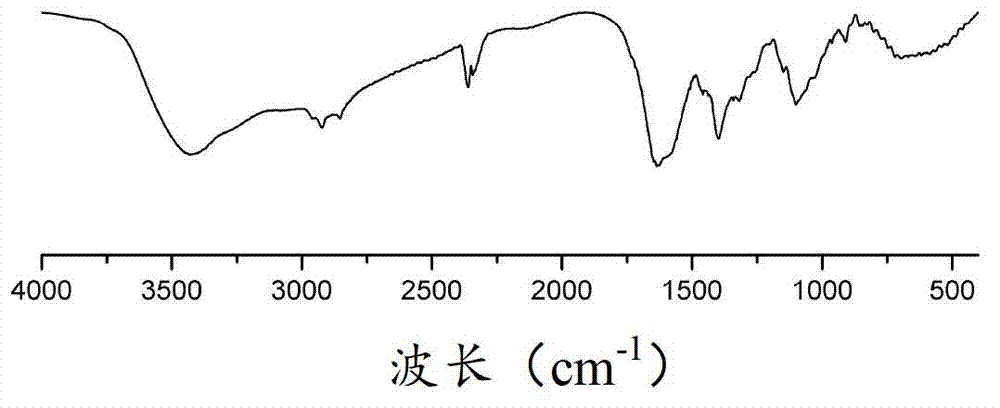
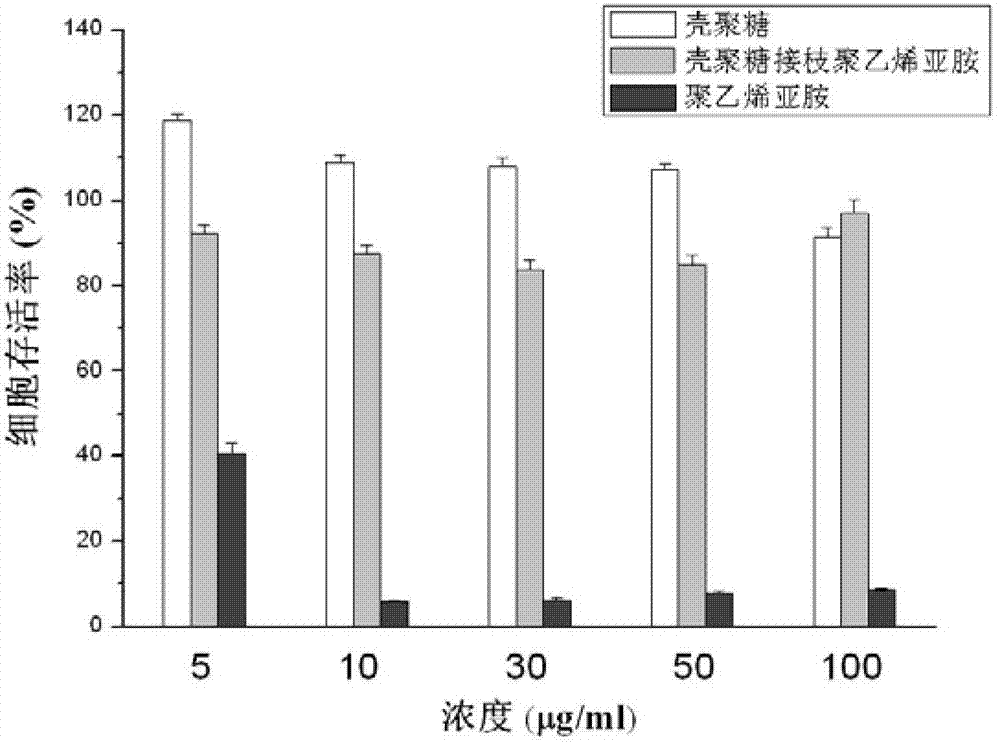
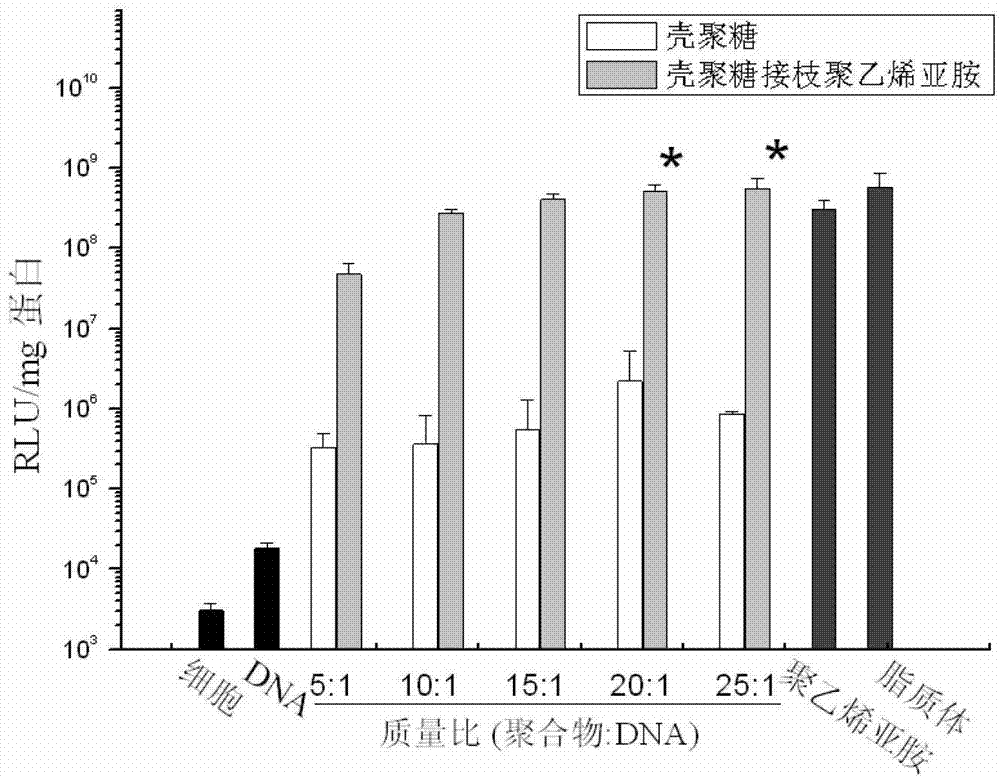
Examples
preparation example Construction
[0016] The embodiment of the present invention provides a kind of preparation method of chitosan grafted polyethylenimine non-viral transgene carrier, it comprises the steps:
[0017] S01: Obtaining thiolated polyethyleneimine and thiolated chitosan;
[0018] S02: oxidize the thiolated polyethyleneimine and thiolated chitosan to form a disulfide bond, and obtain the chitosan-grafted polyethyleneimine non-viral transgene carrier.
[0019] In step S01, both the mercaptolated polyethyleneimine and the mercaptolated chitosan can be prepared by the prior art or obtained commercially. As described, thiolated polyethyleneimine can be obtained by reacting branched amino groups with mercaptocarboxylic acids, or by first reacting with heterobifunctional cross-linking agent N-hydroxysuccinimide-3-(2-pyryl disulfide )-propionate (SPDP) reaction to obtain thiopolyethyleneimine, and then adding a reducing agent for reduction to obtain the thiolated polyethyleneimine. Since the thiolated c...
Embodiment 1
[0032] The reaction solution is PBS buffer (PBS, 1mM EDTA, 0.02% sodium azide, pH 7), 5 mg of polyethyleneimine with a molecular weight of 1800 Da was dissolved in 1 mL of PBS buffer, 2.5 mg of SPDP was first dissolved in 25 μL of DMSO, Then it was added dropwise into the solution of polyethyleneimine, stirred and reacted at room temperature for 24 hours, and dialyzed in deionized water for one day with a dialysis bag with a molecular weight cut-off of 1000Da to remove unreacted SPDP to obtain thiopolyethyleneimine. Take 10mg of chitosan with a molecular weight of 10000Da and a degree of deacetylation of 92% and dissolve it in 50mM acetic acid buffer solution, and then dissolve it in a reaction solution with a total volume of 1mL. Chitosan solution was stirred at room temperature for 24 hours, and a dialysis bag with a molecular weight cut-off of 3500 Da was dialyzed in deionized water for one day to remove unreacted SPDP to obtain thiochitosan.
[0033] Dithiothreitol was add...
Embodiment 2
[0036] The reaction solution is PBS buffer (PBS, 1mM EDTA, 0.02% sodium azide, pH 7). Take 5 mg of polyethyleneimine with a molecular weight of 1800Da and dissolve it in 1 mL of PBS buffer, stir at room temperature for 24 hours, and dialyze with a molecular weight cut-off of 1000Da. The bag was dialyzed against deionized water for one day to remove unreacted SPDP to yield thiopolyethyleneimine. Take 5 mg of chitosan with a molecular weight of 10,000 Da and a deacetylation degree of 92% and dissolve it in 50 mM acetic acid buffer solution, and then dissolve it in a reaction solution with a total volume of 1 mL. Dissolve 1.25 mg of SPDP in 25 μL of DMSO first, and then add it dropwise to In an aqueous solution of chitosan, stir and react at room temperature for 24 hours, then dialyze in deionized water for one day with a dialysis bag with a molecular weight cut-off of 3500 Da to remove unreacted SPDP to obtain thiochitosan.
[0037] Dithiothreitol was added to the aqueous soluti...
PUM
| Property | Measurement | Unit |
|---|---|---|
| molecular weight | aaaaa | aaaaa |
Abstract
Description
Claims
Application Information
 Login to View More