
Pseudomonas choloeaphtis and application
A technology of Pseudomonas chlorophyllae and inoculum, which is applied in the field of microorganisms, can solve the problems of short duration of effect and unsatisfactory control effect of total erosion, achieve long-lasting duration, make up for poor control effect, and significantly prevent and cure effect of effect
- Summary
- Abstract
- Description
- Claims
- Application Information
AI Technical Summary
Problems solved by technology
Method used
Image

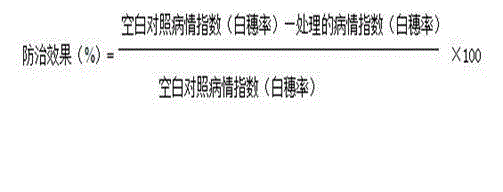

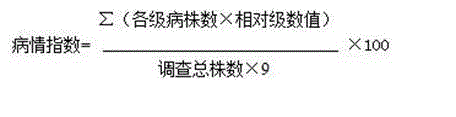
Examples
Embodiment 1
[0015] Example 1 Isolation and screening of Pseudomonas chloropinus bacterial strains
[0016] 1. Isolation of Pseudomonas chloropinus
[0017] Take 10g of the soil sample adsorbed on the wheat root system, add 90ml of sterile water, shake fully, and get 10 -1 Diluent; continue to dilute with sterile water to obtain 10 -5 、10 -6 and 10 -7 Take 0.2ml of the above three dilutions and spread them on the LB plate, incubate at 25°C for 48 hours, pick a single colony and inoculate it on the slant of LB solid medium for preservation;
[0018] 2. Screening of Pseudomonas chloropinus
[0019] A) Inoculate the bacteria on each slant in step 1 into 1ml LB liquid medium, and shake and culture at 28°C 120r / min for 12 hours;
[0020] B) Inoculate the 5mm dish of the highly pathogenic strain G1037 (hereinafter referred to as G1037) of Gaeumannomyces graminis var. tritici to the center of the PDA plate, and after 48 hours of cultivation, the four sides of the four sides of the G1037 c...
Embodiment 2
[0023] Physiological and biochemical analysis of embodiment 2 GP51 bacterial strain
[0024]
[0025] Note: + is positive, - is negative
Embodiment 3
[0026] Example 3 Molecular biological detection of antibiotic synthesis-related genes in the genome of GP51 strain
[0027] The genes related to the synthesis of four antibiotics in the genome of GP51 strain were detected by PCR method: 2,4-diacetylphloroglucinol (phlD), phenazine (phzCD), pyocyanin (pltC), nitric acid Pyrrolactin (prnC). These four antibiotics are the main classes of antibiotics produced by Pseudomonas bacteria. The primers used are as follows:
[0028]
[0029] The genes related to the synthesis of phenazine and nipyrrolidin could be detected in the genome of GP51 strain; the genes related to the synthesis of 2,4-diacetylphloroglucinol and pyocyanin were not detected. In order to further confirm whether the detected genes are target genes, the detected genes were cloned and sequenced respectively, and the obtained sequences were subjected to BLAST on the NCBI website.
[0030] The sequence obtained with phzCD primers and the accession number is HM59428...
PUM
 Login to View More
 Abstract
Description
Claims
Application Information
 Login to View More