
Primer and probe for real-time fluorescence PCR (polymerase chain reaction) detection of alpaca component
A real-time fluorescence, alpaca wool technology, applied in the determination/inspection of microorganisms, biochemical equipment and methods, DNA/RNA fragments, etc. Simple, specific results
- Summary
- Abstract
- Description
- Claims
- Application Information
AI Technical Summary
Problems solved by technology
Method used
Image

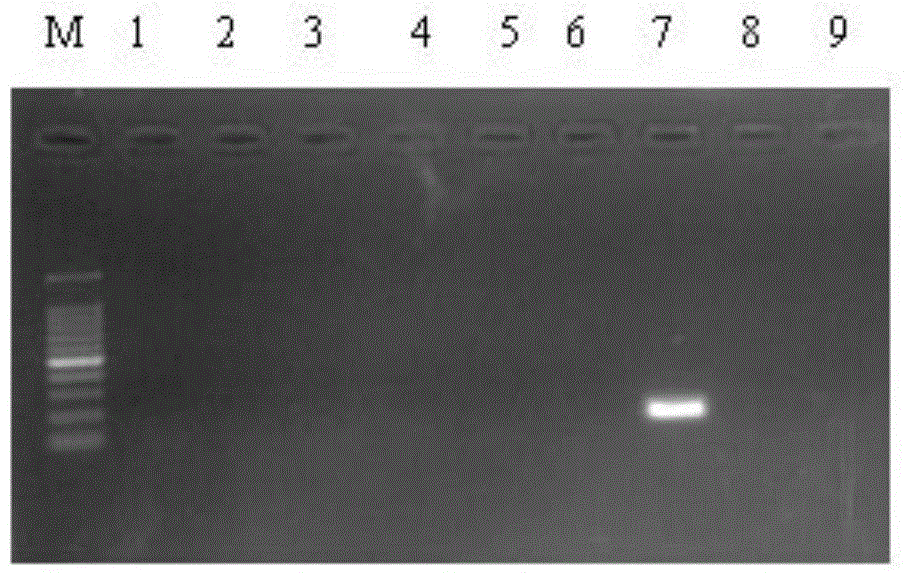
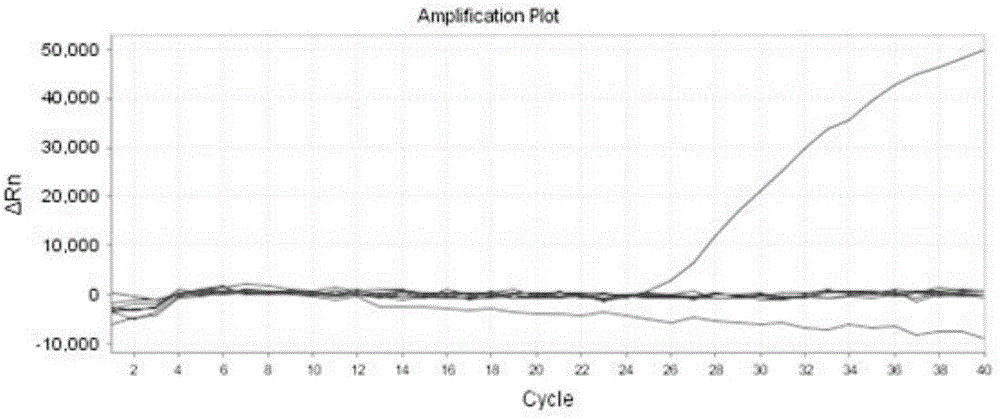
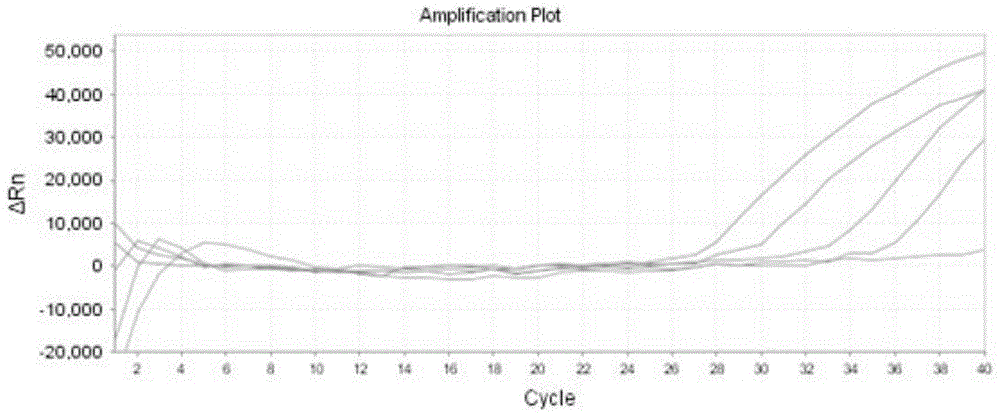
Examples
Embodiment 1
[0039] 1. Take samples from unused parts of fiber products, and take a total of about 1g of samples; cut the samples with scissors, break up and mix them with an analysis grinder, then use scissors to try to cut them to less than 2mm, and then use an analysis grinder to mix them evenly ;
[0040] 2. Weigh about 5 mg sample from the mixed sample, put it into a 2mL centrifuge tube, extract 2 tubes in parallel for each sample, add 180 μL of buffer GL (Buffer GL), 20 μL of proteinase K (Proteinase K) and 10 μL of ribonuclease A (RNase A, 10 mg / mL), warm in a 56°C water bath until the tissue is completely lysed for 3 hours; if the remaining fibrous tissue cannot be completely lysed, centrifuge at 12,000 rpm for 2 minutes after lysing, and then remove impurities. Follow up. Add 200 μL of Buffer GB (Buffer GB) and 200 μL of 100% ethanol to the lysate, and mix well by pipetting. During the warm bath, the sample can be taken out from time to time for shaking or pipetting to speed up ...
PUM
 Login to View More
 Abstract
Description
Claims
Application Information
 Login to View More