Seawater gas detection device and detection method

A gas detection and gas pumping device technology, applied in separation methods, chemical instruments and methods, liquid degassing, etc., can solve the problems of low degree of gas-liquid separation and inaccurate measurement results, and achieve complete separation, high separation efficiency, high efficiency effect

CN105169754AActive Publication Date: 2015-12-23山东山科励睿科技有限公司
7 Cites 5 Cited by

Patent Information

Authority / Receiving Office
CN · China
Patent Type
Applications(China)
Current Assignee / Owner
Publication Date
2015-12-23

Smart Images

  • Figure 1
    Figure 1
  • Figure 2
    Figure 2
  • Figure 3
    Figure 3
Patent Text Reader

Abstract

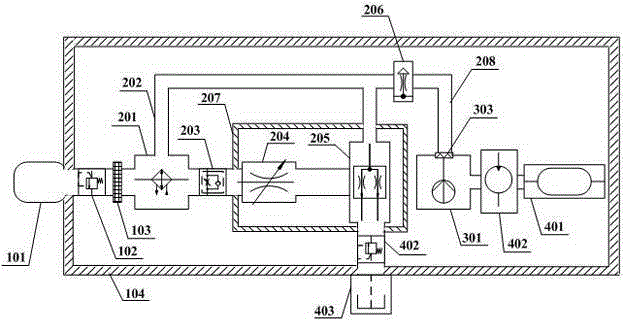
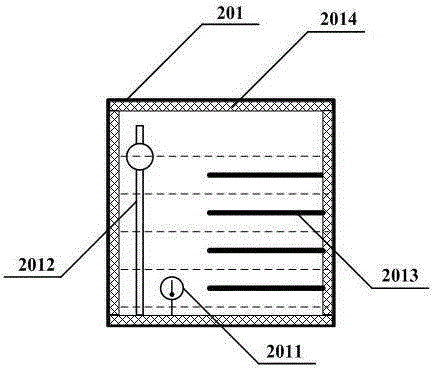
The invention discloses a seawater gas detection device and a detection method. The seawater gas detection device comprises a water sample collection unit, a gas-liquid separation unit and a gas detection unit; the water sample collection unit is used for introducing a water sample to be detected and pre-treating the water sample to be detected; the gas-liquid separation unit adopts the characteristic that the dissolving degree of the gas in the liquid is decreased along with the increasing of temperature and decreasing of pressure and separates the gas and liquid of the water sample to be detected in three levels by designing a water heater, a throttling device and a centrifugal gas-liquid separator, so that the gas-liquid separation degree is increased, the gas dissolved in the liquid water sample is more thoroughly separated, and the separation efficiency is higher; moreover, the water sample is high in flowing speed, and the precision of the gas detection unit for measuring the gas to be detected is greatly supported. In addition, a pressure-resisting shell is arranged outside the device, so that the device has the capacity for resisting the high pressure in deep sea and is convenient for executing the long-term, continuous and in-situ measurement task in a deep sea environment.
Need to check novelty before this filing date? Find Prior Art

Description

technical field

[0001] The invention belongs to the technical field of gas detection, and in particular relates to a device and method for in-situ detection of gas dissolved in a water body to be measured in a deep sea environment. Background technique

[0002] In the marine environment, especially the offshore shelf seabed, oil and gas seepage is a widely distributed natural phenomenon. Submarine seepage is a process in which shallow biogenic gas or deep pyrolytic gas overflows the seabed under the action of buoyancy along channels such as pores, fault planes, and mud volcanoes in sediment layers. The existence of seabed oil and gas seepage indicates that there may be abundant oil and gas resources in seabed sediments. Therefore, the detection of oil and gas seepage on the seabed is helpful to economically, quickly and effectively circle oil and gas prospects.

[0003] Dissolved methane and other hydrocarbons in seabed water are important indicators of deep-sea oil and ga...

Examples

Embodiment Construction

[0028] Specific embodiments of the present invention will be described in detail below in conjunction with the accompanying drawings.

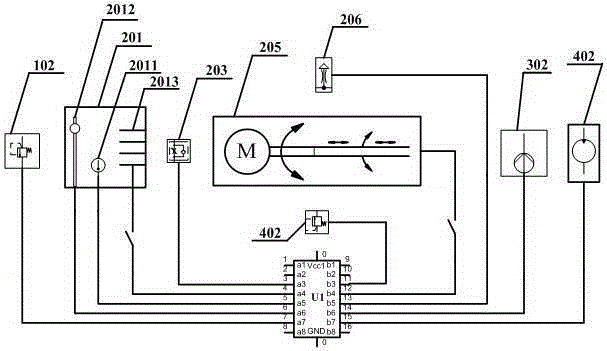
[0029] The seawater gas detection device of this embodiment mainly includes components such as a water sample collection unit, a gas-liquid separation unit, and a gas detection unit. Among them, the water sample collection unit is used to introduce seawater in the sea area to be tested into the detection device, and perform pretreatment such as filtration and depressurization of the water sample to be tested, so as to ensure the smooth progress of the subsequent detection process. The gas-liquid separation unit receives the water sample to be tested collected and output by the water sample collection unit, and performs gas-liquid separation on the water sample to be tested, and separates the gas dissolved in the water sample for subsequent analysis of gas type, concentration or other parameters. detection. In order to improve the degree of ga...