One-dimensional dual-redundant antenna array and construction method

An antenna array and dual redundancy technology, which is applied in the directions of antenna array, antenna, radiation element structure, etc., can solve the problem that the baseline coverage of the antenna array reduces the high spatial resolution, etc., and achieve the effect of large coverage and high resolution

CN106785485AActive Publication Date: 2017-05-31HUAZHONG UNIV OF SCI & TECH
1 Cites 10 Cited by

Patent Information

Authority / Receiving Office
CN · China
Current Assignee / Owner
Publication Date
2017-05-31

Smart Images

  • Figure 1
    Figure 1
  • Figure 2
    Figure 2
  • Figure 3
    Figure 3
Patent Text Reader

Abstract

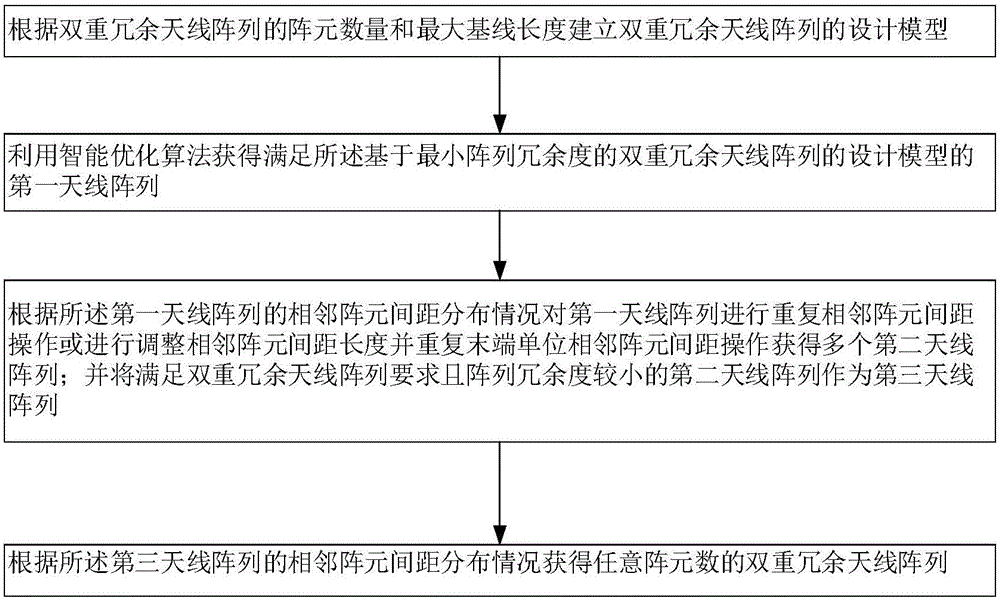
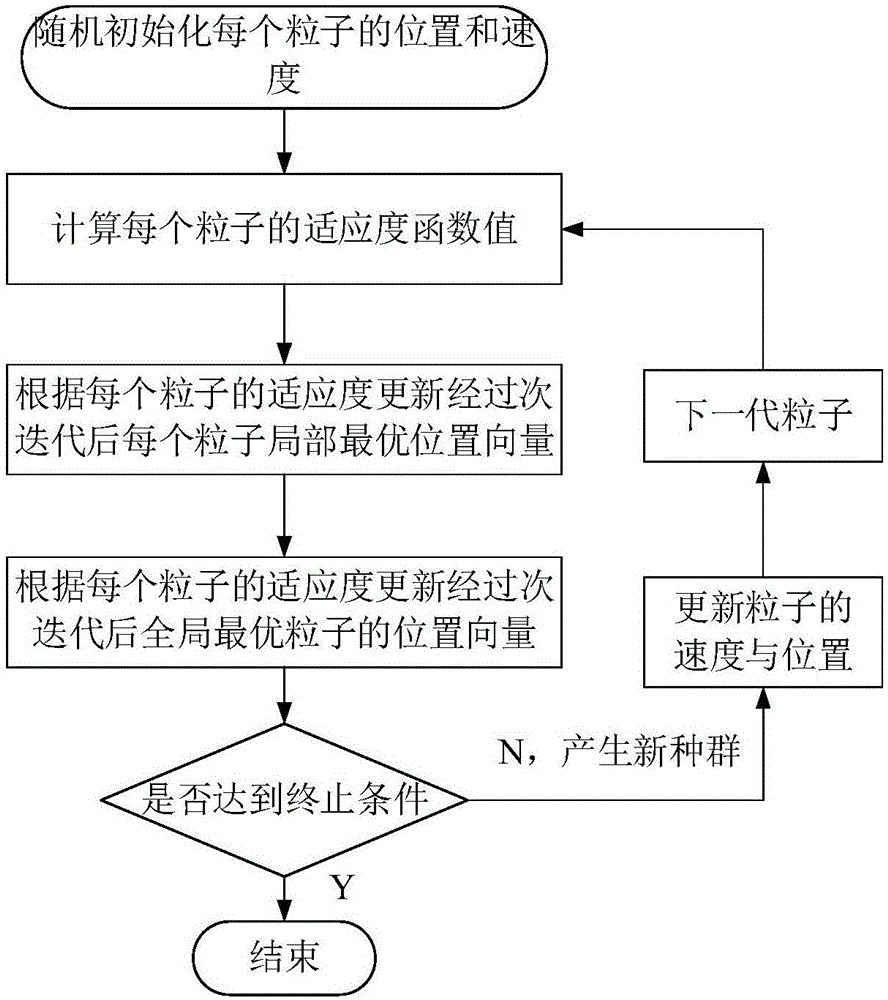
The invention discloses a one-dimensional dual-redundant antenna array and a construction method. The construction method comprises the steps of establishing a design model of the one-dimensional dual-redundant antenna array based on a minimum array redundancy; by utilizing an intelligent optimization algorithm, obtaining a plurality of first antenna arrays which meet the design model; according to an adjacent array element spacing distribution condition of the first antenna arrays, carrying out an expansion operation on the first antenna arrays to obtain a plurality of second antenna arrays; and using the second antenna arrays which meet requirements of the one-dimensional dual-redundant antenna array and have small array redundancies as third antenna arrays, and according to an adjacent array element spacing distribution condition of the third antenna array, obtaining the one-dimensional dual-redundant antenna array with a random number of array elements. The method for constructing the one-dimensional dual-redundant antenna array, which is provided by the invention, solves the problem of large-degree coverage of a sampling frequency under the condition that a single array element is damaged, and provides guarantee for system reliability of a synthetic aperture radiometer in the microwave and millimeter wave radiation measurement application.
Need to check novelty before this filing date? Find Prior Art

Description

technical field

[0001] The invention belongs to the technical field of microwave remote sensing and target detection, and more specifically relates to a one-dimensional double redundant antenna array and a construction method. Background technique

[0002] The "aperture synthesis technology" derived from radio astronomy uses sparse small-aperture antenna arrays to realize the "synthesis" of large-aperture antennas, avoiding the difficulty of making real-aperture antennas with large physical apertures in the field of microwave remote sensing and target detection. This results in a higher spatial resolution.

[0003] However, when we consider the reliability and stability of the synthetic aperture microwave radiation measurement system, especially when the system works in some harsh environments, such as space-borne platforms, it is necessary to ensure that any array element is damaged. Completeness of baseline coverage within a given area.

[0004] In harsh working environm...

Examples

Embodiment Construction

[0067] To solve the integrity problem of baseline coverage, the invention provides the definition and mathematical model of one-dimensional dual redundant antenna arrays (TFRLAs), and provides an analytical construction method of one-dimensional dual redundant antenna arrays. In order to make the object, technical solution and advantages of the present invention more clear, the present invention will be further described in detail below in conjunction with the accompanying drawings and embodiments. It should be understood that the specific embodiments described here are only used to explain the present invention, not to limit the present invention. In addition, the technical features involved in the various embodiments of the present invention described below may be combined with each other as long as they do not constitute a conflict with each other.

[0068] Given n antenna array elements a, arrange them on a straight line in sequence, and use a set of n different positive i...