Device for generating continuously variable quantum entanglement between quantum channels and quantum nodes

A quantum entanglement and device generation technology, which is applied in instruments, nonlinear optics, optics, etc., to achieve the effect of enhancing interaction, improving storage efficiency, and high entanglement

CN107346086BActive Publication Date: 2019-06-28SHANXI UNIV
6 Cites 0 Cited by

Patent Information

Authority / Receiving Office
CN · China
Patent Type
Patents(China)
Current Assignee / Owner
Publication Date
2019-06-28

Smart Images

  • Figure 1
    Figure 1
  • Figure 2
    Figure 2
  • Figure 3
    Figure 3
Patent Text Reader

Abstract

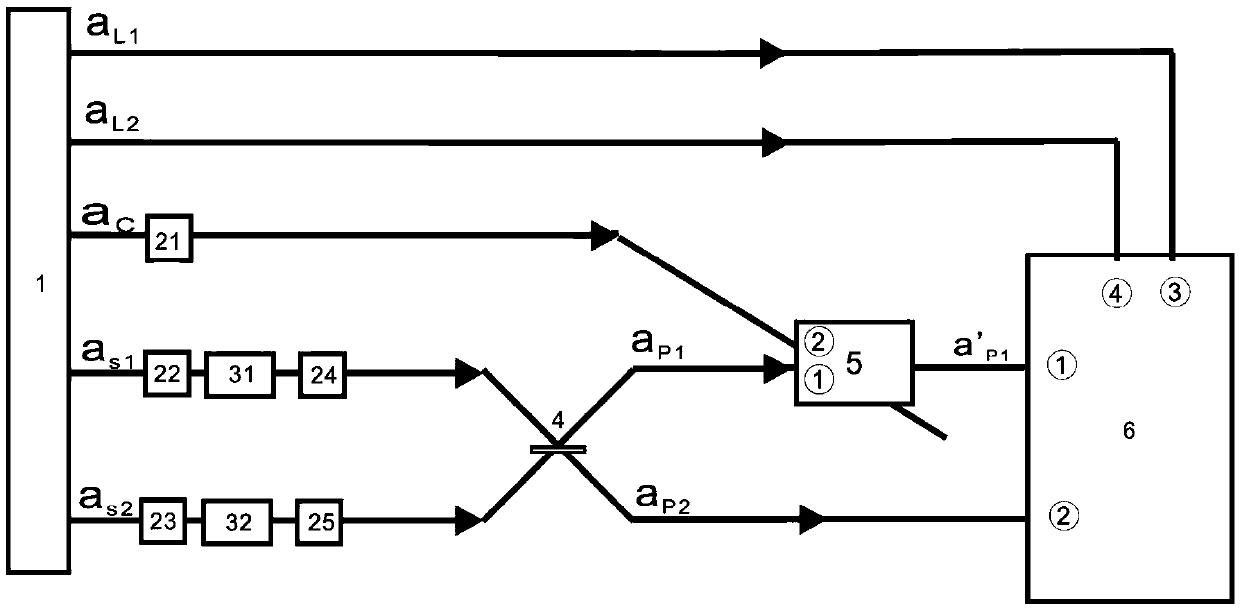
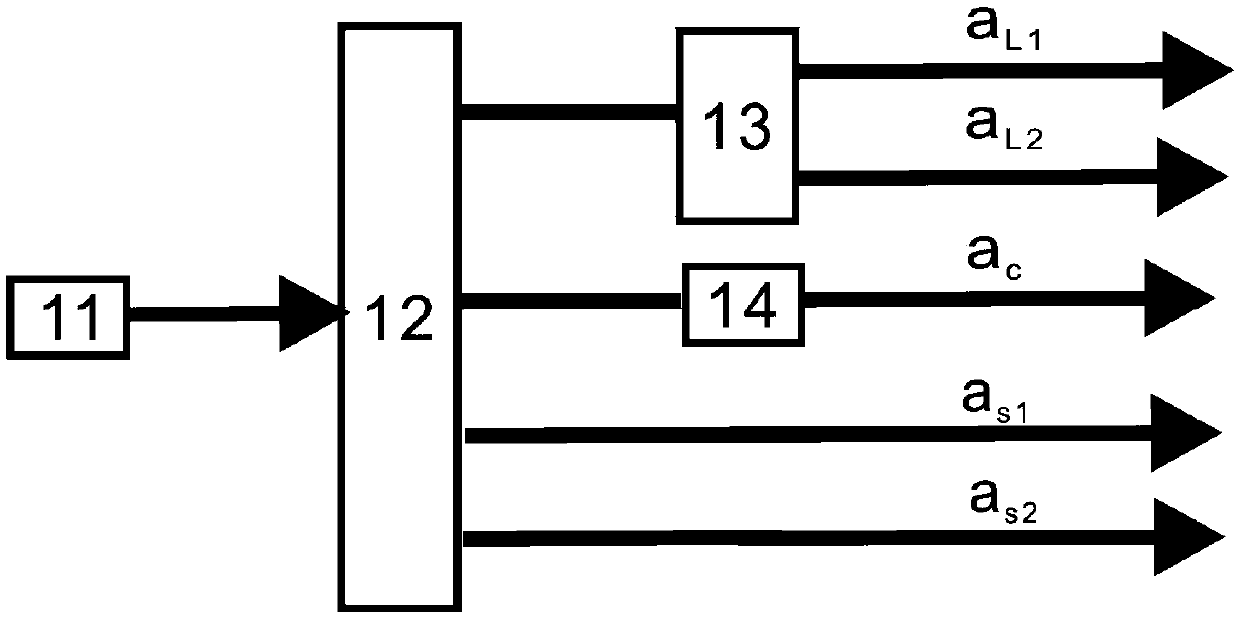
The invention relates to a generating device for continuous variable quantum entanglement between a quantum channel and a quantum node. The generating device mainly solves the technical problem of probability preparation of the entanglement between the quantum channel and the quantum node at present. According to the technical scheme provided by the invention, the generating device comprises a light source unit, an acousto-optic modulation system, an optical parameter amplifier, an optical beam splitter, an atom system and an entanglement measuring system, wherein the light source unit is provided with a seed optical signal aS1 and aS2 output end, a control optical signal aC output end and a local oscillation optical signal aL1 and aL2 output end; the seed optical signals aS1 and aS2 are connected with a first input end of the atom system through the acousto-optic modulation system, the optical parameter amplifier and the optical beam splitter; the control optical signal aC is connected with a second input end of the atom system through the acousto-optic modulation system; the atom system is connected with the first input end of the entanglement measuring system; a second output end of the optical beam splitter is connected with the second input end of the entanglement measuring system; the local oscillation optical signals aL1 and aL2 are connected with the third and fourth input ends of the entanglement measuring system.
Need to check novelty before this filing date? Find Prior Art

Description

technical field

[0001] The invention relates to a device for generating continuous variable quantum entanglement between quantum channels and quantum nodes, in particular to a device for generating continuously variable quantum entanglement between light and atomic systems, and the light and atomic systems are enhanced by optical resonant cavities The degree of entanglement between. Background technique

[0002] Quantum entanglement is not only one of the important contents of quantum mechanics, but also the core resource of quantum information transmission and processing. Quantum entanglement between light fields has been prepared experimentally and applied to various quantum information protocols. A quantum internet could be made of light and atoms. Among them, light is an ideal carrier of quantum information. Atoms can interact with light and serve as nodes for quantum information processing and storage. Quantum entanglement between quantum channels and quantum nodes ...

Examples

Embodiment Construction

[0023] The present invention will be described in further detail below in conjunction with the accompanying drawings and embodiments.

[0024] Such as figure 1 As shown, a device for generating continuous variable quantum entanglement between quantum channels and quantum nodes in this embodiment includes a light source unit 1, five sets of acousto-optic modulation systems 21-25, and two optical parametric amplifiers 31-32, 50 : 50 optical beam splitters 4, atomic systems 5 and entanglement measurement systems 6; the light source unit 1 is provided with two beams of seed optical signals a S1 、a S2 Output terminal, control optical signal a C output and two beams of local oscillator optical signals a L1 、a L2 output terminal; the two beams of seed light signals a S1 、a S2 The output ends are respectively connected to the input ends of the second and third acousto-optic modulation systems 22 and 23, and the output ends of the second and third acousto-optic modulation systems...