'Four-arm hedge-frame-shaped' pear tree form and shaping method

A pear tree and trellis technology, which is applied in the field of "four-arm trellis" tree shape and shaping of pear trees, can solve the problems of slender spindle-shaped high cultivation management technology, poor cultivation technology learning ability, and trellis tree shape shaping time Long and other issues, to achieve the effect of improving wind resistance, easy to remember, and improved ventilation

CN107371855AActive Publication Date: 2017-11-24ZHENGZHOU FRUIT RES INST CHINESE ACADEMY OF AGRI SCI
4 Cites 10 Cited by

Patent Information

Authority / Receiving Office
CN · China
Patent Type
Applications(China)
Current Assignee / Owner
Publication Date
2017-11-24

Smart Images

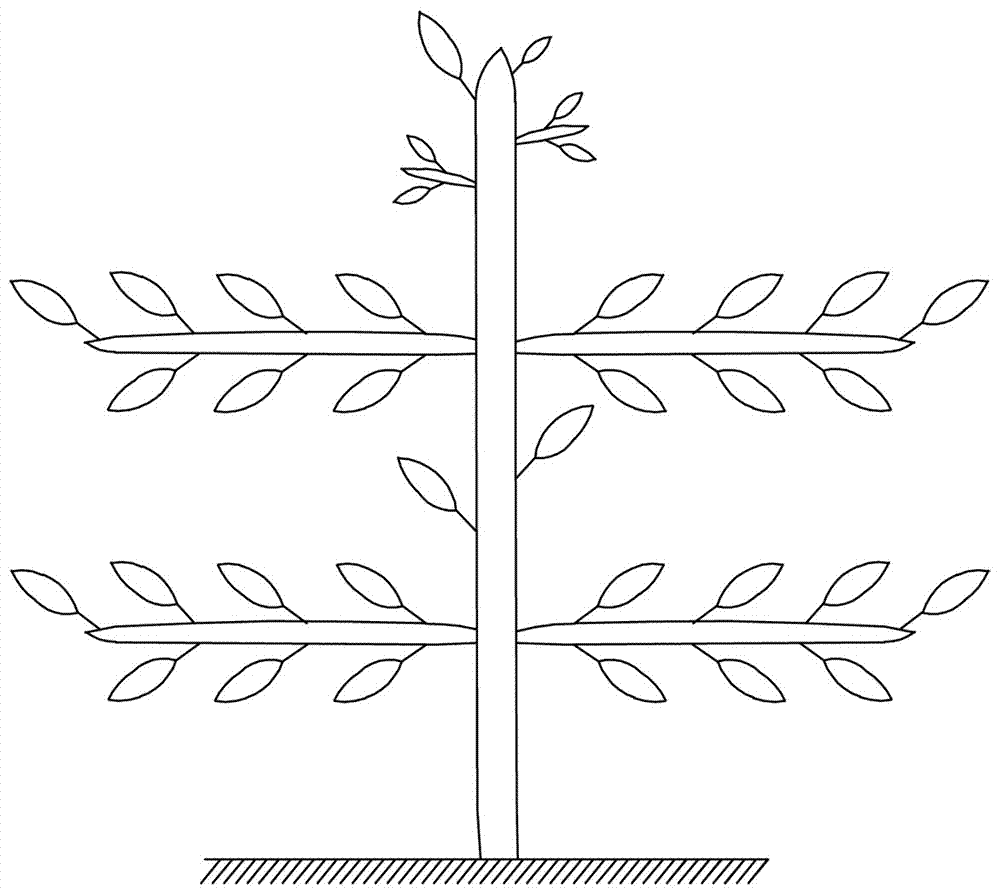
  • Figure 1
    Figure 1
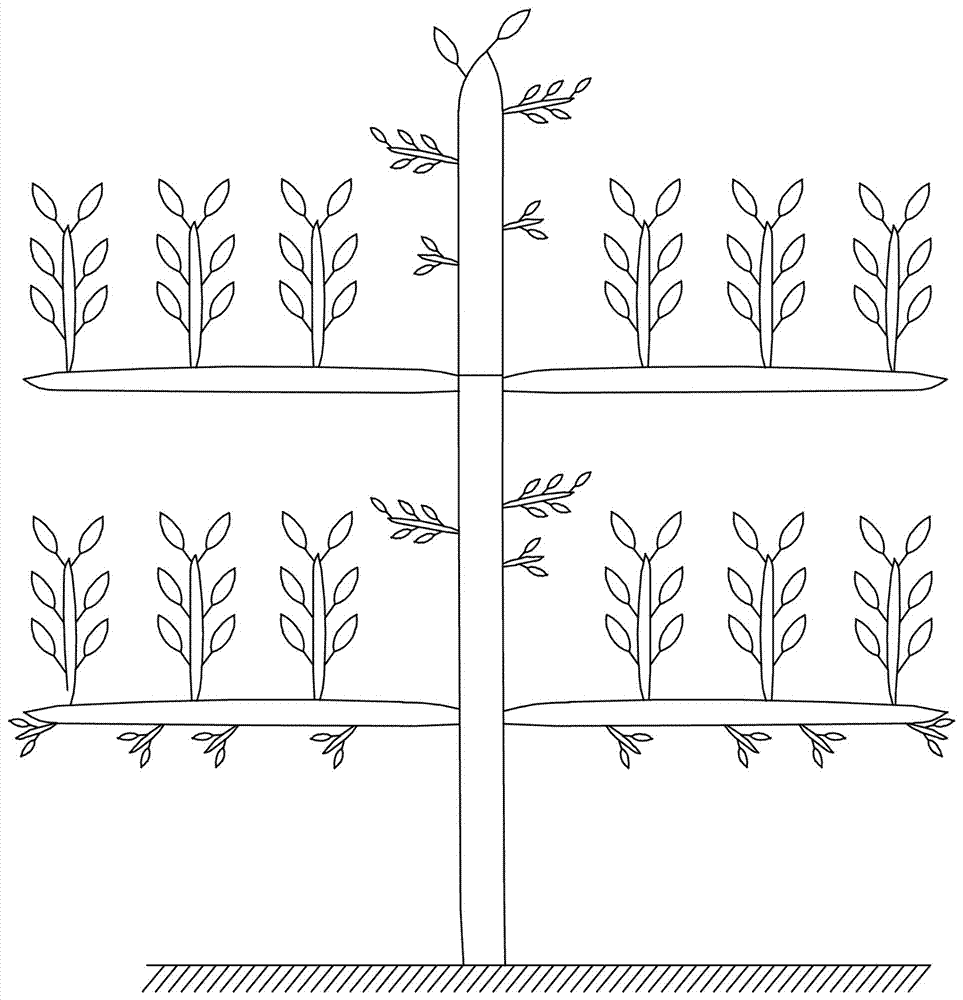
  • Figure 2
    Figure 2
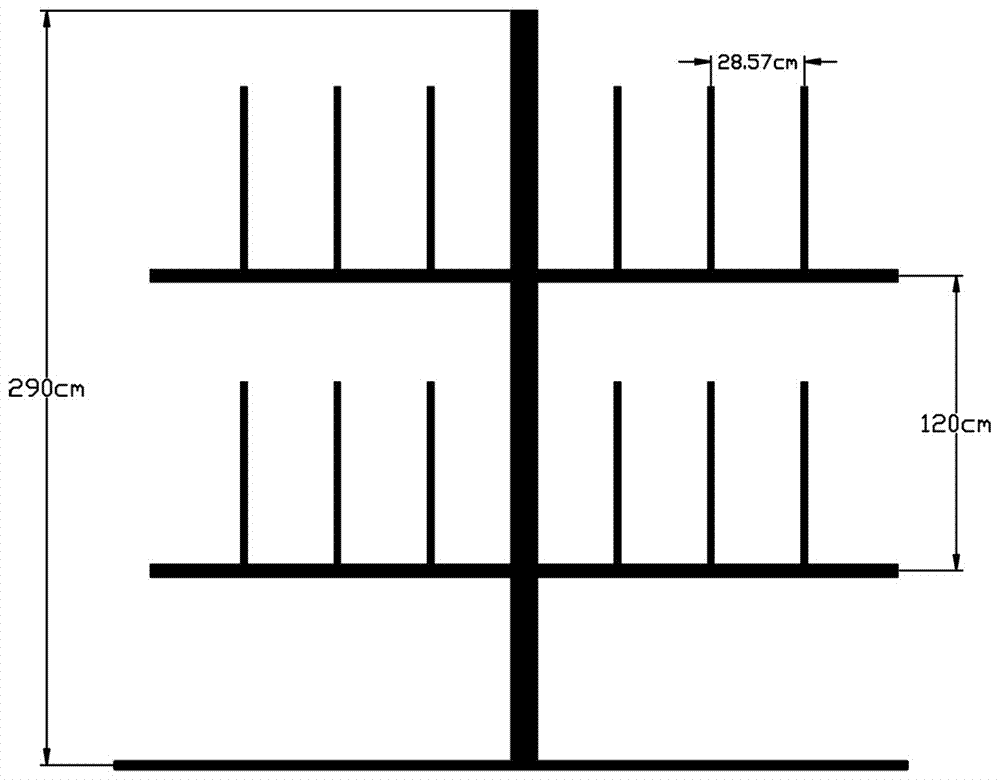
  • Figure 3
    Figure 3
Patent Text Reader

Abstract

The invention belongs to the technical field of fruit tree cultivation and relates to a 'four-arm hedge-frame-shaped' pear tree form and a shaping method. The 'four-arm hedge-frame-shaped' pear tree form is characterized in that a pear tree is 290cm in height, four main branches are arranged on two sides of the central trunk of the pear tree in a two-layer manner, three fruiting branches are arranged on each main branch, each main branch is vertical to the central trunk, and each main branch is 100cm in length; the fruiting branches are vertical to the main branches, and the distance between every two fruiting branches is 28.57cm; the first layer of the main branches is 50cm in height, the second layer of the main branches is 170cm in height, and the first layer of the main branches and the second layer of the main branches are horizontal. The 'four-arm hedge-frame-shaped' pear tree form has the advantages that the three-dimensional fruiting of a traditional pear tree can be changed into single-side fruiting, the pear tree can sufficiently utilize illumination, ventilation performance is also increased greatly, diseases and pests can be reduced effectively, and fruit quality can be increased.
Need to check novelty before this filing date? Find Prior Art

Description

technical field

[0001] The invention belongs to the technical field of fruit tree cultivation, and in particular relates to a "four-arm trellis-shaped" pear tree shape and a shaping method. Background technique

[0002] Pear (Pyrus L.) is an important economic crop in my country, and its cultivated area and output both rank first in the world. Pear fruit has high nutritional value, crisp and juicy, sweet and sour taste, and has certain medical value, so it is loved by consumers. In the cultivation technology management of pear trees, the tree structure is directly related to the lighting efficiency and nutrient distribution of the tree body, thereby affecting the fruit quality, and it occupies a very important position in the pear tree cultivation system. At present, in the domestic pome fruit industry, labor costs have increased greatly. In the past, the large-crown tree shape and some tree shapes with high technical requirements required a long period of time, complicated...

Examples

Embodiment Construction

[0026] The following examples are used to illustrate the present invention, but are not intended to limit the protection scope of the present invention. Unless otherwise specified, the technical means used in the embodiments are conventional means well known to those skilled in the art.

[0027] The pear tree was selected as "Zhongli No. 1". The selection criteria for pear seedlings: the main root should be more than 25cm, at least 3 lateral roots, the length of the lateral roots should be more than 15cm, the thickness of the rhizome should be more than 0.5cm, the branches should be full, and the buds should be full.

[0028] Such as Figure 1 to Figure 6 As shown, a kind of pear tree "four-arm fence shape" tree shape is as follows: the pear tree is 290cm high, and four main branches are arranged in two layers on both sides of the central trunk of the pear tree, and three fruiting branches are arranged on each main branch. group; the base angle between the main branch and the...