
Molecular identifier related to laying duck egg laying and egg quality traits and application thereof
A technology for molecular markers and egg quality, which is applied in the determination/inspection of microorganisms, biochemical equipment and methods, DNA/RNA fragments, etc., and can solve the problems that there is no molecular marker of LRRTM1 gene in laying ducks.
- Summary
- Abstract
- Description
- Claims
- Application Information
AI Technical Summary
Problems solved by technology
Method used
Image

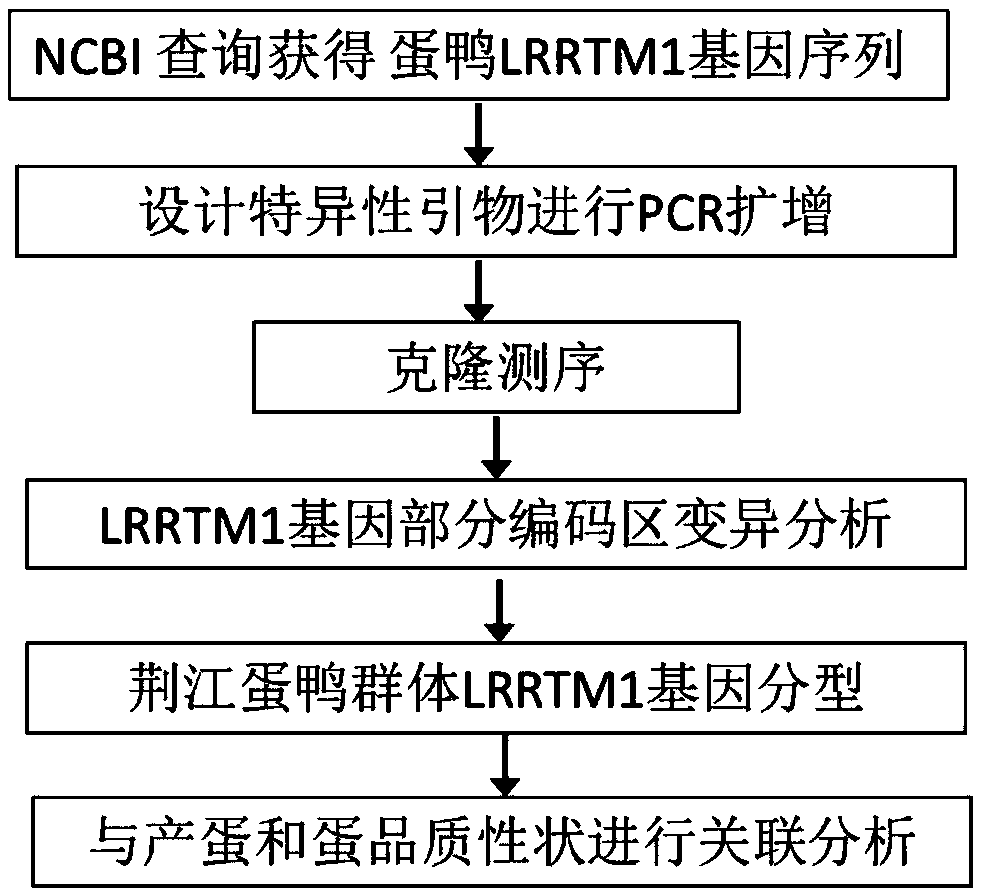
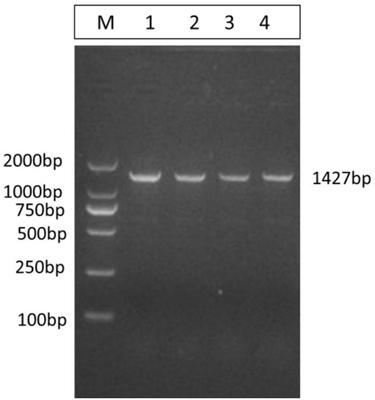
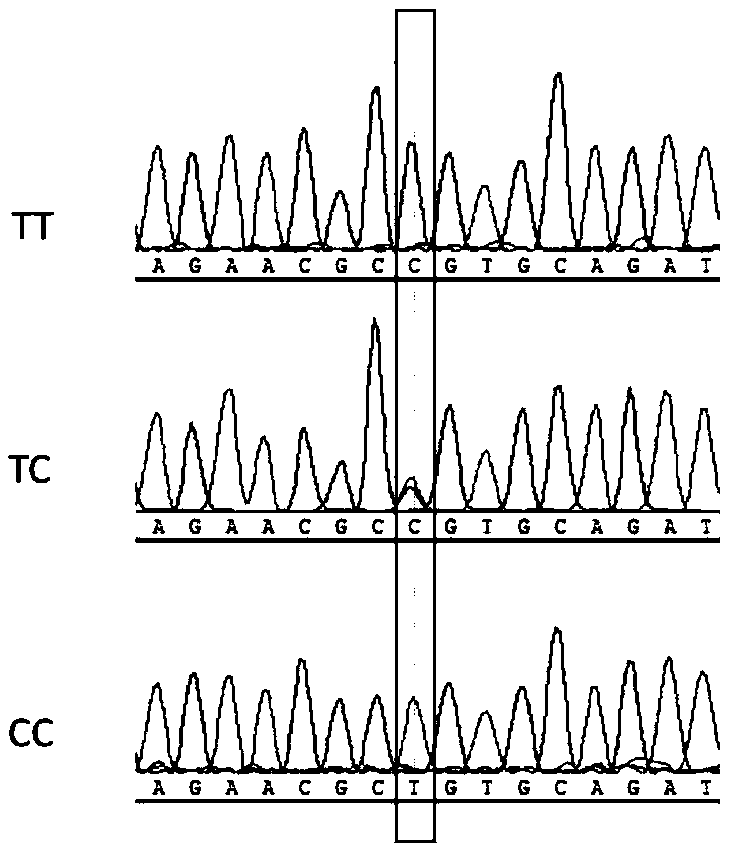
Examples
Embodiment 1
[0022] Example 1 Obtaining the Partial Coding Region Fragment of Laying Duck LRRTM1 Gene and Establishment of SNP Detection Method
[0023] 1. Extraction of genomic DNA from laying ducks
[0024] The test laying duck variety of the present invention is a new strain of Jingjiang laying duck, and the samples are from the poultry testing field of the Institute of Animal Husbandry and Veterinary Medicine of the Hubei Academy of Agricultural Sciences. The genomic DNA of laying ducks was extracted using a genomic DNA kit produced by Beijing Biotech Biotechnology Co., Ltd. (operated according to the kit instructions). The specific steps are as follows:
[0025] (1) Use a disposable syringe to extract about 1ml of blood from the vein below the duck wing, inject it into a 1.5ml centrifuge tube that has been sterilized by high pressure and filled with 200 μL of sterile ACD anticoagulant, shake it gently, and record the wing number, - Store at 20°C for later use. Aspirate 10 μL of anti...
Embodiment 2
[0047] Example 2 Detection of polymorphism distribution of molecular markers prepared by the present invention in Jingjiang laying ducks
[0048] The polymorphism of the T1259C site in the partial coding region of the laying duck LRRTM1 gene was detected, and three genotypes were detected in the tested population. The genotype frequency and distribution are shown in Table 3.
[0049] Table 3 Genotype frequency and allele frequency of LRRTM1 gene in Jingjiang laying duck
[0050]
[0051] Remarks: In the column of genotype frequency, the genotype frequency is in the brackets, and the number of individuals of the genotype is outside the brackets.
[0052] It can be seen from Table 3 that the base polymorphism site of T or C at the 1259th bp of the sequence shows three genotypes of TT, TC or CC, wherein the TC genotype is the dominant genotype.
Embodiment 3
[0053] Example 3 Correlation analysis and application of molecular markers of the present invention and egg production and egg quality traits of laying ducks
[0054] In order to determine whether the SNP in the partial coding region of the LRRTM1 gene of laying ducks is related to the differences in laying and egg quality traits of laying ducks, a new line of Jingjiang laying ducks (656 samples) was selected as the test material, and the sample collection and data collection were carried out in conjunction with The Poultry Experimental Field of the Institute of Animal Husbandry and Veterinary Medicine, Hubei Academy of Agricultural Sciences, used direct sequencing to detect polymorphisms, and analyzed the relationship between different genotypes in the partial coding region of the LRRTM1 gene of laying ducks and the egg production and egg quality traits of laying ducks. The association analysis between genotype and phenotype was carried out by SPSS 18.0 software, and the model...
PUM
 Login to View More
 Abstract
Description
Claims
Application Information
 Login to View More