
Method and mobile station to perform initial cell search in time slotted systems
A cell search and mobile station technology, applied in the direction of code division multiplexing system, communication between multiple stations, network data management, etc., can solve the problems of lack of frequency correction channel, high cost, etc., and achieve accelerated scanning operation , Accelerate the effect of the initial cell search
- Summary
- Abstract
- Description
- Claims
- Application Information
AI Technical Summary
Problems solved by technology
Method used
Image

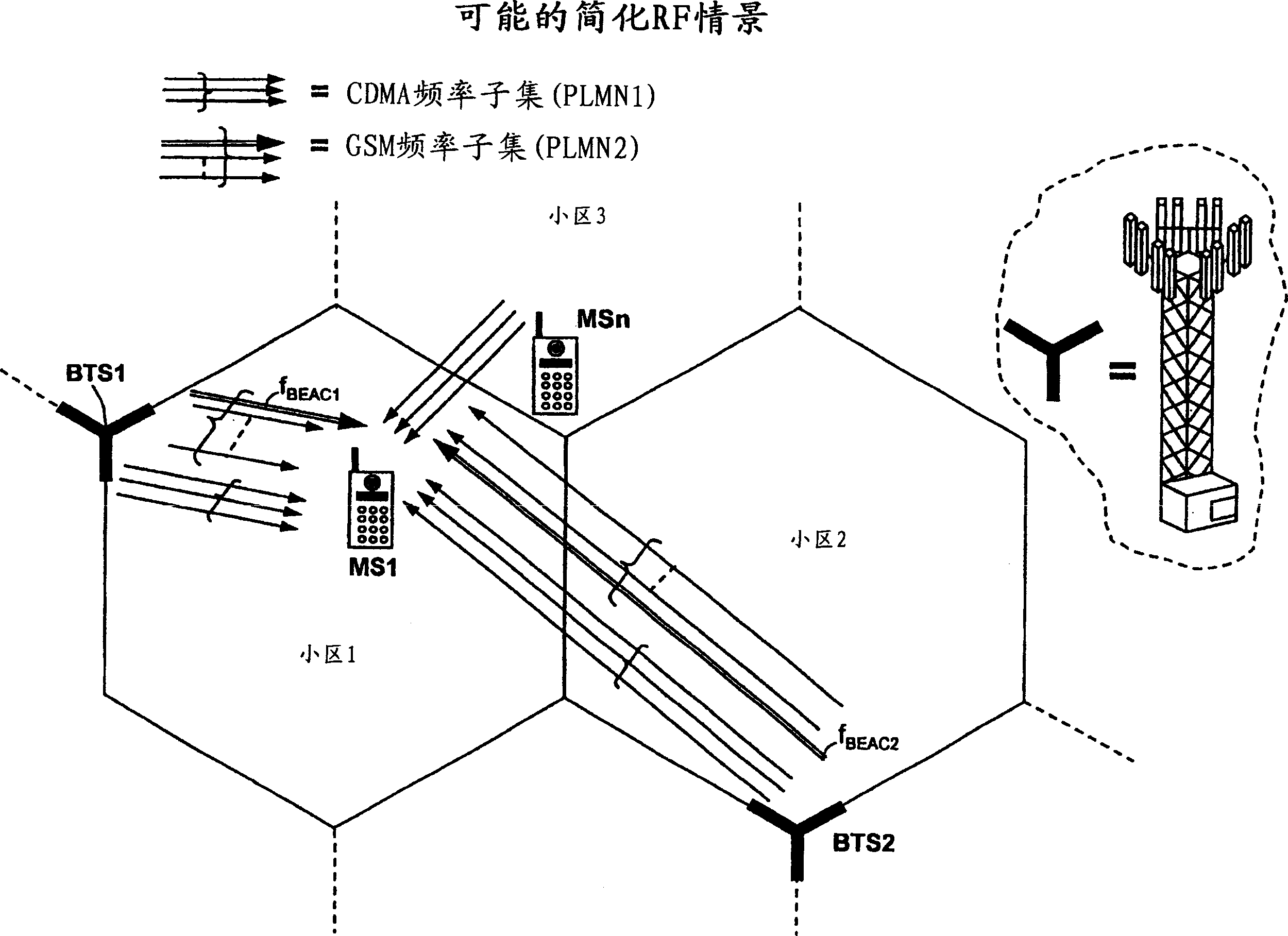
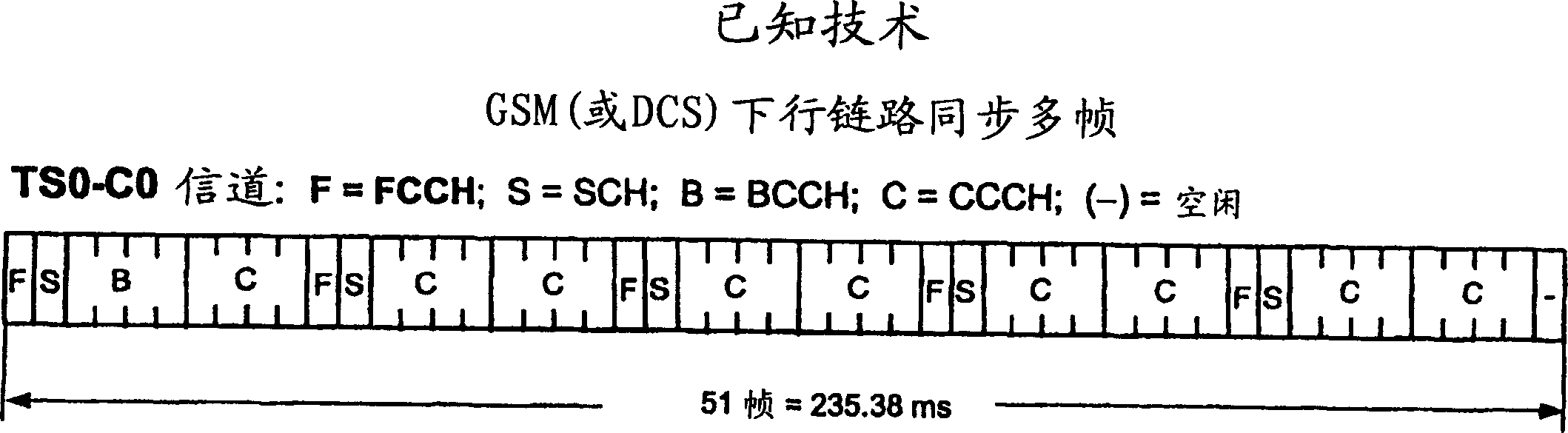
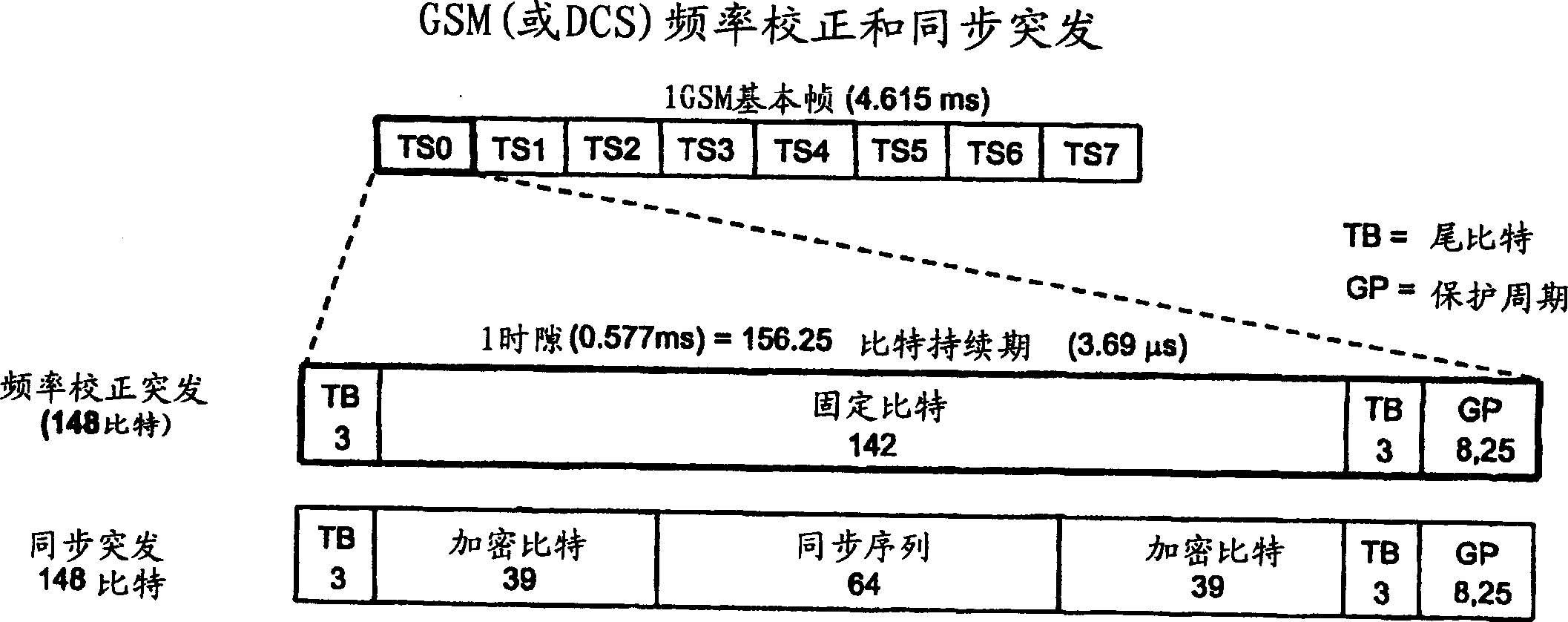
Examples
Embodiment Construction
[0057] already discussed figure 1 to 6. Fig. 7 schematically shows, without limitation, a possible narrowband architecture of a known art BTS transmitter. The transmitter includes a BSC (Base Station Controller) interface that forwards relevant protocol messages to as many carrier transmitters as there are planned carriers in the cell. Each carrier transmitter consists of at least the following blocks: baseband processor-TX, QPSK modulator, two identical RRC (Root Raised Cosine, Root Raise Cosine) type TX filters with low pass channel frequency band (1.6MHz) , IF oscillator (digital), summer and RF-TX. The Baseband Processor-TX receives protocol messages and processes them according to the specification. In particular it is based on Figure 5 Generates traffic and control transmission frames and multiframes spread over K channels. The QPSK modulator generates in-phase and quadrature-phase I, Q frames, which are filtered by two TX filters. The I, Q filtered frames are dig...
PUM
 Login to View More
 Abstract
Description
Claims
Application Information
 Login to View More