
Information handling system super elastic spring hinge
a technology of information handling and springs, applied in the field of information handling systems, can solve the problems of reducing the size of the housing, reducing the practicability of the housing, and removing materials, and achieve the effects of improving the predictability of compressive force, low spring rate, and constant compression for
- Summary
- Abstract
- Description
- Claims
- Application Information
AI Technical Summary
Benefits of technology
Problems solved by technology
Method used
Image

Examples
Embodiment Construction
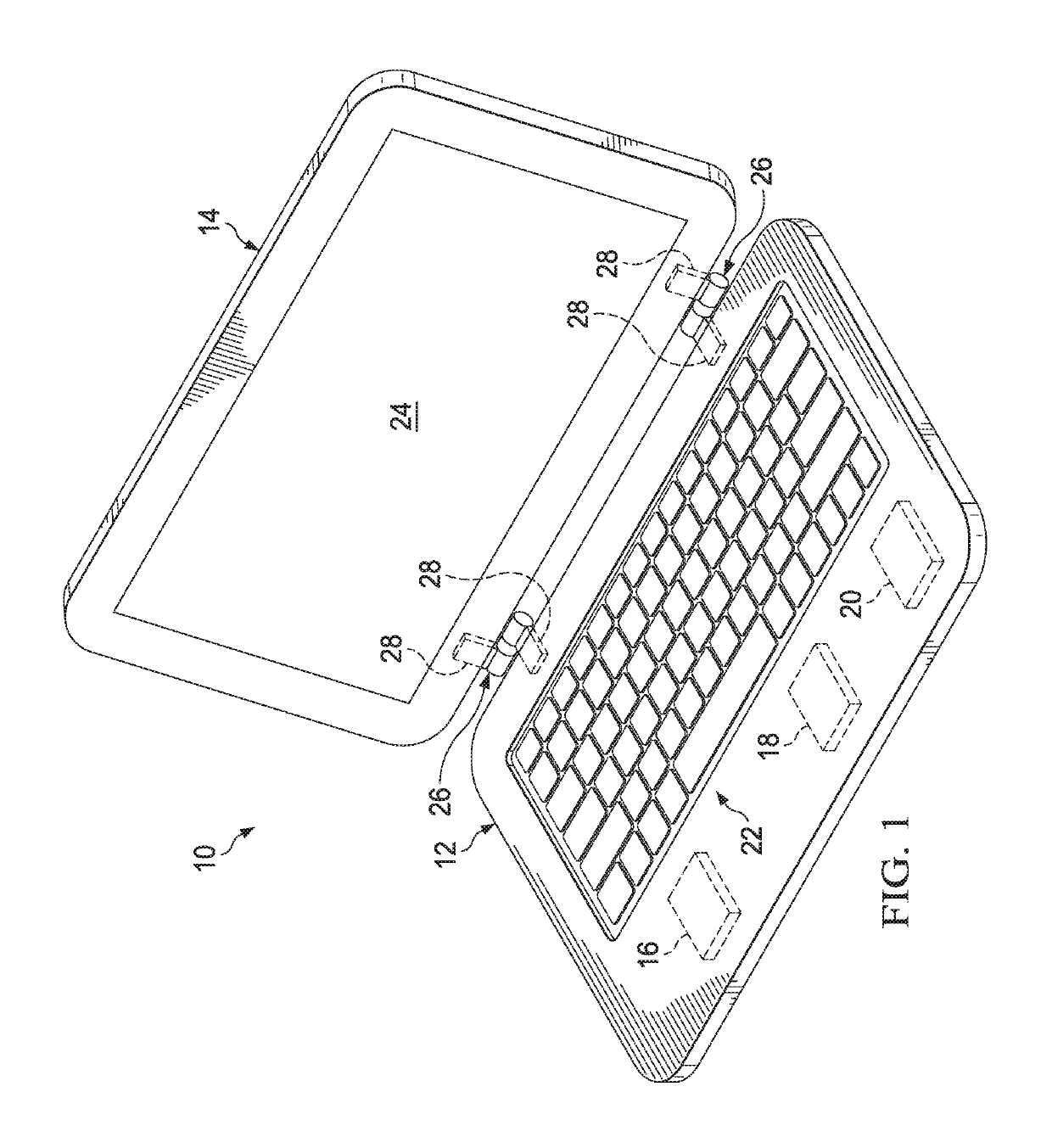
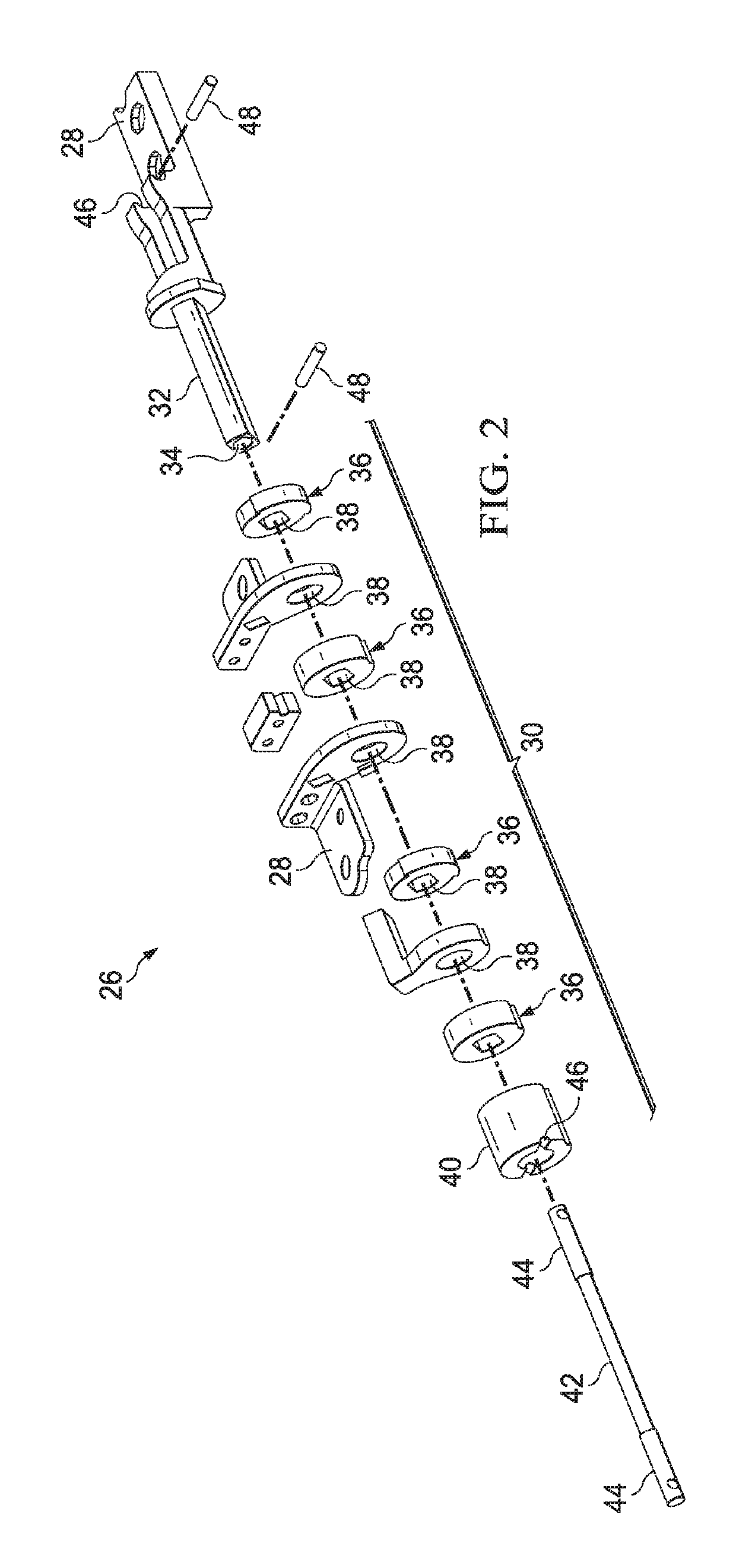
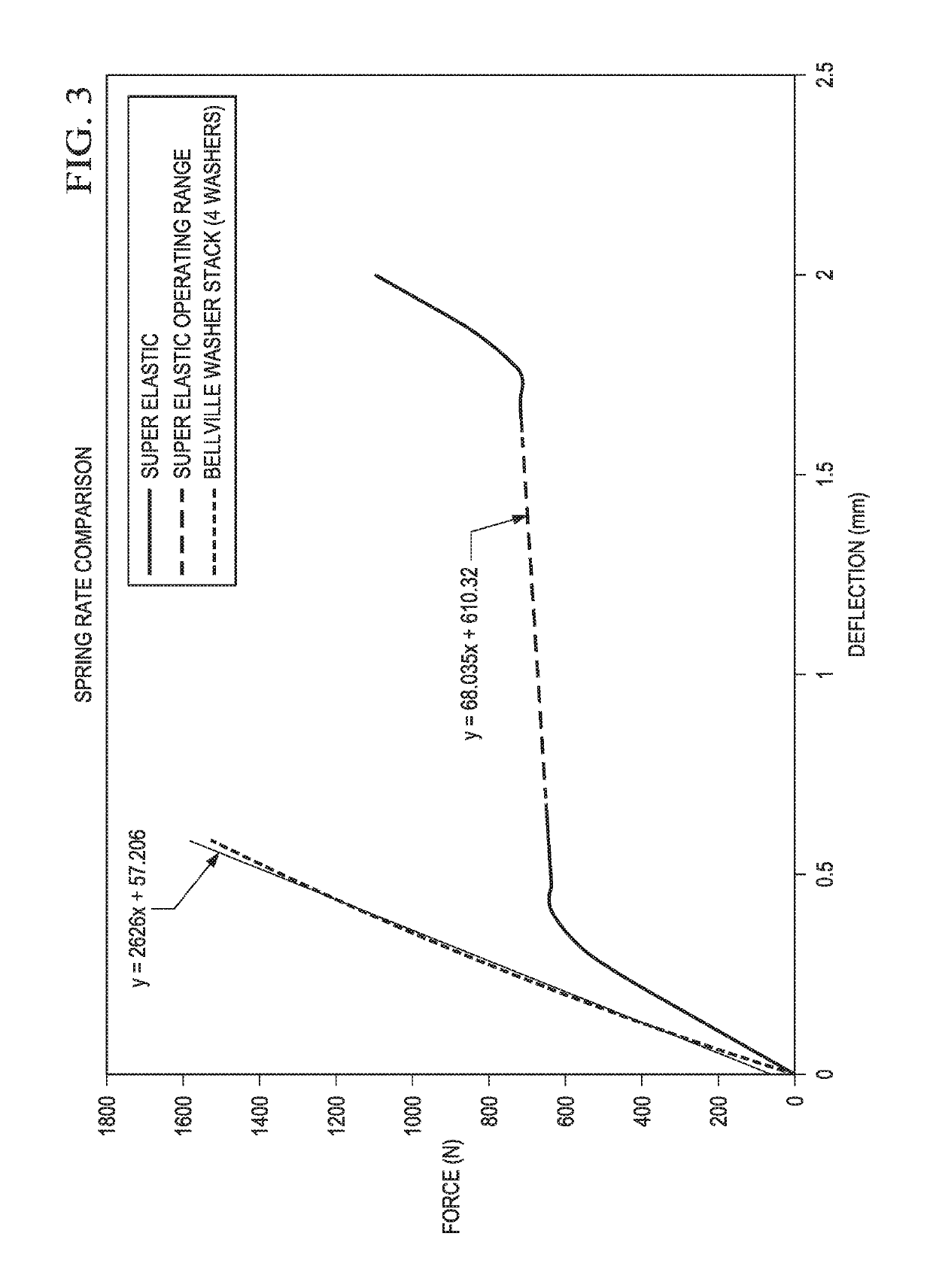
[0016]A hinge compresses frictional elements with a super elastic wire under tension to provide torque responsive to hinge rotation, such as for supporting rotational coupling of information handling system housing portions. For purposes of this disclosure, an information handling system may include any instrumentality or aggregate of instrumentalities operable to compute, classify, process, transmit, receive, retrieve, originate, switch, store, display, manifest, detect, record, reproduce, handle, or utilize any form of information, intelligence, or data for business, scientific, control, or other purposes. For example, an information handling system may be a personal computer, a network storage device, or any other suitable device and may vary in size, shape, performance, functionality, and price. The information handling system may include random access memory (RAM), one or more processing resources such as a central processing unit (CPU) or hardware or software control logic, RO...
PUM
 Login to View More
 Abstract
Description
Claims
Application Information
 Login to View More