Check patentability & draft patents in minutes with Patsnap Eureka AI!

System for data storage and retrieval

a data storage and retrieval technology, applied in the field of information management and exchange systems for the throughlife management of complex assets, can solve the problems of proliferation of errors, difficult task of supporting and maintaining a complex product (‘asset’), and lack of appropriate access to information created

Active Publication Date: 2021-09-14
BAE SYSTEMS PLC
View PDF30 Cites 1 Cited by
  • Summary
  • Abstract
  • Description
  • Claims
  • Application Information

AI Technical Summary

Benefits of technology

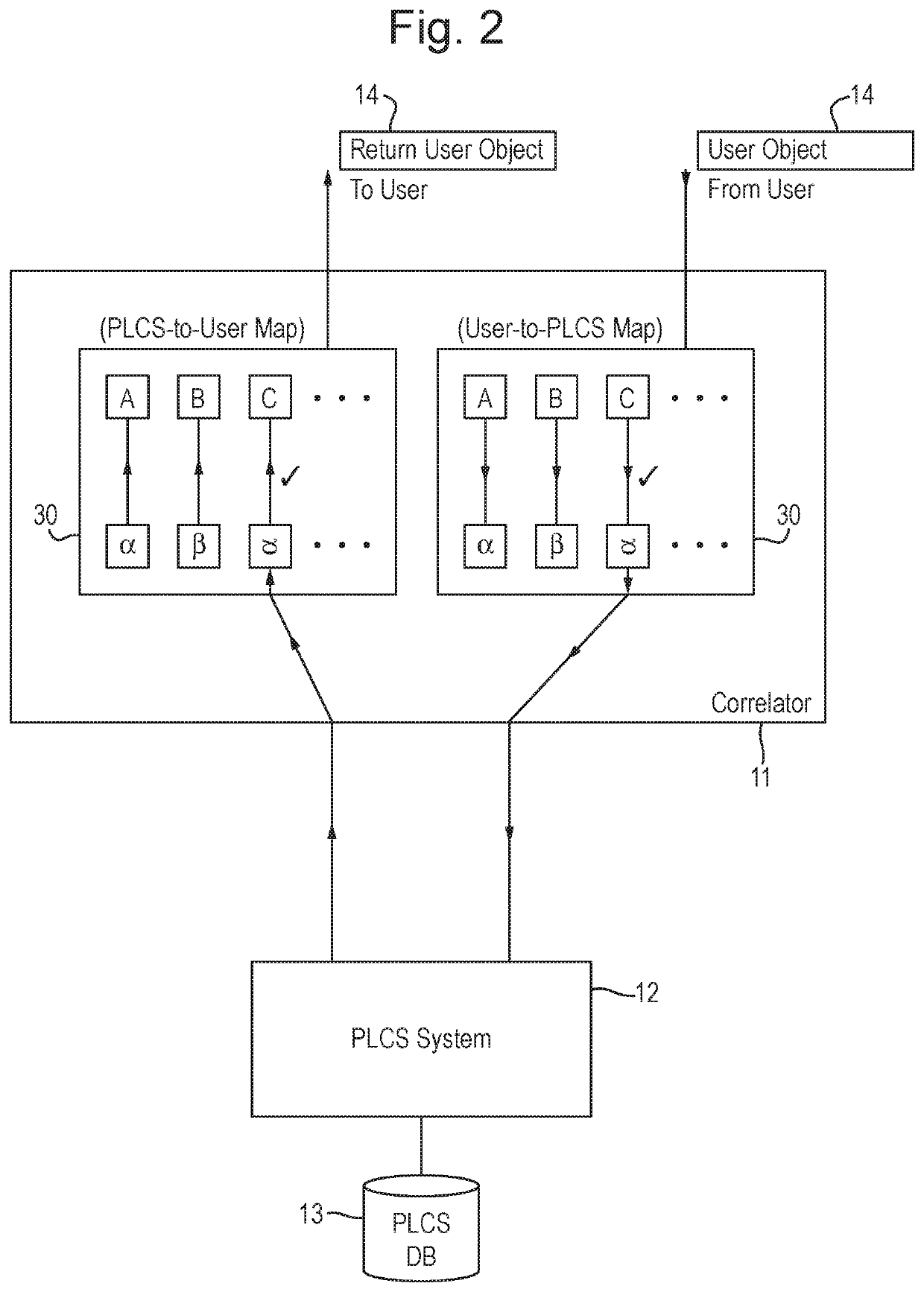
[0004]At its most general, a concept of the invention is the means of providing a common database of optimal data / information (e.g. production, status and / or maintenance data) about a physical asset (e.g. vehicle, vessel, machine, product / item) gleaned / learned from data relating to the asset submitted over a period of time by multiple separate users. Each user may employ a different respective (local) schema, terminology or naming conventions relating to the self same asset. Those disparate users are able to interrogate and / or update the common database using their respective (local) schema, terminology or naming conventions. Accordingly, through a period of time, preferably its lifetime, multiple disparate users may use the common database regarding a shared asset, without being required to know or use the database schema of the common database, and the content of the database is optimised by selecting optimal data from amongst asset data submitted by the multiple users. The optimal data may preferably be optimal in the sense of being: more accurate or extensive in information content numerically and / or textually; expressed in a manner compliant with predetermined or accepted terminology, schema or naming convention; containing fewer or no errors / typos (numerical and / or textual).
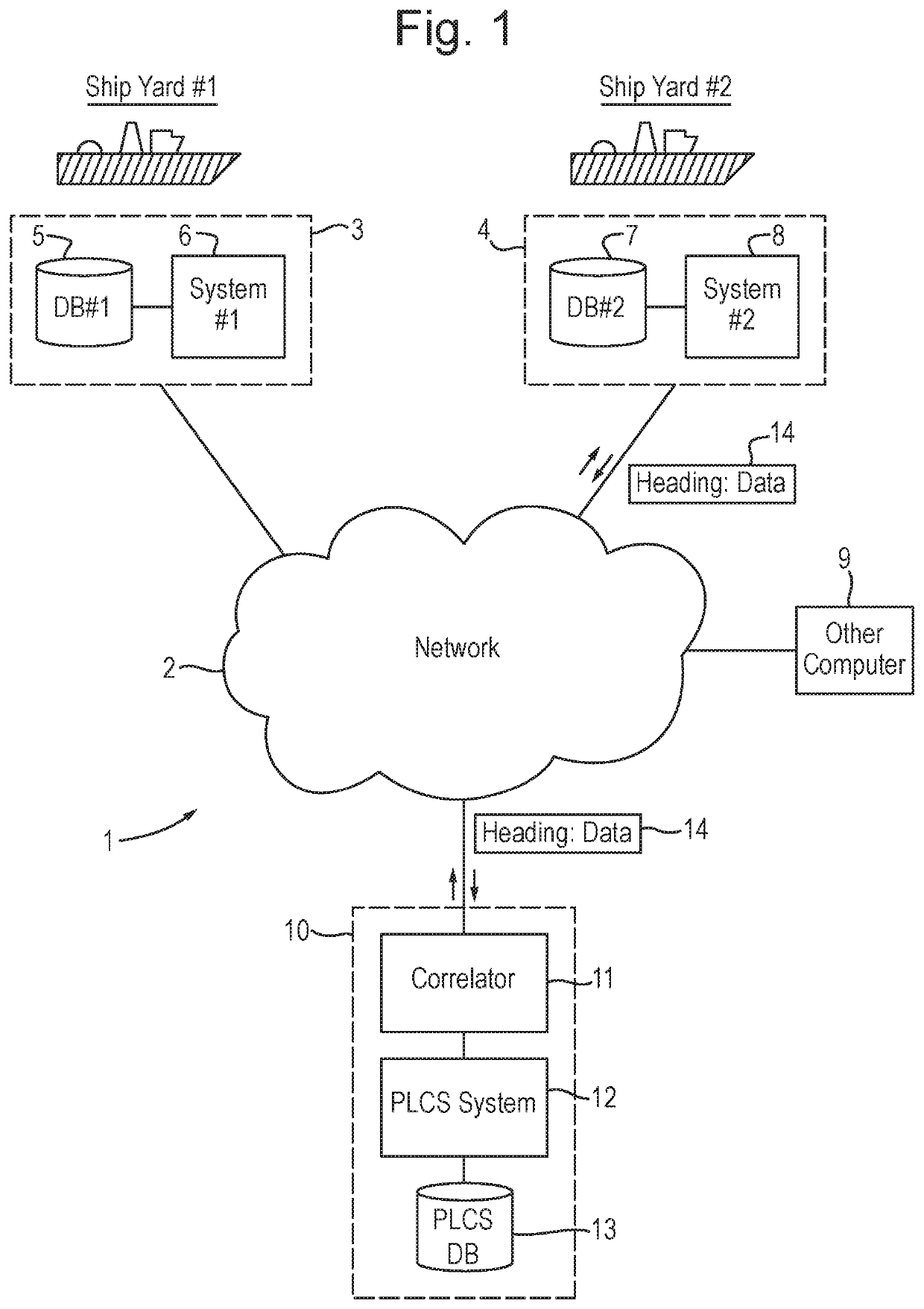
[0005]Information about an asset will, over time, typically be created in many different locations using different local IT systems, databases and / or users, each potentially using bespoke authoring tools and each potentially employing different schema, terminology and naming conventions relating to the self same asset. The invention allows different, disparate databases, and the users, to interact with (e.g. update, interrogate etc.) the common database each using a different respective (local), non-common database schema, naming convention or terminology. In this way, effective and useful access to information about the asset may be provided to different, disparate IT systems or databases, and the users of them. The invention allows the asset information to be consolidated while enabling direct access by disparate IT systems employing their disparate terminology and naming conventions.
[0017]The computer or computer network system may select, for each said entity, from amongst the attribute data the optimal attribute data thereof. The optimal data may preferably be determined to be optimal according to a predetermined selection criterion implemented by a selection algorithm. The algorithm may determine a data item as being more optimal than another in the sense of being: more accurate or extensive in information content numerically and / or textually; expressed in a manner compliant with predetermined or accepted terminology, schema or naming convention; containing fewer or no errors / typos (numerical and / or textual). The computer or computer network system may map the field headers of the master data exchange packet to corresponding field headers of the PLCS database schema. The computer or computer network system may load the optimal attribute data of the master data exchange packet into the PLCS database according to the mapped PLCS field headers.
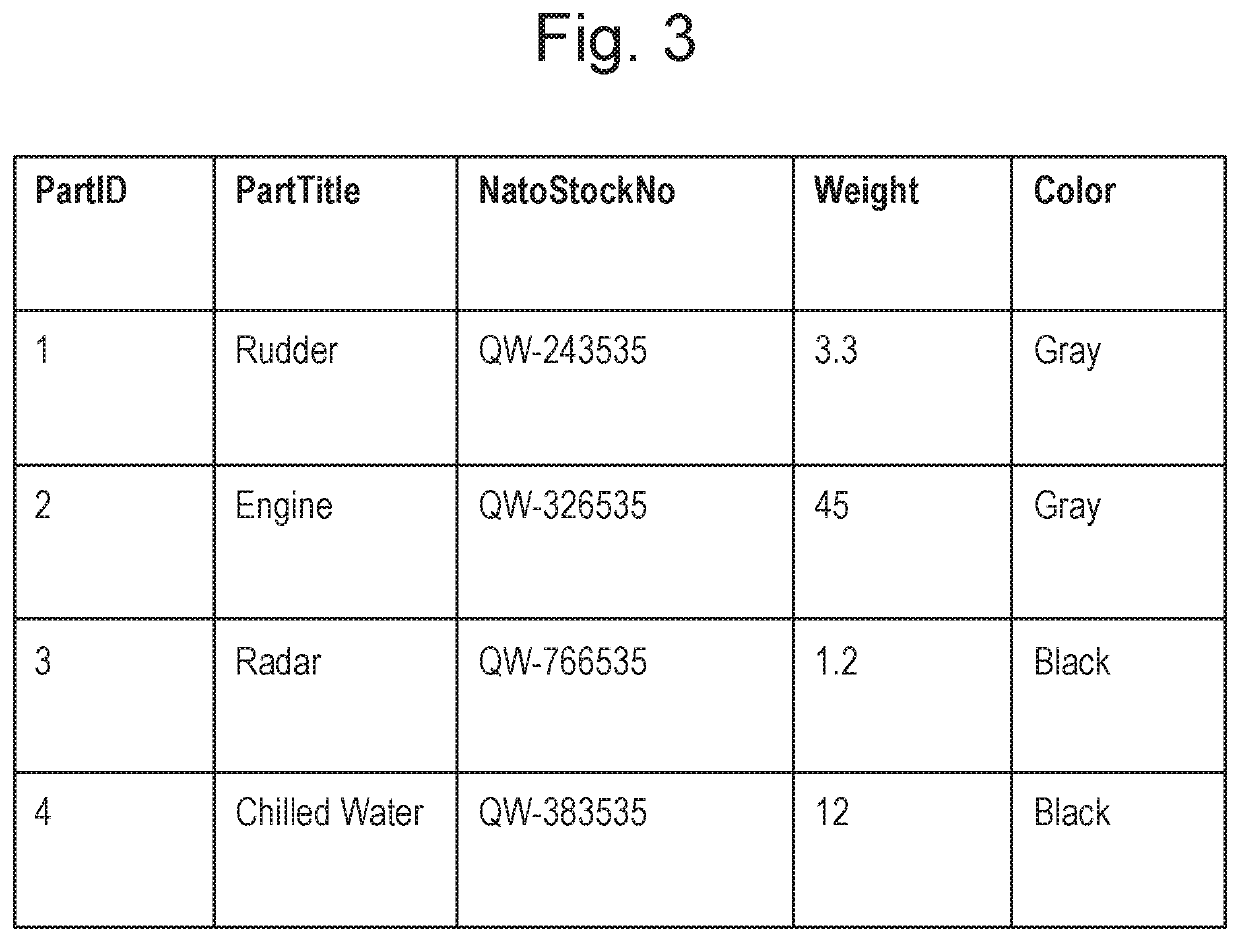
[0022]The logical table may be defined by, or in accordance with, a so-called Entity-Relationship (ER) Logical Database Model. A relational model defines rules for organizing data items, adhered to by the database management system implementing it. In this way, the invention may record real-world scenarios into a database model, defining entities, their entity data, and their attribute data. This allows relationships among entities to be identified, encoded and accessed more efficiently in the database. The logical association among entities is referred to in the art as a ‘relationship’. Relationships between entities may be mapped in various ways, as would be readily apparent to the skilled person. The provision of a logical table according to a so-called Entity-Relationship (ER) Logical Database Model, enables this in preferred aspects of the invention. The logical table, and the data stored within it, may provide a so-called ‘relation’ table for a relational database. Each row in the relation table may represent a particular entity, and each column may represent an attribute that is shared over all entities represented in that table.

Problems solved by technology

Effectively managing all of the information related to production data and maintenance process data needed to produce, and then support and maintain a complex product (‘asset’) is a difficult task.
A significant problem arises because, typically, any one of the potentially many participants involved in such processes, do not have appropriate access to information created by any of the other participants.
As a result, information which already exists either has to be re-generated, re-formatted or re-entered manually with a proliferation of errors over time, or managers are forced to make decisions based on incomplete or inaccurate information.
The impact of information errors and omissions add heavy costs and time delays to manufacturing and maintenance processes.

Method used

the structure of the environmentally friendly knitted fabric provided by the present invention; figure 2 Flow chart of the yarn wrapping machine for environmentally friendly knitted fabrics and storage devices; image 3 Is the parameter map of the yarn covering machine
View more

Image

Smart Image Click on the blue labels to locate them in the text.
Viewing Examples
Smart Image
  • System for data storage and retrieval
  • System for data storage and retrieval
  • System for data storage and retrieval

Examples

Experimental program
Comparison scheme
Effect test

Embodiment Construction

[0080]In the drawings, like items are assigned like reference symbols.

[0081]FIG. 1 schematically illustrates a networked system (1) of databases and computers according to an embodiment of the invention. The system comprises a communications network (2), such as an intranet or the Internet, to which are linked a first shipyard (3) and a second, separate shipyard (4). Both shipyards contain respective ship maintenance records containing data and information concerning the maintenance history for each vessel that has entered the shipyard in question for maintenance. Maintenance records might include, for example, a service history containing information such dates when a vessel entered the shipyard, the identity of the vessel, the work performed on the vessel by the shipyard staff, reports of shipyard staff concerning outcomes / assessments of the vessel and / or work done on the vessel by them, components within the vessel replaced whilst in the shipyard, or identified as requiring repla...

the structure of the environmentally friendly knitted fabric provided by the present invention; figure 2 Flow chart of the yarn wrapping machine for environmentally friendly knitted fabrics and storage devices; image 3 Is the parameter map of the yarn covering machine
Login to View More

PUM

No PUM Login to View More

Abstract

A data storage and retrieval system for a computer memory for maintaining a database for product life cycle support (PLCS database). A computer system receives data exchange packets comprising data fields and populated with data according to different respective database schema and selects optimal data from amongst the packets. A master data exchange packet is formed comprising common field headers and the optimal data in data fields of the master data exchange packet. The system maps the common field headers to corresponding field headers of the PLCS database schema, and loads the optimal data of the master data exchange packet into the PLCS database according to the mapped PLCS field headers.

Description

FIELD OF THE INVENTION[0001]The invention relates to a system for improved data storage and retrieval, such as e.g. database systems and methods for through-life management of complex assets. In particular, though not exclusively, the invention relates to information management and exchange systems for through-life management of complex assets such as naval vessels / vehicles, or the like.BACKGROUND[0002]Effectively managing all of the information related to production data and maintenance process data needed to produce, and then support and maintain a complex product (‘asset’) is a difficult task. A significant problem arises because, typically, any one of the potentially many participants involved in such processes, do not have appropriate access to information created by any of the other participants. As a result, information which already exists either has to be re-generated, re-formatted or re-entered manually with a proliferation of errors over time, or managers are forced to ma...

Claims

the structure of the environmentally friendly knitted fabric provided by the present invention; figure 2 Flow chart of the yarn wrapping machine for environmentally friendly knitted fabrics and storage devices; image 3 Is the parameter map of the yarn covering machine
Login to View More

Application Information

Patent Timeline
no application Login to View More
Patent Type & Authority Patents(United States)
IPC IPC(8): G06F16/00G06F16/21G06F16/22G06F16/25G06Q10/00
CPCG06F16/212G06F16/2282G06F16/258G06Q10/20G06Q10/08G06F16/25
Inventor APPS, STEPHEN DAVIDHOBLEY, ROGER LEONARD
Owner BAE SYSTEMS PLC
Features
  • R&D
  • Intellectual Property
  • Life Sciences
  • Materials
  • Tech Scout
Why Patsnap Eureka
  • Unparalleled Data Quality
  • Higher Quality Content
  • 60% Fewer Hallucinations
Social media
Patsnap Eureka Blog
Learn More