
Method for remodeling bone and related sutures
a technology of relaxin receptor and bone, applied in the field of relaxin receptor, can solve the problems of parturition delay and unclear nature of relaxin receptor, and achieve the effect of blocking the activity of relaxin receptor
- Summary
- Abstract
- Description
- Claims
- Application Information
AI Technical Summary
Benefits of technology
Problems solved by technology
Method used
Image

Examples
example 1
Localization of Relaxin Receptors in Bone and Sutures
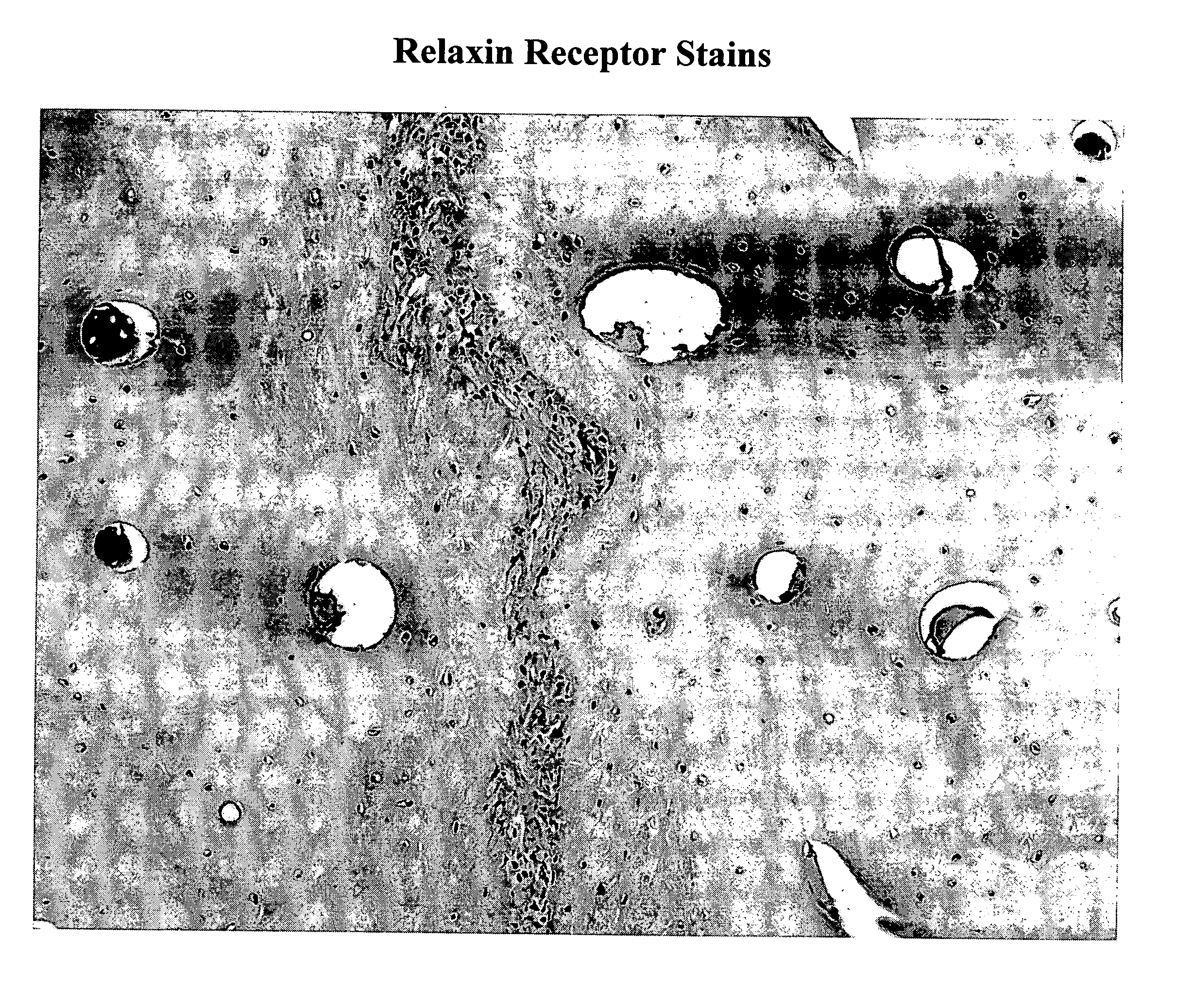
[0086] An antibody to the human relaxin receptor was generated in rabbits and its use has previously been reported (Hsu et al. (2002), supra). This antibody was obtained and used to localize relaxin receptors in rat tissues. In these tissues, relaxin receptors were found in osteocytes, odontoblasts, osteoclasts, and osteoblasts (see FIG. 3). Furthermore, relaxin receptors were found in periodontal ligament (PDL), gingival fibroblasts, and gingival epithelium in rats.
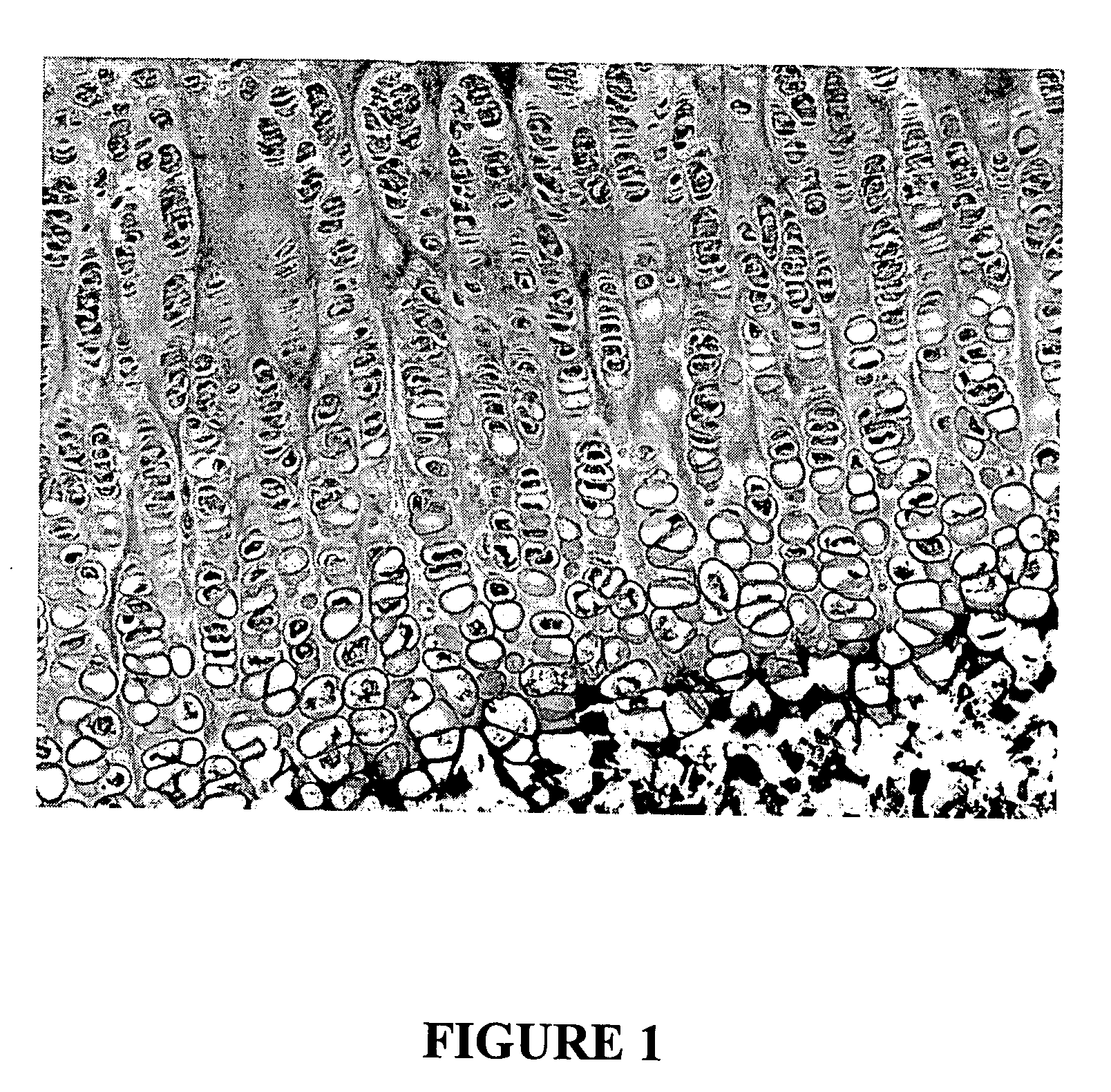
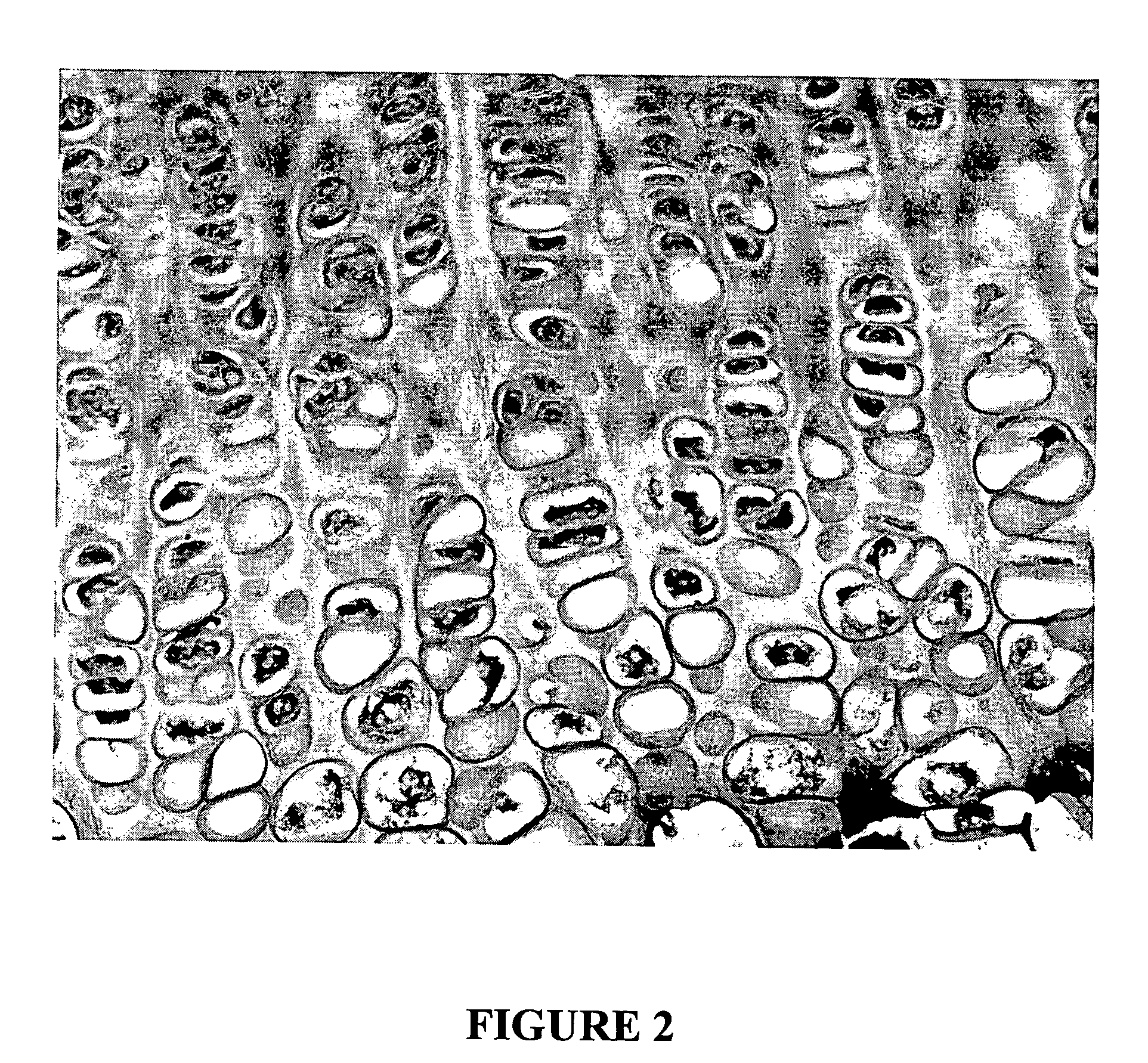
[0087] Additionally, dog growth plate tissues were obtained and stained for the relaxin receptor. Binding of relaxin to relaxin receptors was observed in chondrocytes of the growth plate with the most intense staining in the hypertrophic zone where cells are enlarging and storing glycogen (see FIGS. 1 and 2). This represents an area where cells are rapidly growing in size. Relaxin can aid in the initiation of development of chondrocytes, and can further aid in the di...
example 2
Treating Inadequate Height
[0090] We found relaxin binding sites in chondrocytes (supra, see FIGS. 1 and 2) that are in an active stage of multiplying and storing glycogen. This has implications for relaxin binding involved in the growth of long bones (arms and legs) in adolescents. In fact, treatment of inadequate height in humans, particularly children and adolescents, can be achieved by administering relaxin compounds to the afflicted individual. The individual can be treated with relaxin compounds, either by systemic administration for general bone growth or by localized administration for specific bone growth.
example 3
Treating Fractures
[0091] Bone fractures can be treated with relaxin compounds via localized or systemic administration. Notably, relaxin has an effect on fracture repair on multiple levels. Relaxin binds to the recruited osteoblasts and helps to stimulate new bone formation. Relaxin also possesses angiogenic properties in wound healing which are useful for treating bone fractures. Specifically, relaxin stimulates angiogenic factors (VEGF) from wound macrophages that are recruited to the fracture site. Hence, relaxin has a multilevel approach to fracture repair.
PUM
| Property | Measurement | Unit |
|---|---|---|
| Time | aaaaa | aaaaa |
| Height | aaaaa | aaaaa |
| Length | aaaaa | aaaaa |
Abstract
Description
Claims
Application Information
 Login to View More