
Material for promoting skin basement formation
a technology of skin basement membrane and material, which is applied in the direction of prosthesis, peptide/protein ingredients, drug compositions, etc., can solve the problems of unsatisfactory elucidation of the mechanism by which ultraviolet ray photoaging occurs, unsatisfactory elucidation of wrinkle formation mechanism, and no specific means known for promoting the formation of skin basement membrane structur
- Summary
- Abstract
- Description
- Claims
- Application Information
AI Technical Summary
Benefits of technology
Problems solved by technology
Method used
Image

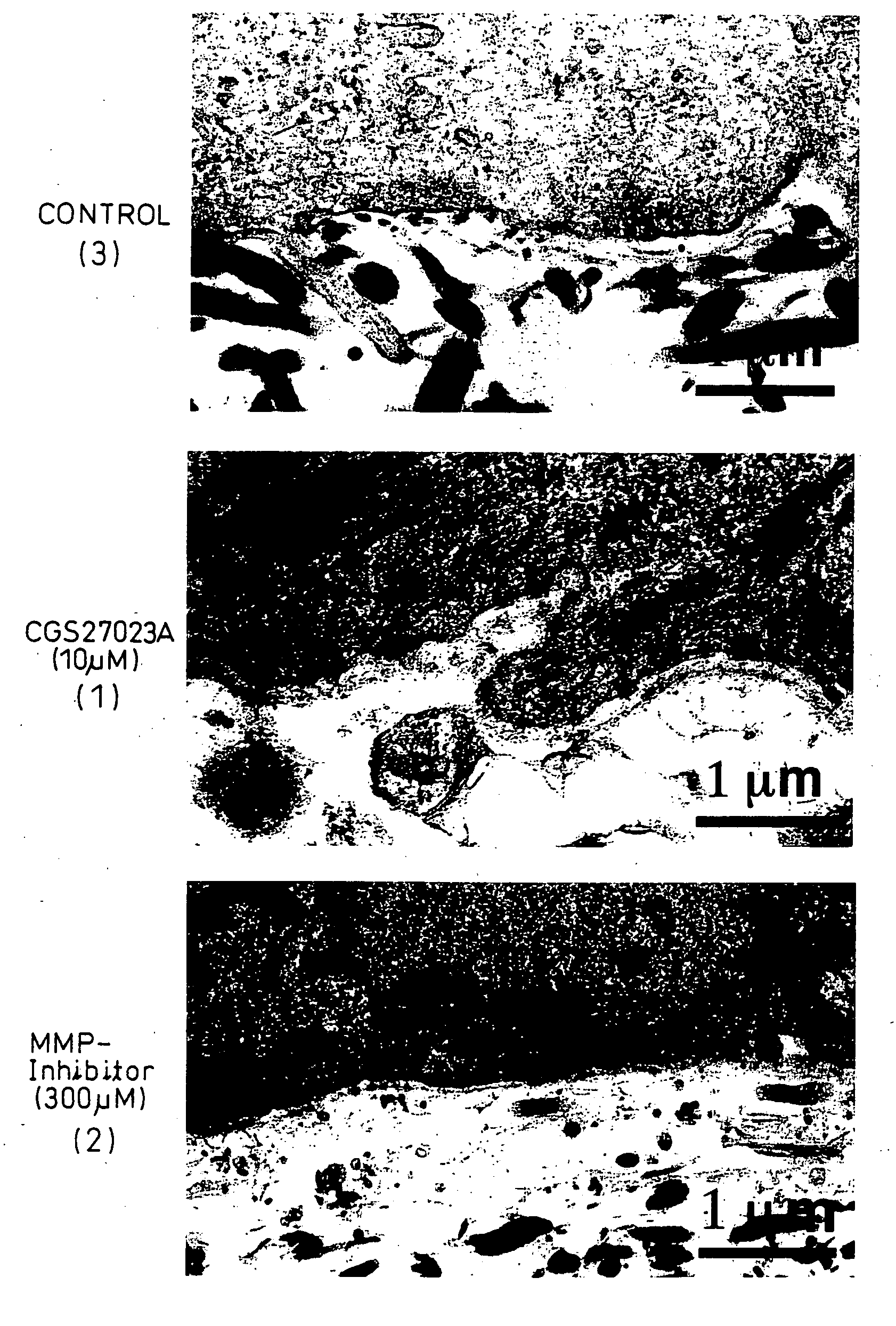
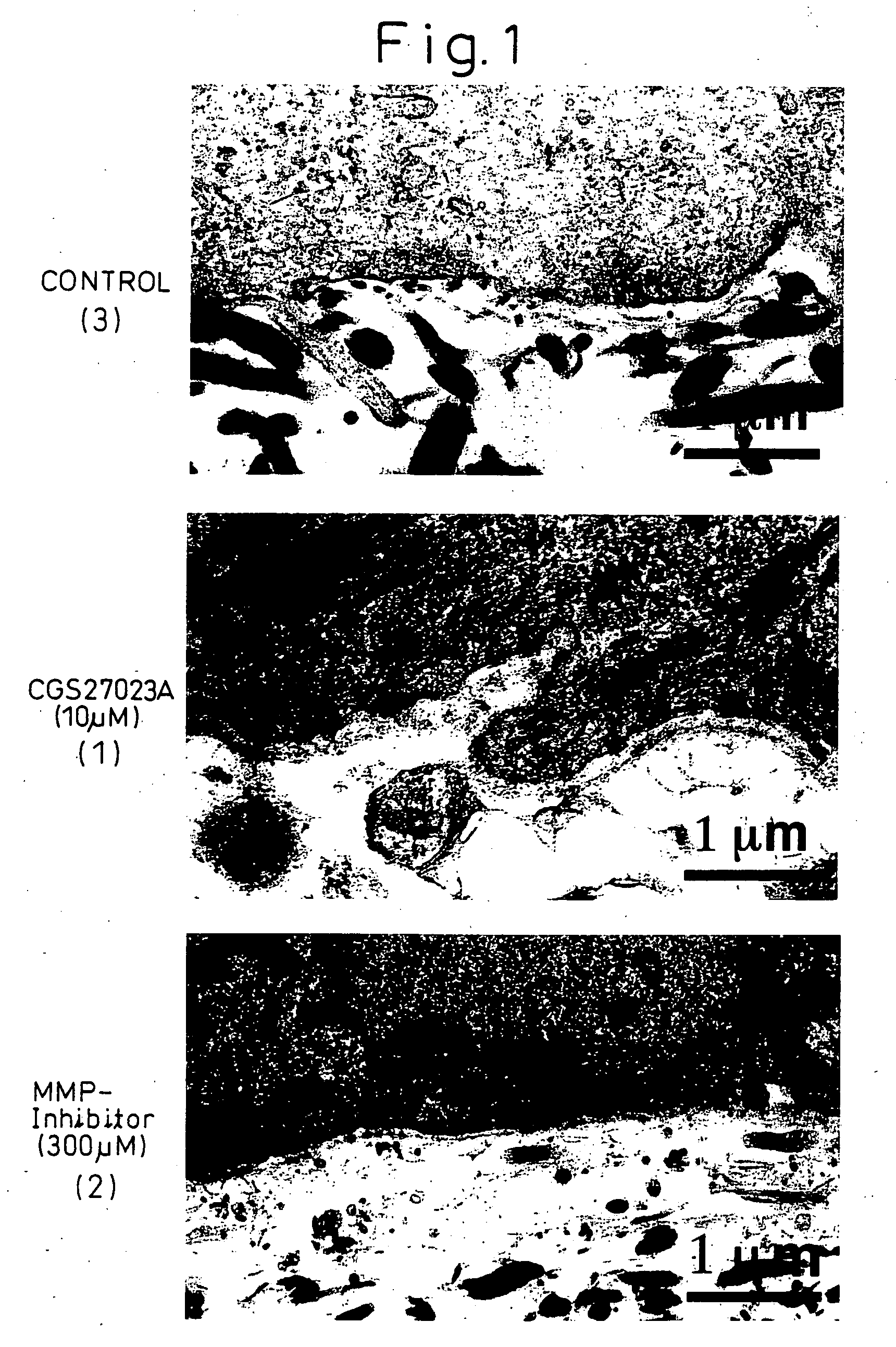
Examples
example 1
Production of Artificial Skin Using Matrix Metalloproteinase Inhibitor
[0078] Collagen gel was obtained by preparing 10 ml of a collagen solution of suspended fibroblasts (0.3 to 1×10⁵ cells / ml) originating in human dermis (product I-AC of Koken Co., Ltd. was used for the collagen) on ice followed by gelling the collagen at 37° C. in a 60 mm Petri dish. Next, the gel was peeled from the walls of the Petri dish and the collagen gel was contracted in a CO2 incubator.
[0079] This contracted collagen gel equivalent to dermis was placed on a metal mesh and a glass ring (inner diameter: 12 mm) was placed over this gel. 0.4 ml of a suspension of epidermal keratinocytes (1×10⁶ / ml) (mixed medium of KGM-DMEM containing 5% fetal calf serum (1:1)) were placed inside the glass ring to prevent leakage of liquid. After adhering keratinocytes in a CO2 incubator overnight, the ring was removed on the following day. The above medium was filled to the boundary of the epidermal layer and culturing was ...
example 2
Production of Artificial Skin Using Both Matrix Metalloproteinase Inhibitor and Matrix Protein Production Promoting
Agent
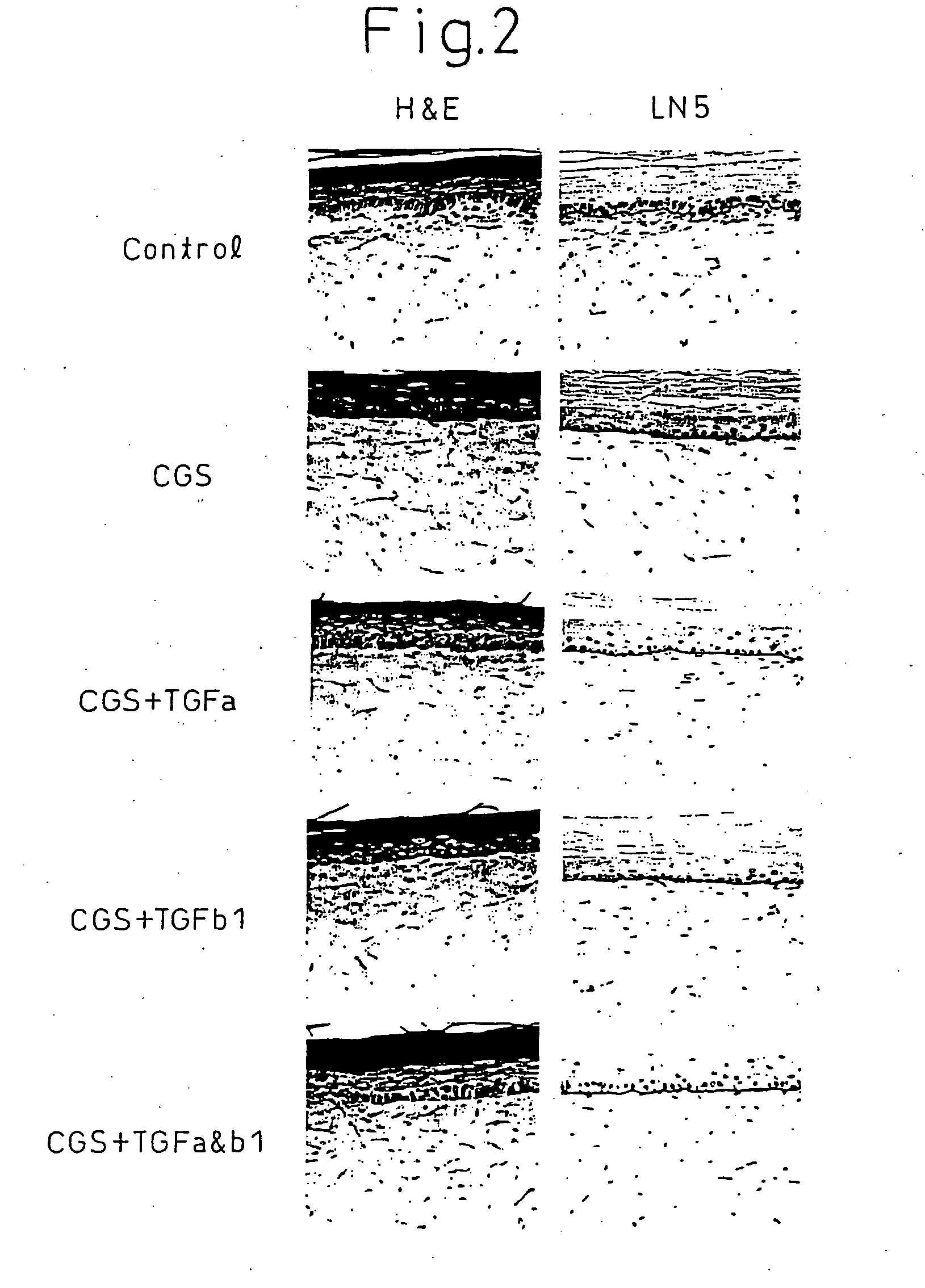
[0084] Although the same method as Example 1 was repeated, the following substances were used as test substances. [0085] (1) 10 μM matrix metalloproteinase inhibitor CGS27023A only; [0086] (2) 10 μM matrix metalloproteinase inhibitor CGS27023A and 10 ng / ml of matrix metalloproteinase protein production promoting agent, Transforming Growth Factor α (TGFa); [0087] (3) 10 μM matrix metalloproteinase inhibitor CGS27023A and 10 ng / ml of matrix protein production promoting agent, Transforming Growth Factor β1 (TGFb1); [0088] (4) 10 μM matrix metalloproteinase inhibitor CGS27023A, 10 ng / ml of matrix protein production promoting agent, Transforming Growth Factor α (TGFa) and 10 ng / ml of Transforming Growth Factor β1 (TGFb1); and [0089] (5) culturing of a control to which none of the above were added.
[0090] The formed artificial skin was stained by hematoxylin-eosin (H ...
example 3
Preparation of Artificial Skin Culture Medium
[0096] Matrix metalloproteinase inhibitor CGS27023A or MMP-inhibitor were added to a concentration of 10 μM to basal medium comprising a 1:1 mixture of KGM (keratinocyte growth medium), typically used to culture epidermic cells, and Dulbecco's Modified Eagle's Medium containing 10% fetal calf serum, typically used to culture fibroblasts. Furthermore, KGM was prepared by adding HEPES (6.7 g / L), NaHCO3 (1.2 g / L), insulin (5 mg / L), transferrin (10 mg / L), hydrocortisone (0.5 mg / L) and phosphorylethanolamine (14.1 mg / L) to MCDB153 medium (10.93 g / L) and adjusting the pH to 7.4 followed by the addition of 20 g of bovine pituitary extract (Far East Pharmaceutical).
PUM
| Property | Measurement | Unit |
|---|---|---|
| Fraction | aaaaa | aaaaa |
| Fraction | aaaaa | aaaaa |
| Fraction | aaaaa | aaaaa |
Abstract
Description
Claims
Application Information
 Login to View More