
Data processor for use in chromatographic analysis
a data processor and chromatographic analysis technology, applied in the direction of separation processes, instruments, nuclear elements, etc., can solve the problems of coarse data sampling pitch at which to sample analysis data, and the analysis time becomes very long, so as to ensure the validity of analysis results, the possibility of data falsification, and the effect of reducing the time of analysis
- Summary
- Abstract
- Description
- Claims
- Application Information
AI Technical Summary
Benefits of technology
Problems solved by technology
Method used
Image

Examples
example
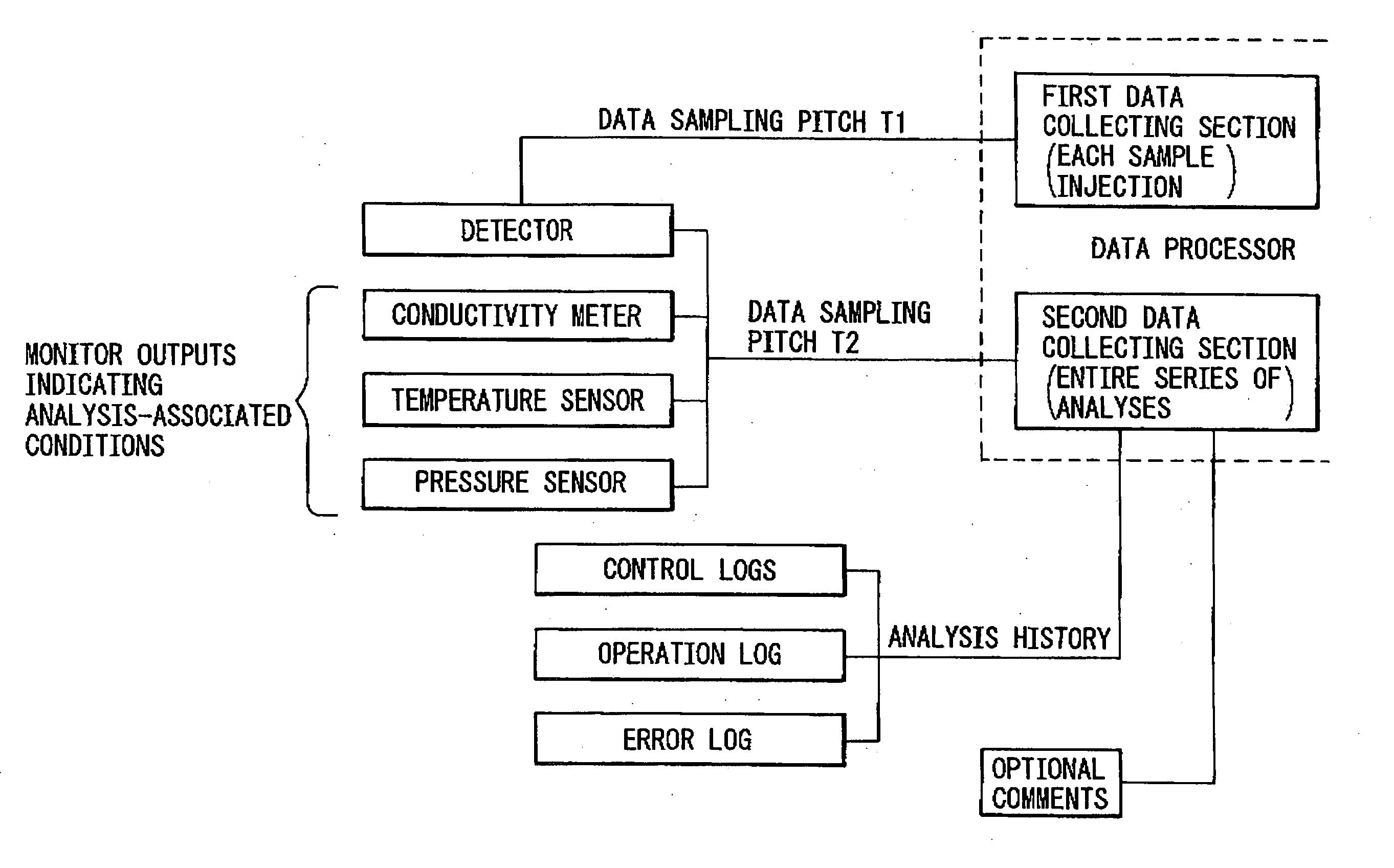
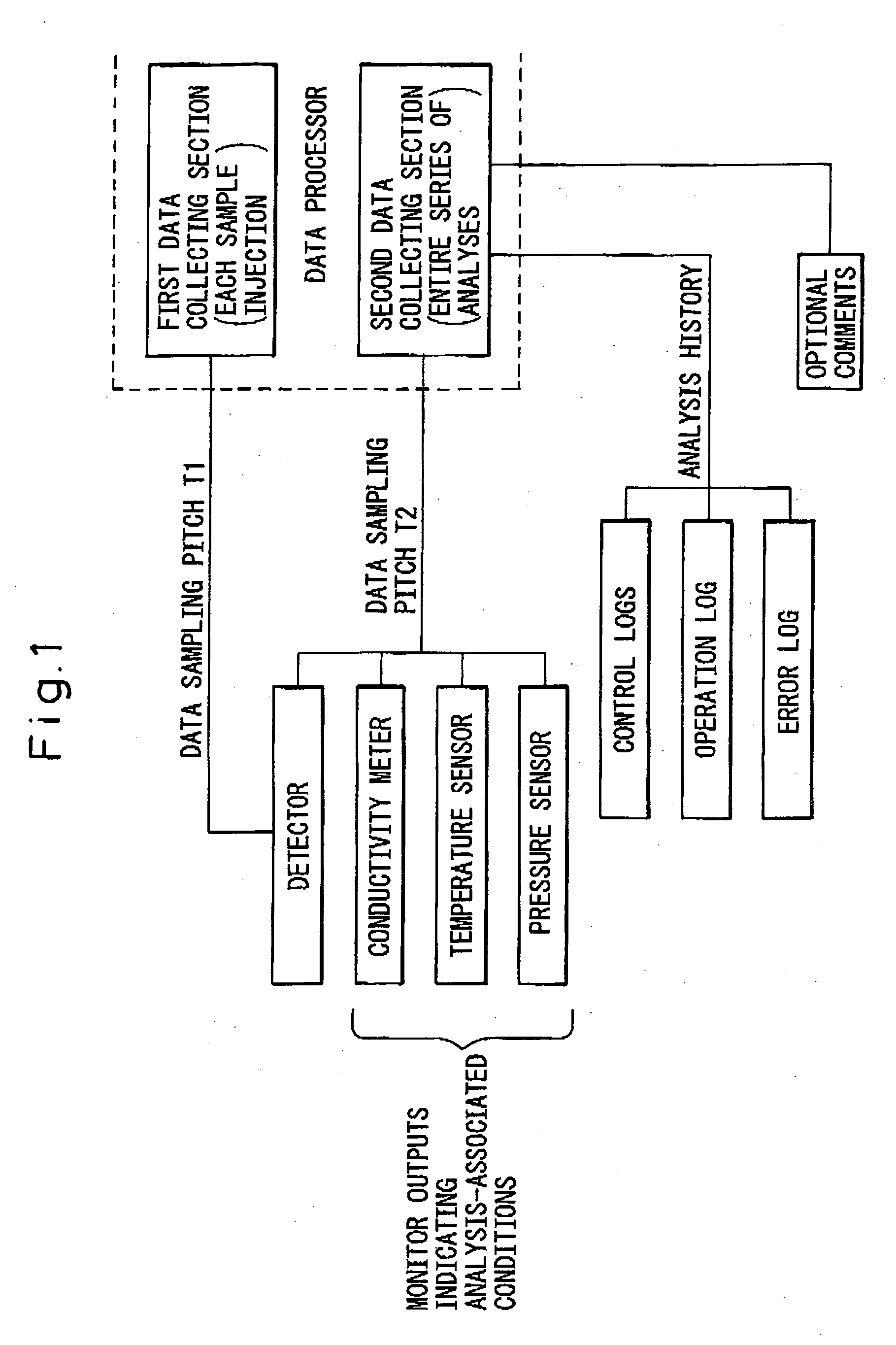
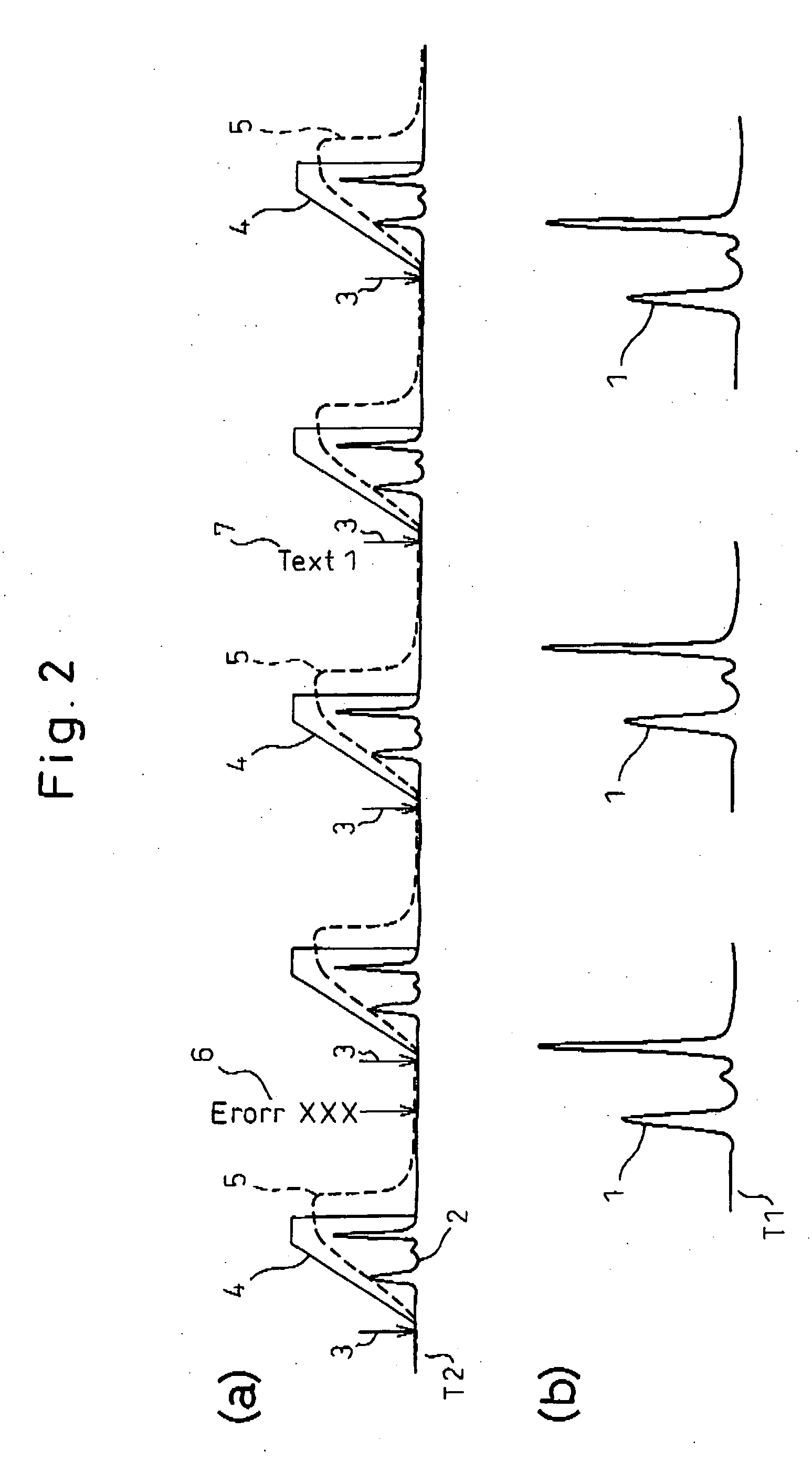
[0025]FIG. 1 is a diagram illustrating the flow of information around the data collecting sections which constitute the characteristic data processor of the present invention. Here, the first data collecting section collects the detector output for each sampling injection at every data sampling pitch T1. On the other hand, the second data collecting section collects and records the detector output throughout a series of analyses from the start to the end of the chromatographic analysis process, and collects and records at every data sampling pitch T2 the output of a conductivity meter installed as a gradient monitor, the output of a temperature sensor installed near it, and the output of a pressure sensor installed in the flow passage near a delivery pump. The second data collecting section also collects and records optional comments and analysis history, such as control logs for sample injection and separation, an operation log recording any changes made to analysis conditions, and...
PUM
| Property | Measurement | Unit |
|---|---|---|
| time | aaaaa | aaaaa |
| pressure | aaaaa | aaaaa |
| flow rate | aaaaa | aaaaa |
Abstract
Description
Claims
Application Information
 Login to View More