

Rendering of high dynamic range images
a high dynamic range and image technology, applied in image enhancement, image analysis, instruments, etc., can solve the problems of unappealing luminance compression and color shift in certain areas of the rendered image, and the traditional techniques of tone mapping used to compress the hdr image are computationally expensive, and achieve the effect of reducing the cost of image rendering, and improving the quality of image rendering
- Summary
- Abstract
- Description
- Claims
- Application Information
AI Technical Summary
Benefits of technology
Problems solved by technology
Method used
Image

Examples
Embodiment Construction
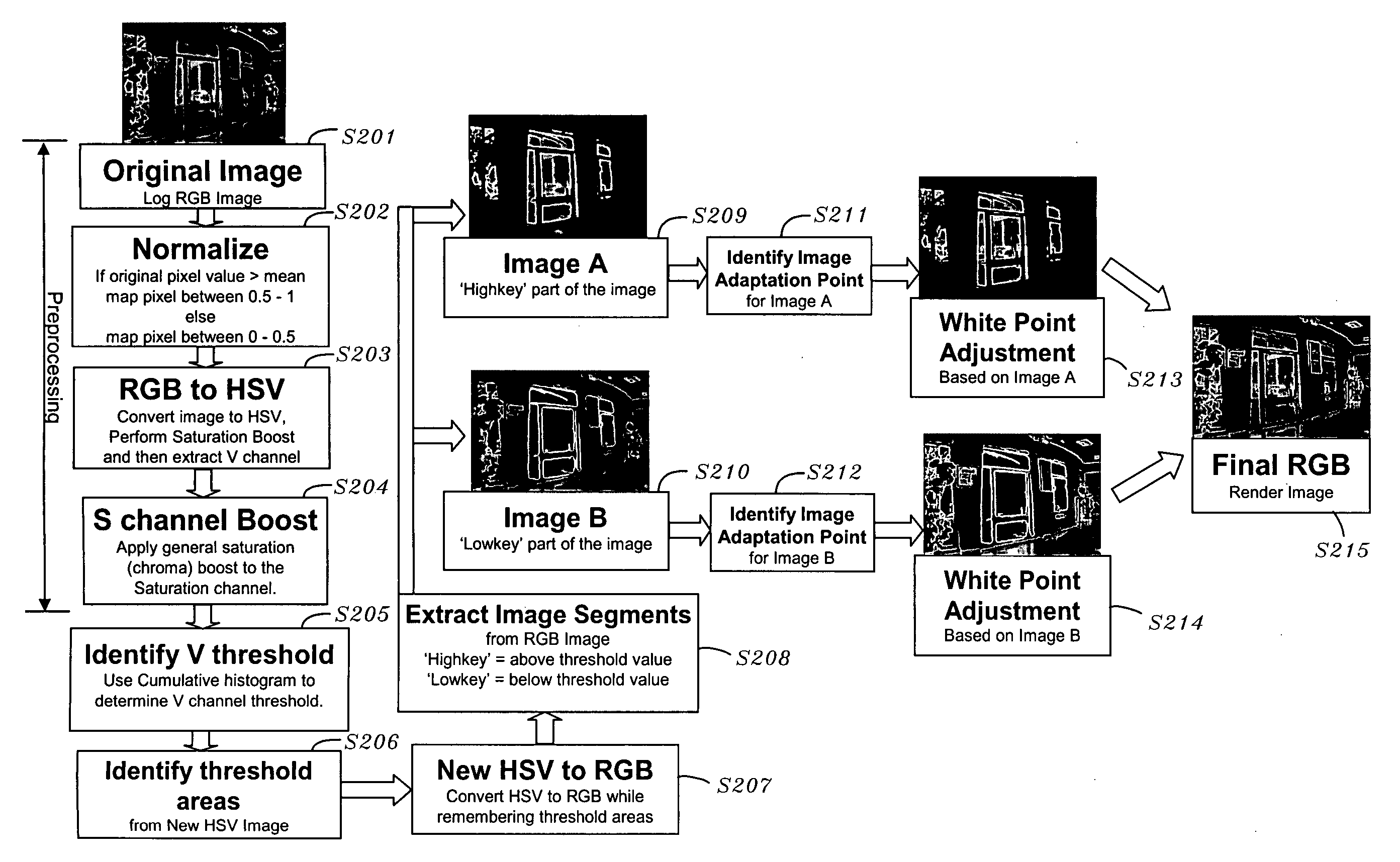
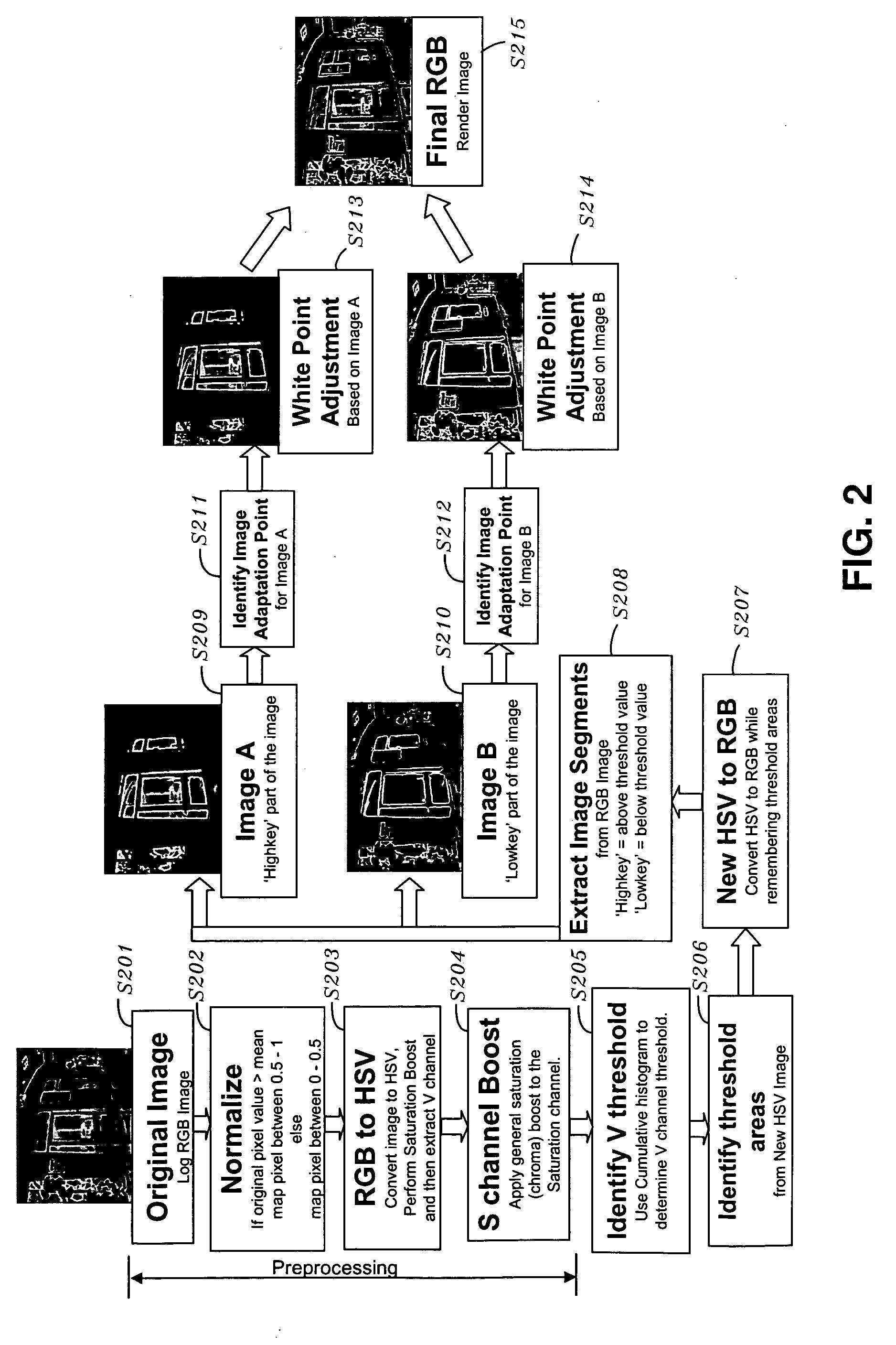
[0024] Embodiments of the present invention are described below with reference to accompanying drawings. These embodiments describe a method of white balance normalization that recognizes that HDR images are often the result of multiple illuminant sources. Each of the multiple illuminant sources provides a visual reference for chromatic and luminance adaptation in the HDR image. In the methods described below, accounting for multiple illuminant sources facilitates more accurate rendering HDR images, particularly with regard to producing appealing global luminance compression and minimizing color shifts.
[0025] The methods described below recognize that a state of multiple adaptations can exist within a single image due to multiple illuminants observable in the scene. For example, a common high dynamic indoor-outdoor scene will have reference to an indoor illuminant, such as a tungsten bulb, as well as an outdoor illuminant, such as daylight. In traditional rendering methods, the use...
PUM
 Login to View More
 Abstract
Description
Claims
Application Information
 Login to View More