
Downhole seismic source
a seismic source and downhole technology, applied in the field of subterranean borehole technology, can solve problems such as energy directed along, and achieve the effects of low energy consumption, simple and inexpensive, and large working volum
- Summary
- Abstract
- Description
- Claims
- Application Information
AI Technical Summary
Benefits of technology
Problems solved by technology
Method used
Image

Examples
Embodiment Construction
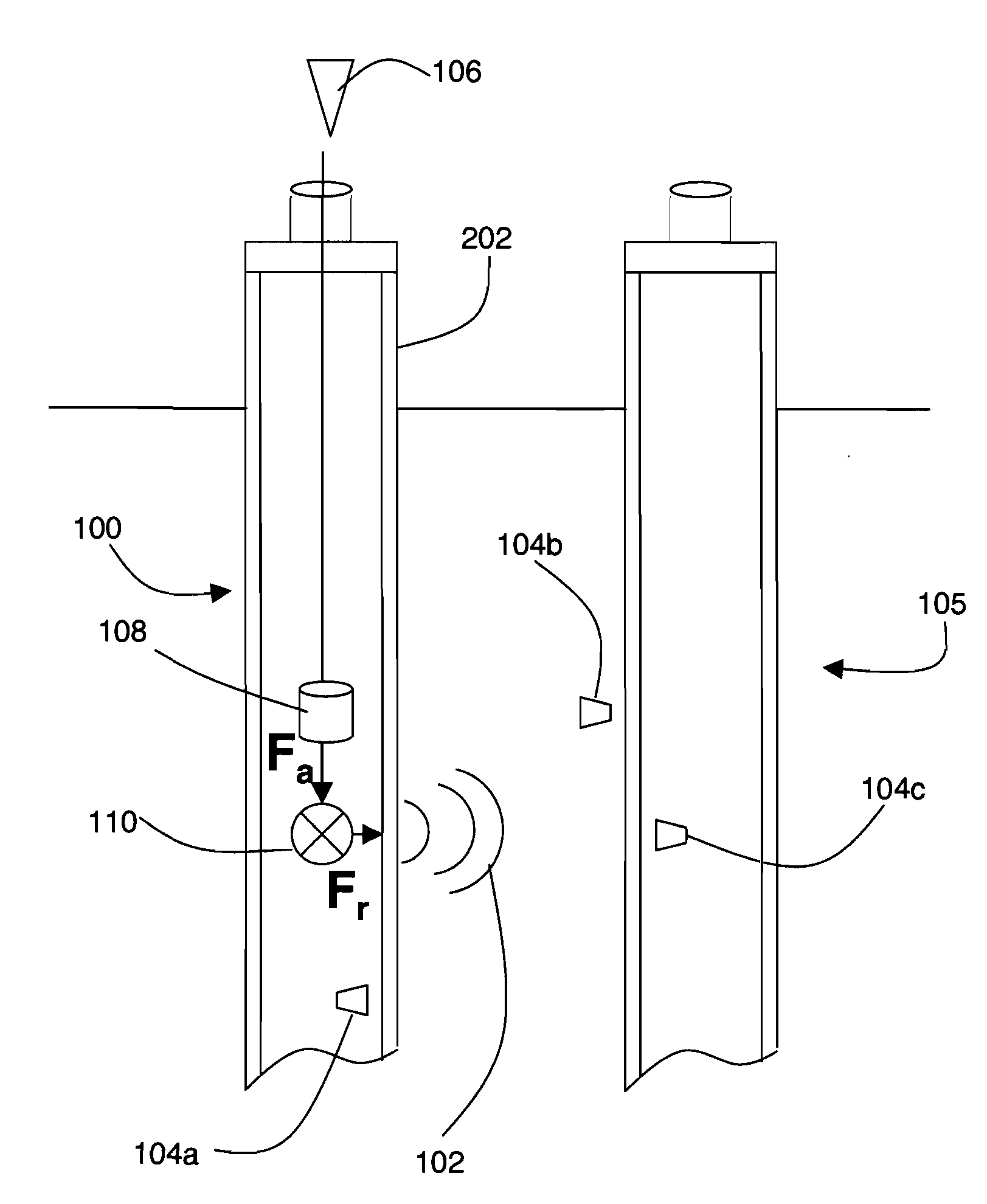
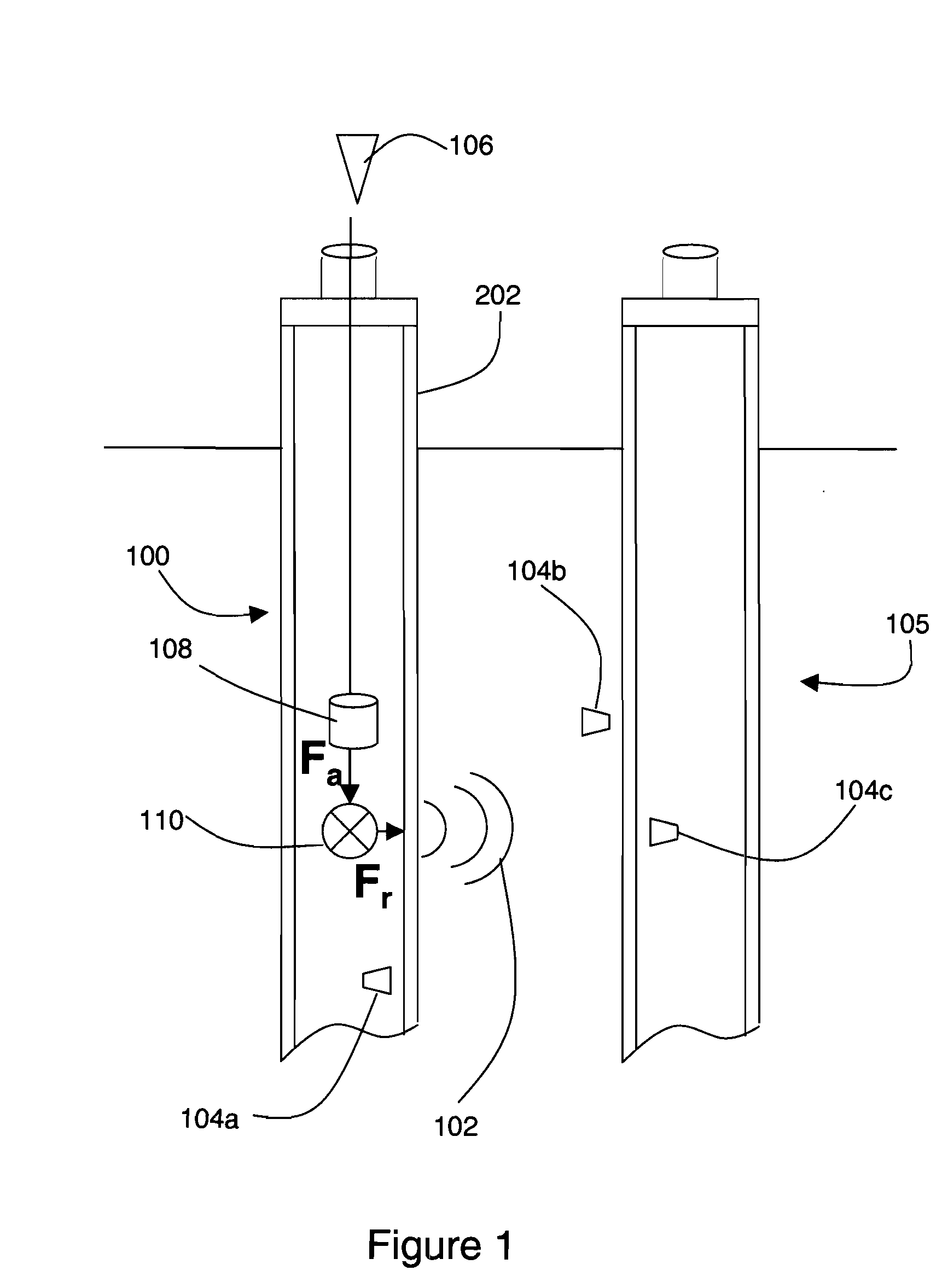
[0011]FIG. 1 illustrates a schematic representation of a downhole seismic source for facilitating data collection. The seismic source is utilized in a borehole (100) and is operable to produce elastodynamic waves (102) which can be measured by sensors (104a-104c). In particular, P, S, SH, and SV type waves can be generated. The sensors may be located within the borehole itself, e.g., sensor (104a), in a nearby borehole (105), e.g., sensor (104c), and in the formation proximate to the borehole, e.g., sensor (104b). Based on the measurements obtained by the sensors, it is possible to detect, for example, the presence of fractures, stresses, and sedimentation boundaries in the formation. Detection of such conditions can be utilized to enhance recovery of oil and gas.
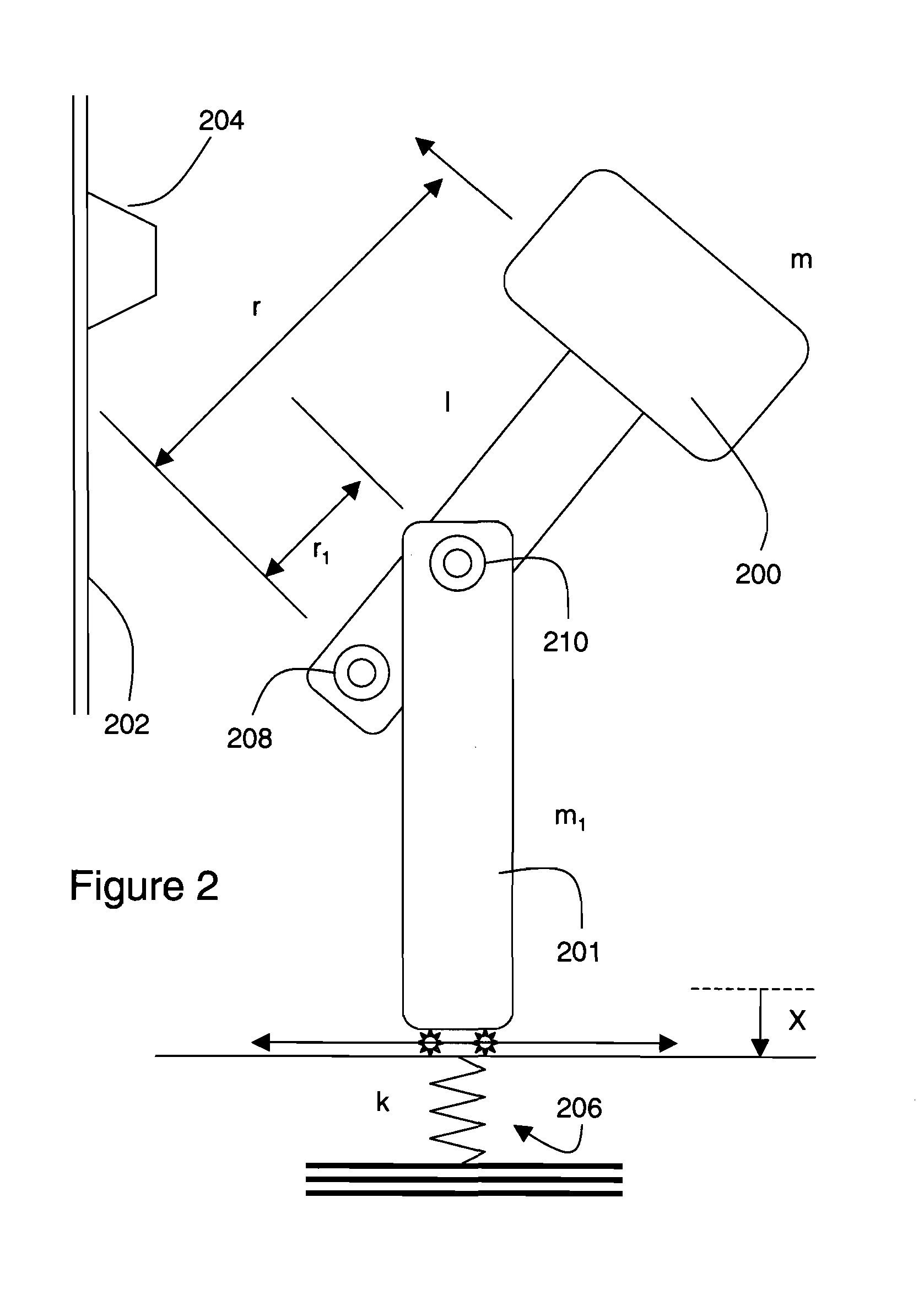
[0012]The seismic source includes an energy source component (106), an energy storage component (108), and a force translator and amplification component (110). The energy source component (106) may be located either above ...
PUM
 Login to View More
 Abstract
Description
Claims
Application Information
 Login to View More