
Adaptive Soft Buttons for a Vehicle User Interface
a technology of user interface and soft button, applied in the field of user interface, can solve the problems of unsafe driving habits, poorly designed interfaces, user frustration and dissatisfaction, etc., and achieve the effect of improving the user's ability to successfully interact with the interface, increasing the tap duration of touch-sensitive soft button, and expanding the touch-sensitiv
- Summary
- Abstract
- Description
- Claims
- Application Information
AI Technical Summary
Benefits of technology
Problems solved by technology
Method used
Image

Examples
Embodiment Construction
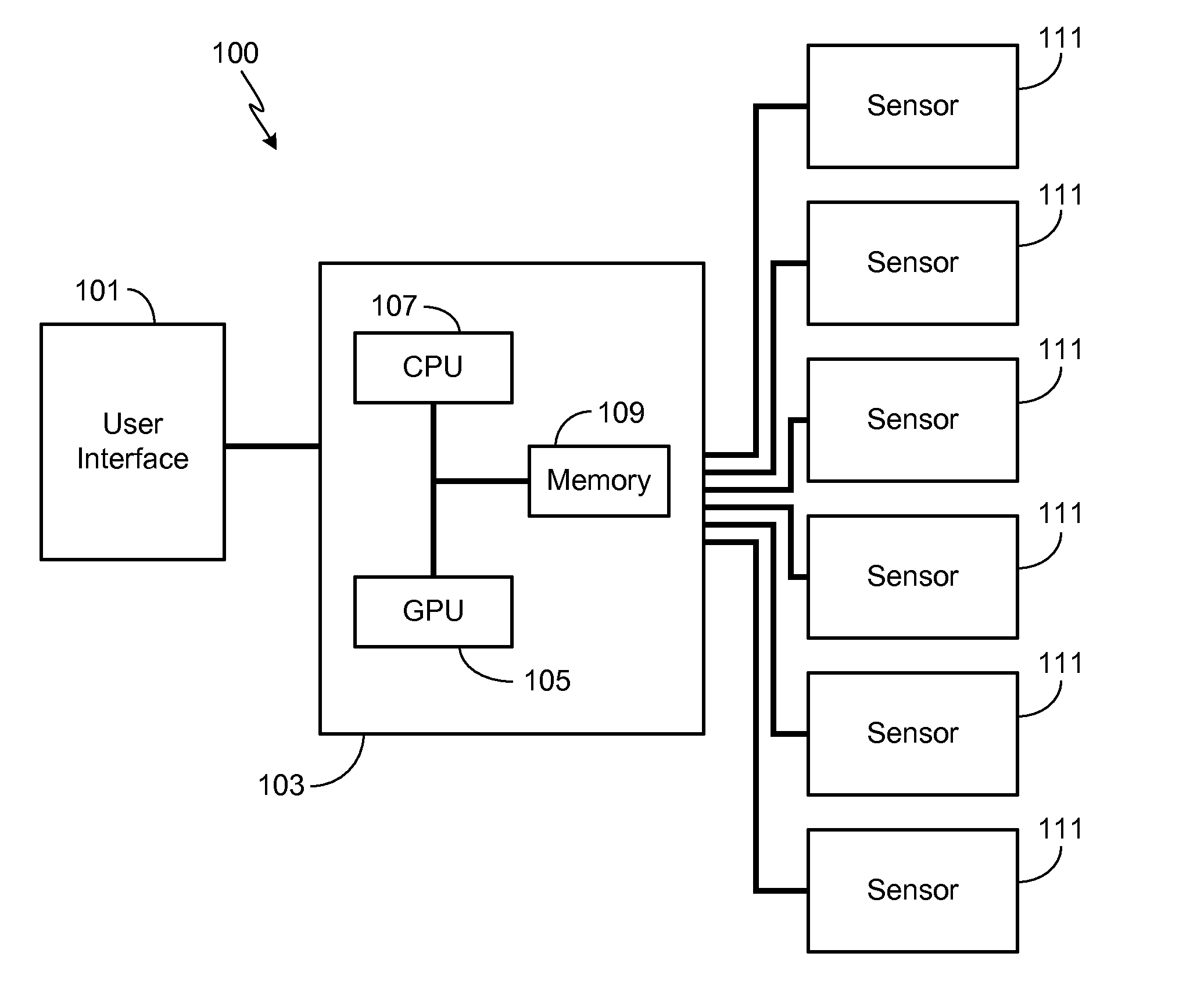
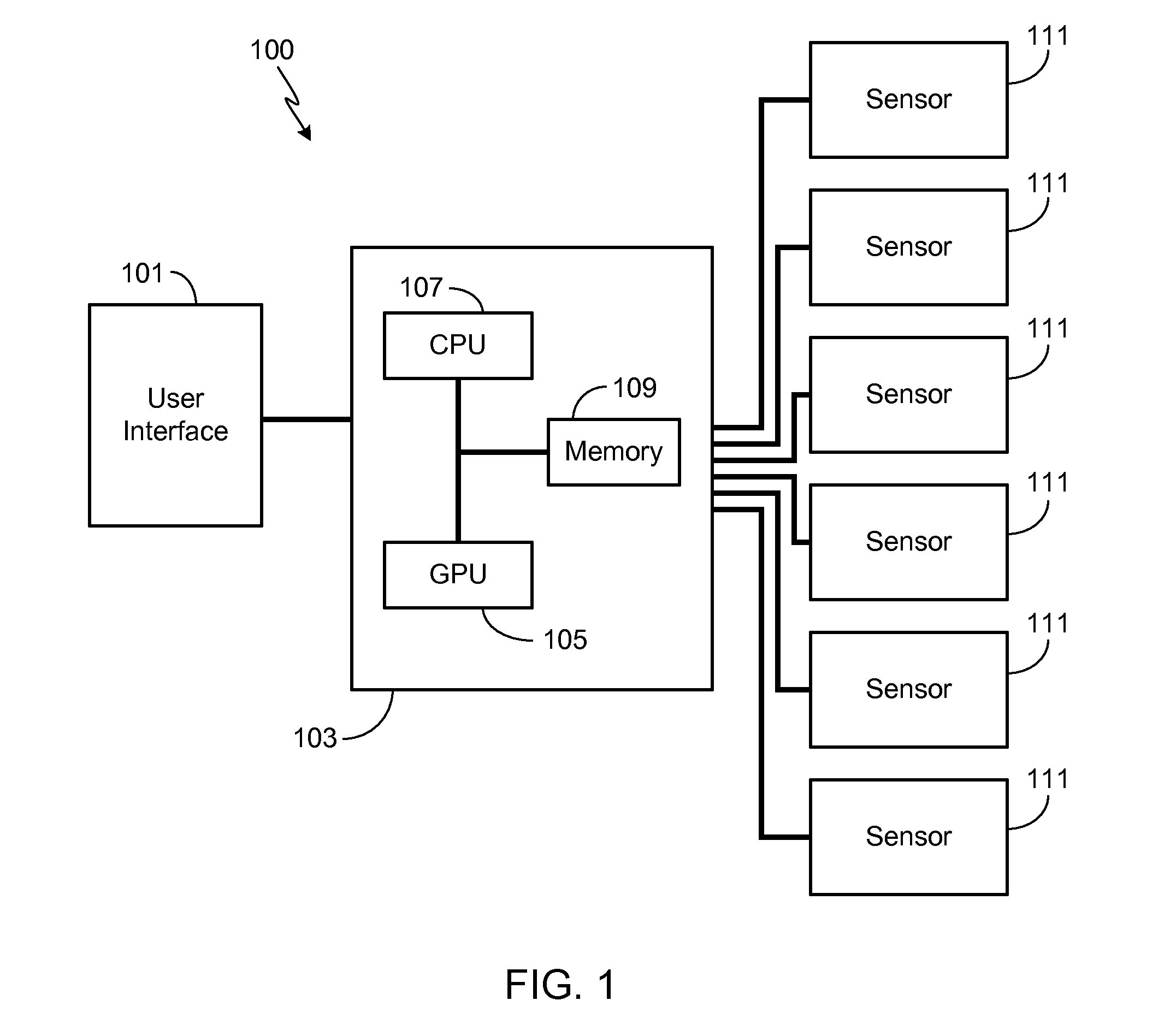
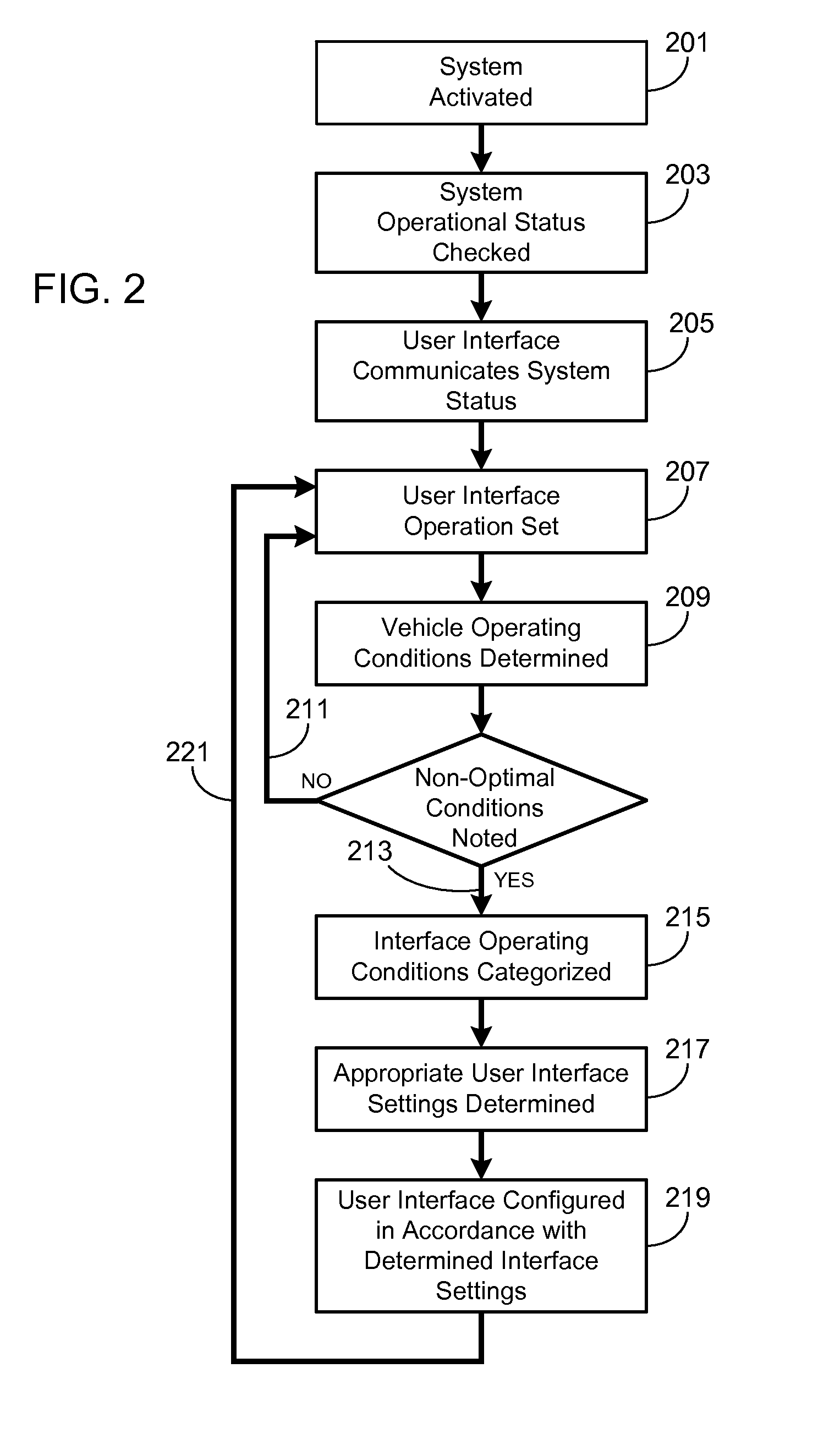
[0030]There are a variety of factors that influence how well a particular user is able to interact with a particular user interface. In addition to the type of controls used by the interface (e.g., touch, voice command, etc.), these factors include both external and internal vehicle conditions as well as conditions that are or are not within the control of the driver. External vehicle conditions that are primarily outside the control of the user include lighting (e.g., day time, night time, night time with nearby high intensity city lighting, night time with little or no additional lighting, etc.), audio levels (e.g., road noise, wind noise, nearby construction, etc.), weather (e.g., rain, fog, snow, sleet, etc.) and driving conditions (e.g., paved road, gravel road, bumpy road, windy road, etc.). External vehicle conditions that are at least partially under the control of the driver include road selection and driving speed for a given set of road conditions. To a large extent, cond...
PUM
 Login to View More
 Abstract
Description
Claims
Application Information
 Login to View More