
Notch inhibition in the treatment and prevention of a metabolic disease or disorder and cardiovascular complications thereof
a metabolic disease or disorder and notch inhibition technology, applied in the field of notch inhibition in the treatment and prevention of metabolic diseases or disorders and cardiovascular complications thereof, can solve the problems of increased risk and present activity, and achieve the effects of preventing proteolytic cleavage, increasing risk, and increasing notch expression
- Summary
- Abstract
- Description
- Claims
- Application Information
AI Technical Summary
Benefits of technology
Problems solved by technology
Method used
Image

Examples
example 1
Delta-Like 4 Participates in the Pathogenesis of Atherosclerosis and Obesity: A Potential Common Mechanism for Cardiometabolic Disorders
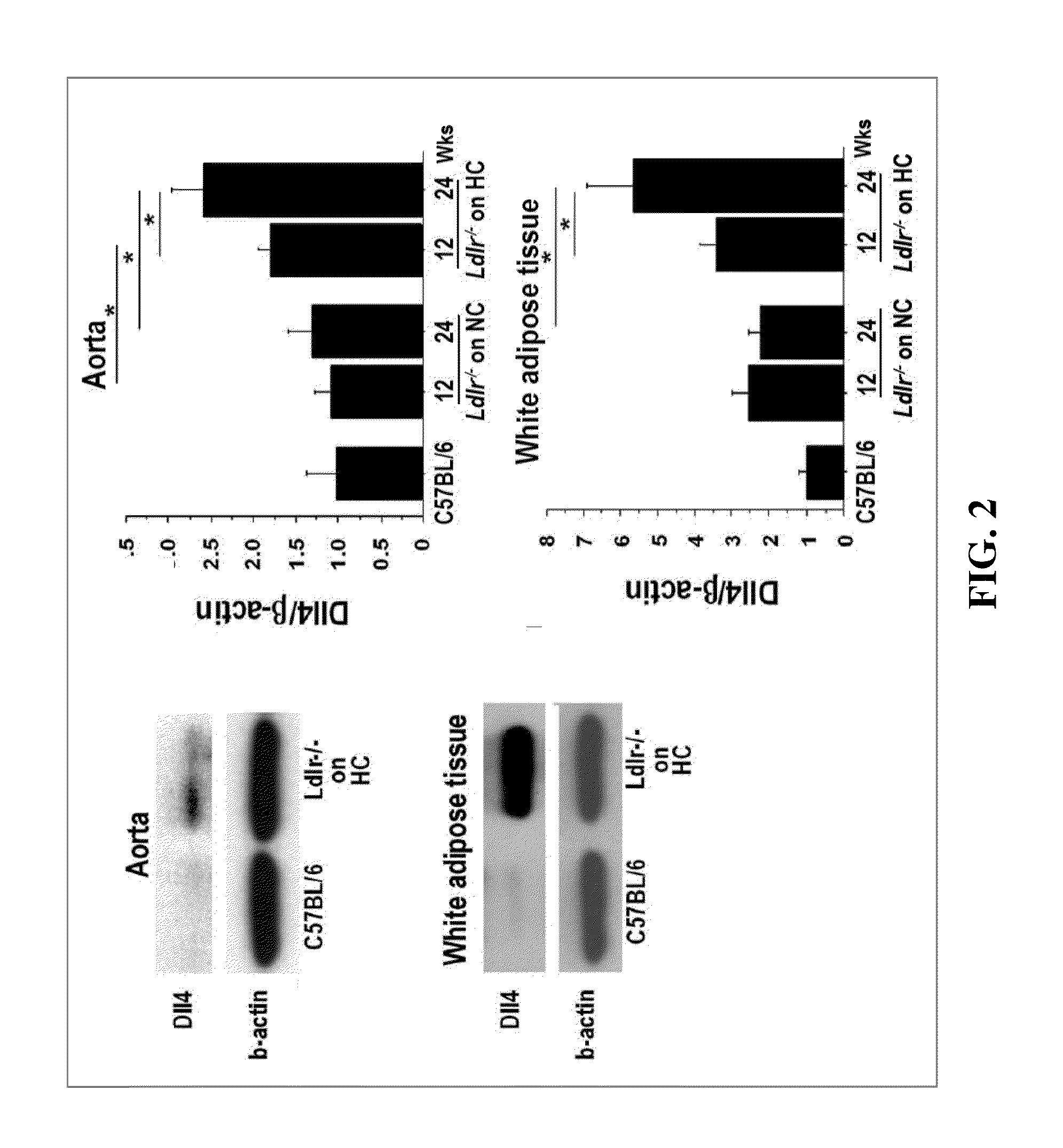
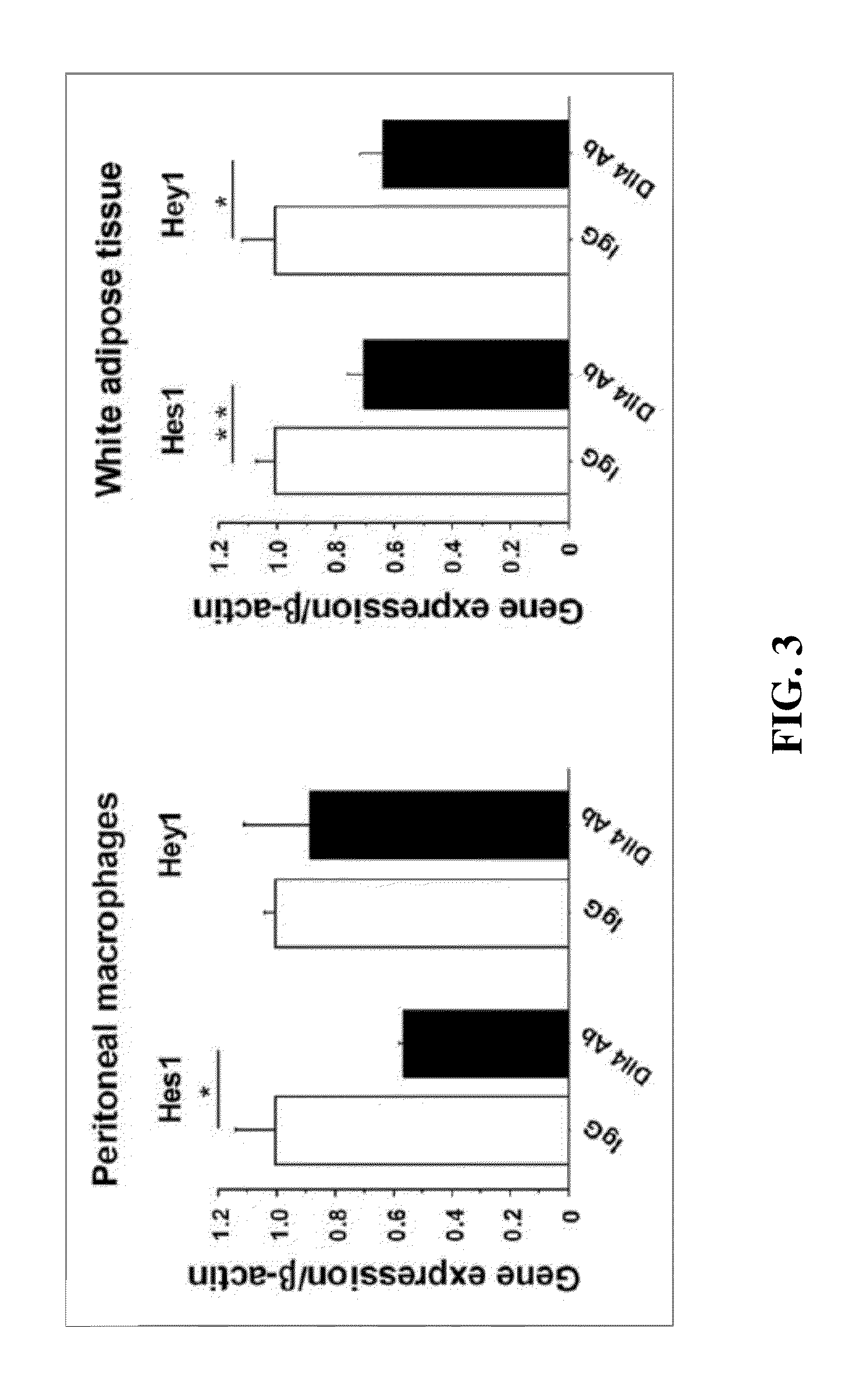
[0085]The present example examines whether the Notch ligand Delta-like 4 (Dll4) contributes to the pathogenesis of cardiometabolic disorders.
[0086]A. Methods
[0087]Mice and anti-Dll4 Ab Treatment
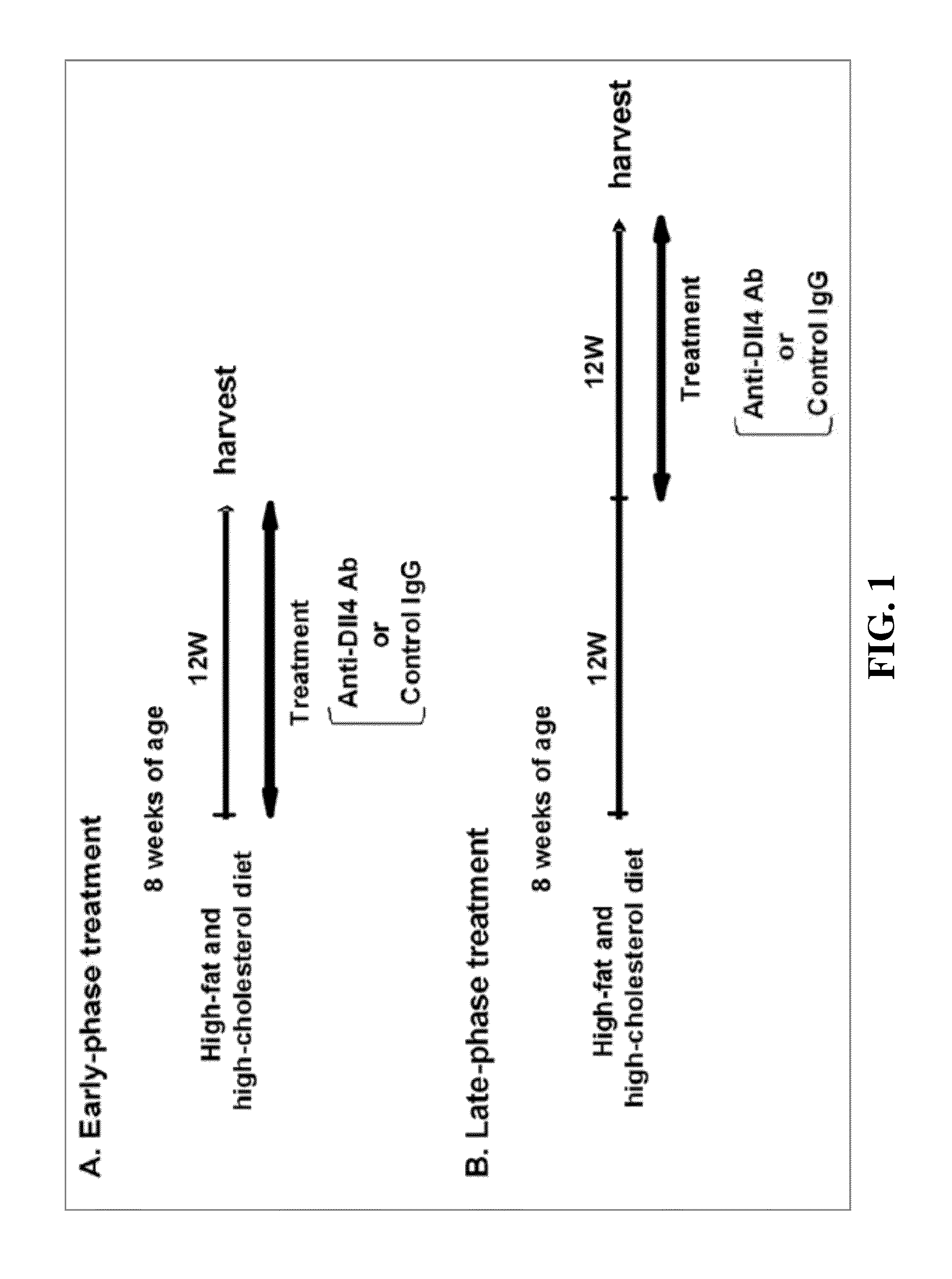
[0088]Eight-week-old male Ldlr− / − mice were purchased from The Jackson Laboratory. Ldlr− / − mice were fed a high-fat, high-cholesterol diet (D12108, Research Diets; 40% fat, 1.25% cholesterol) from 8 weeks of age through the completion of the study. All mice were housed on a 12-hour light / dark cycle, with food and water ad libitum. Animal care and experimentation was approved by the Harvard Medical School Institutional Animal Care and Use Committee. Ldlr− / − mice were assigned randomly to two groups and were injected with 250 μg of hamster anti-mouse Dll4 antibody (Dll4 Ab) or isotype control IgG (IgG) (BioXcell) intraperitoneally twice a week from 8 weeks of a...
example 2
Notch3 Signaling in Macrophages Promotes Obesity, Atherosclerosis and Arterial Calcification in Hypercholesterolemic Mice
[0138]To test the hypothesis that Notch signaling in macrophages promotes cardiometabolic disorders, including obesity, metabolic syndrome, atherosclerosis and vascular calcification, macrophage-selective Notch3-ICD transgenic (Notch3tg) mice under control of the macrophage SR-A promoter / enhancer were used. The findings from the study suggest that Notch3 signaling induces a proinflammatory macrophage phenotype and that Notch3 activation in macrophages promotes atherosclerosis, arterial calcification, and visceral fat obesity in vivo.
[0139]A. Methods
[0140]Animal Preparation
[0141]All experiments conform to a protocol approved by the Standing Committee on Animals of Harvard Medical School. Two independent macrophage-selective Notch3 intracellular domain transgenic (Notch3tg) mice were established under the control of the macrophage scavenger receptor A (SR-A) promote...
PUM
| Property | Measurement | Unit |
|---|---|---|
| Density | aaaaa | aaaaa |
| Electrical resistance | aaaaa | aaaaa |
Abstract
Description
Claims
Application Information
 Login to View More