
Treatment of headache disorders
- Summary
- Abstract
- Description
- Claims
- Application Information
AI Technical Summary
Benefits of technology
Problems solved by technology
Method used
Image

Examples
Embodiment Construction
[0121]Embodiments of the present invention will now be described as non-limiting examples and with reference to the Figures.
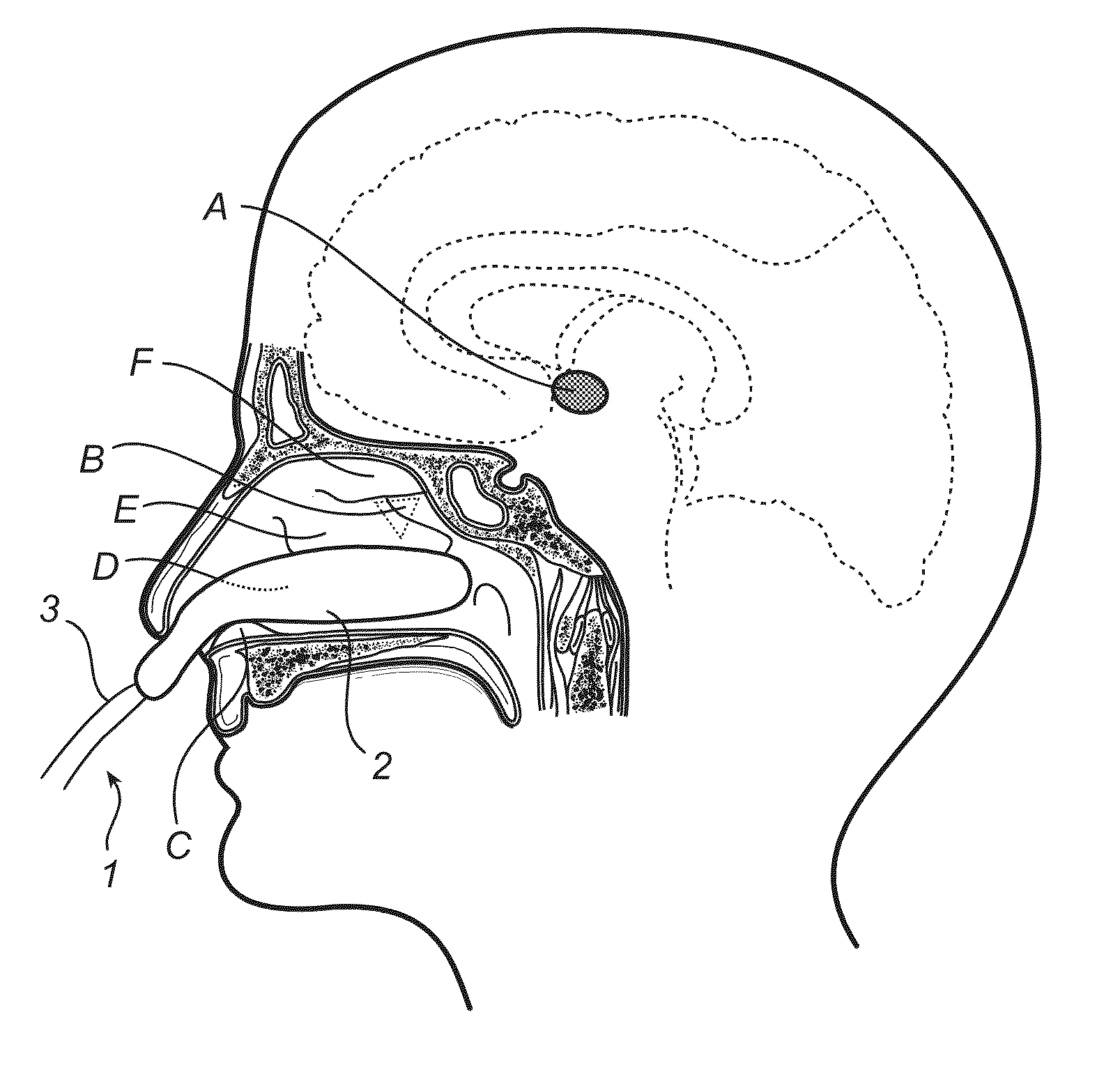
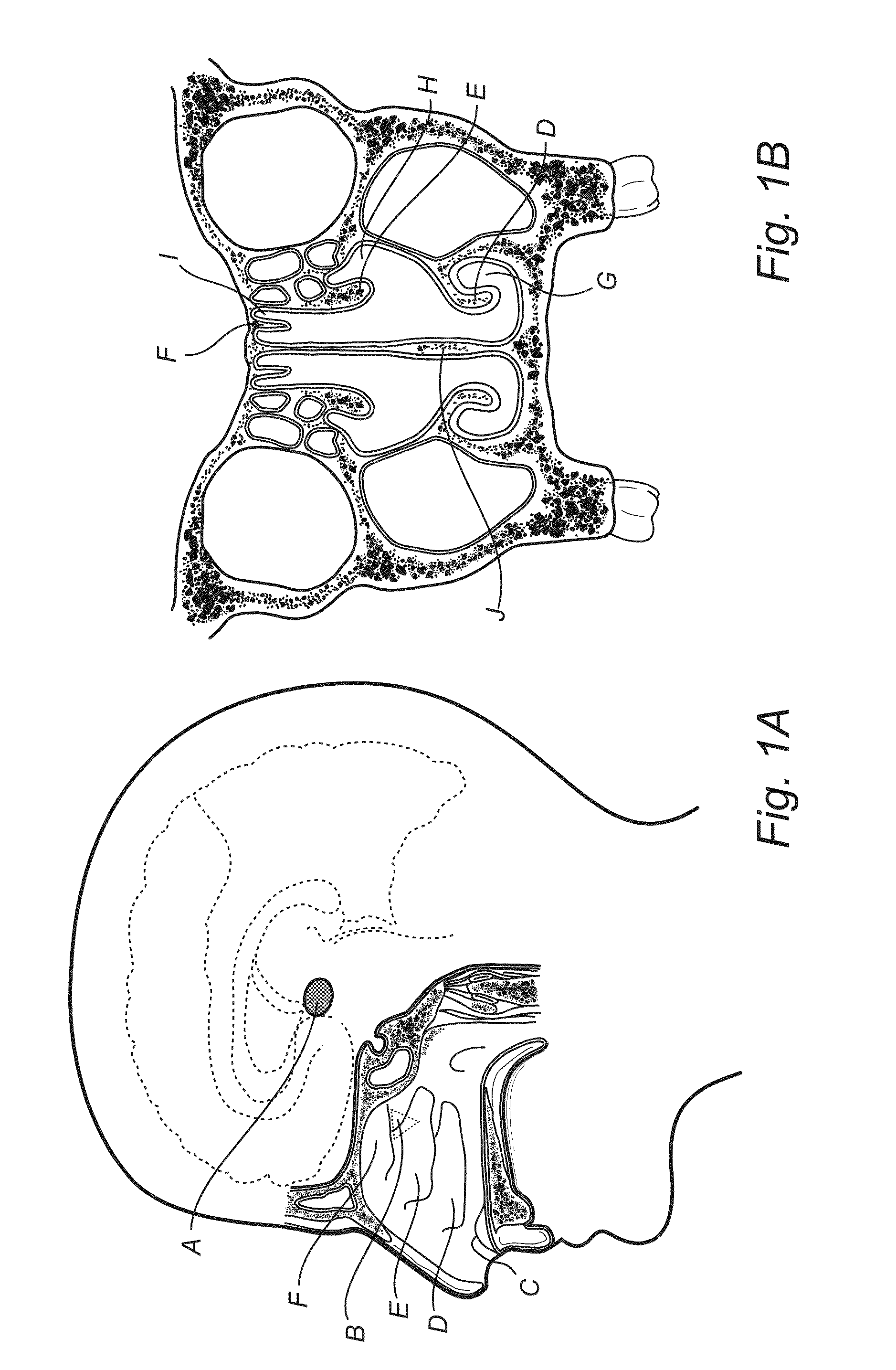
[0122]FIG. 1A and FIG. 1B schematically depict the anatomy of the human nasal cavity. FIG. 1A is a side view schematically depicting a nasal cavity of a human and the position of hypothalamus, A, and sphenopalatine ganglion, B, relative one nasal cavity. FIG. 1B schematically depicts the human nasal cavities seen from the front.
[0123]The nose has two cavities, separated from one another by a wall of cartilage called the septum, J, as can be seen in the front view of the nasal cavities in FIG. 1B. The vestibule, C, is the most anterior part of the nasal cavity. On the sides of the nasal cavity are three horizontal outgrowths called nasal conchae or turbinates. The conchae are several thin, scroll-shaped bony elements forming the upper chambers of the nasal cavities. They increase the surface area of these cavities, thus providing for rapid warming and humidifica...
PUM
 Login to View More
 Abstract
Description
Claims
Application Information
 Login to View More