
Motion control weighted canine fitness garment
- Summary
- Abstract
- Description
- Claims
- Application Information
AI Technical Summary
Benefits of technology
Problems solved by technology
Method used
Image

Examples
Embodiment Construction
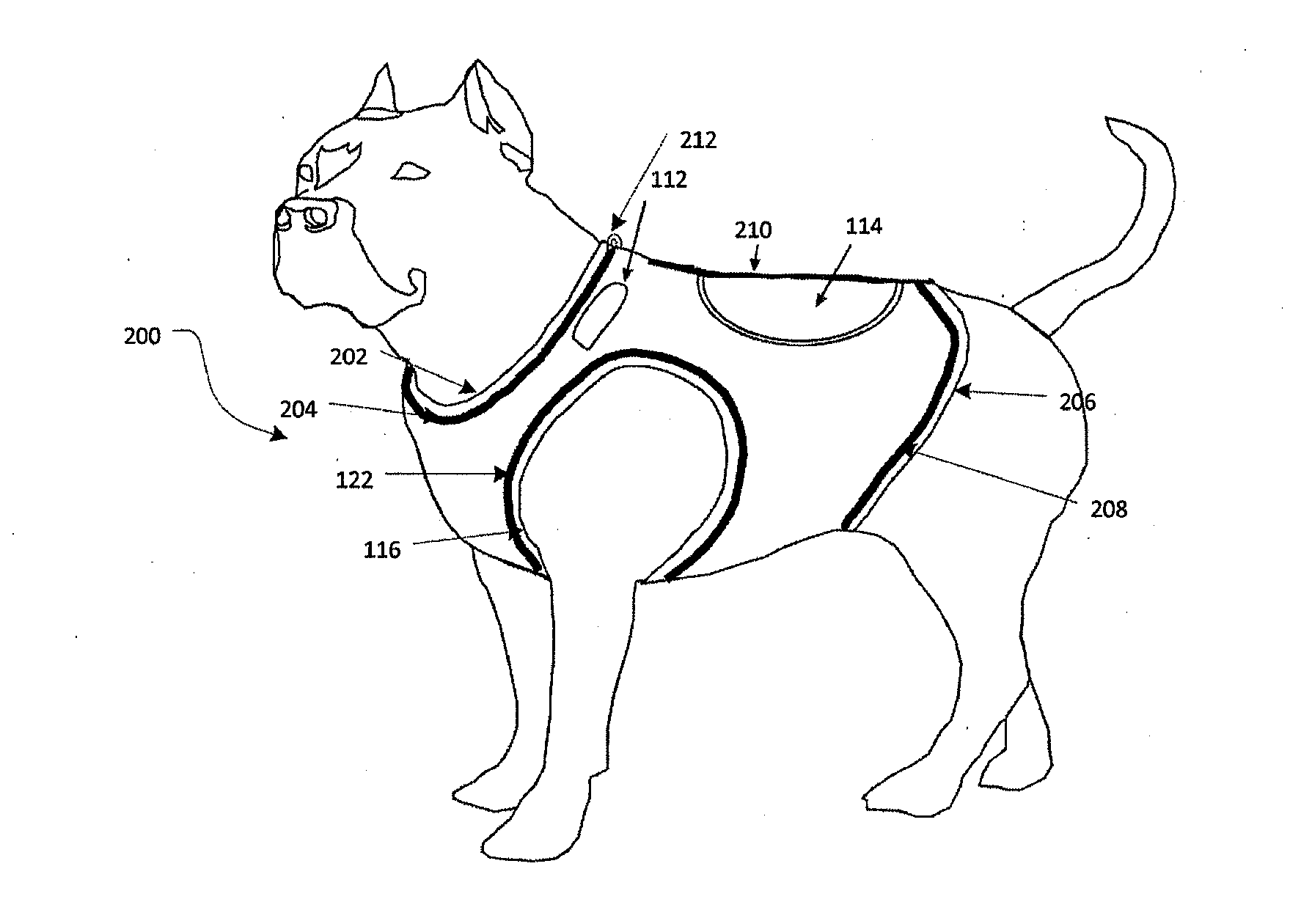
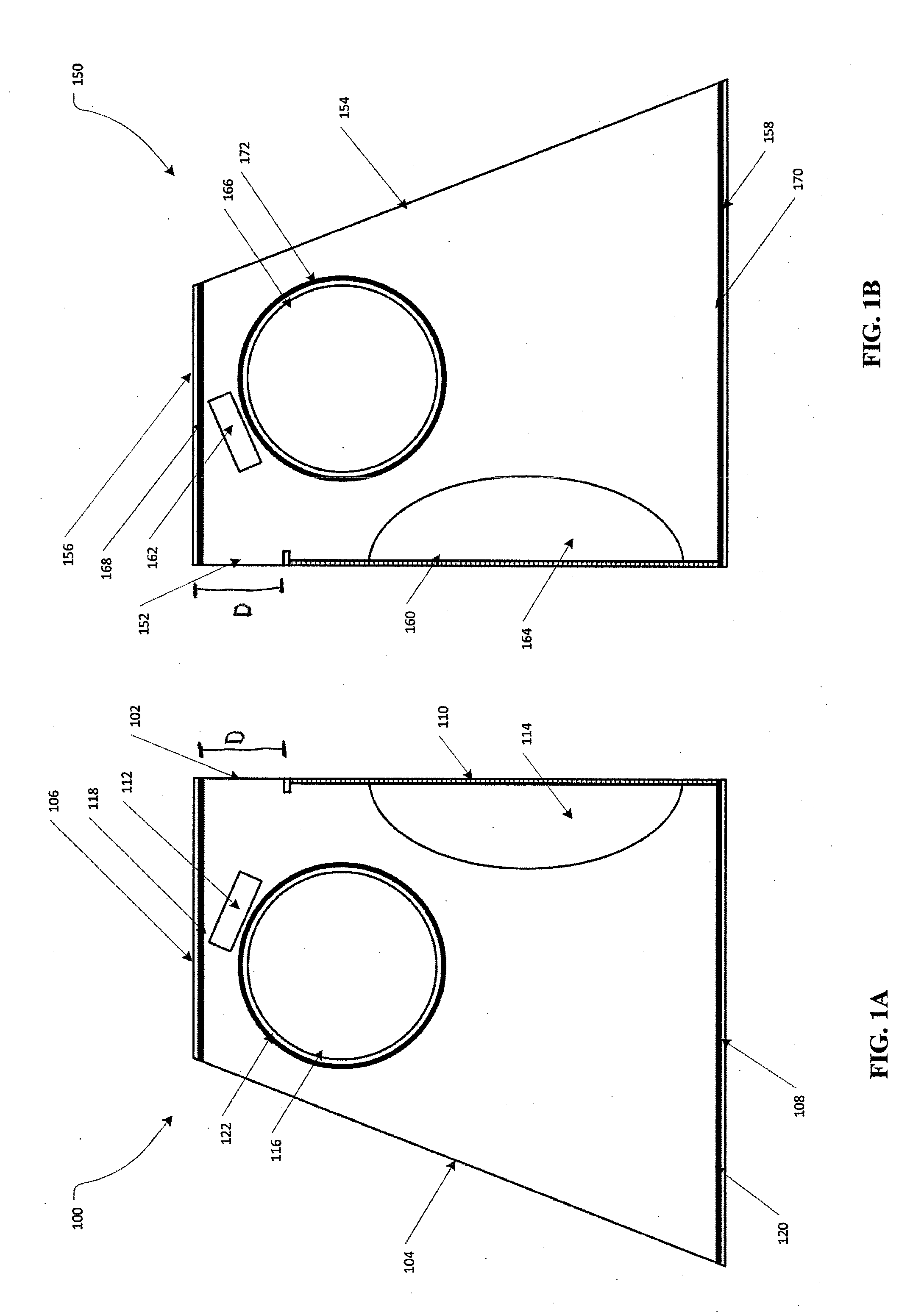
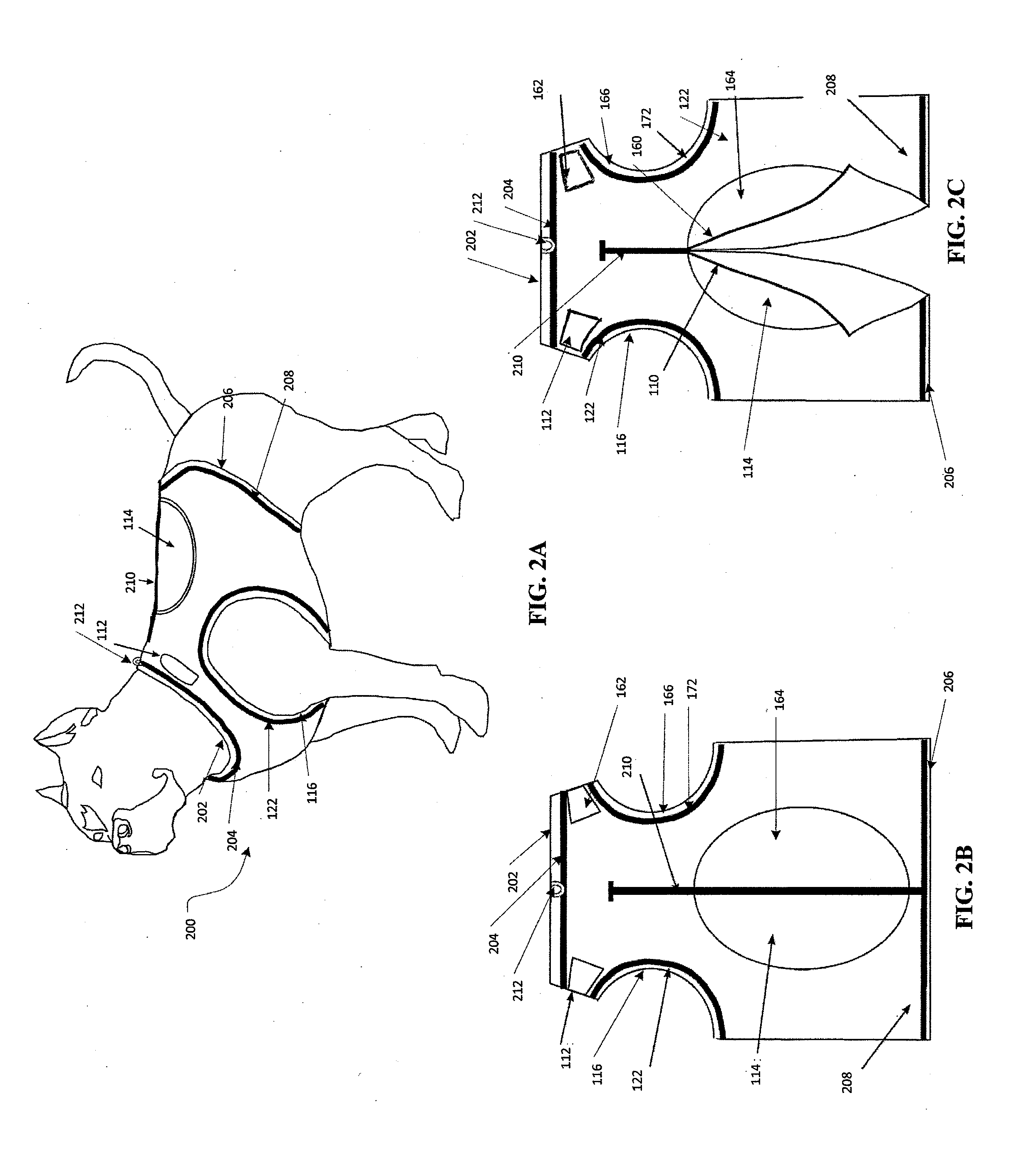
[0021]The present application is directed at a motion control weighted canine fitness garment. The motion control weighted canine fitness garment is specially designed to fit like a second skin over the canine anatomy. It supports purposeful placement of its resistance weights that is also by design resistant to motion (relative to the dogs skin) and does not restrict the natural normal movements of the canine thoracic / lumbar regions, or that of the hind or front limbs. Integrated weight placement is based on Kinesio-Taping Methodology practices that have been proven to be therapeutically effective and influential for the musculo skeletal system. This type of methodology influences blood flow, either increasing (when applied in the same direction as the muscle fibers) or decreasing / restricting blood flow (when applied across the muscles fibers). It is used often in the human and canine world to facilitate the body's natural healing process while providing support and stability witho...
PUM
 Login to View More
 Abstract
Description
Claims
Application Information
 Login to View More