
System to Evaluate Prosthetic Sockets
- Summary
- Abstract
- Description
- Claims
- Application Information
AI Technical Summary
Benefits of technology
Problems solved by technology
Method used
Image

Examples
Embodiment Construction
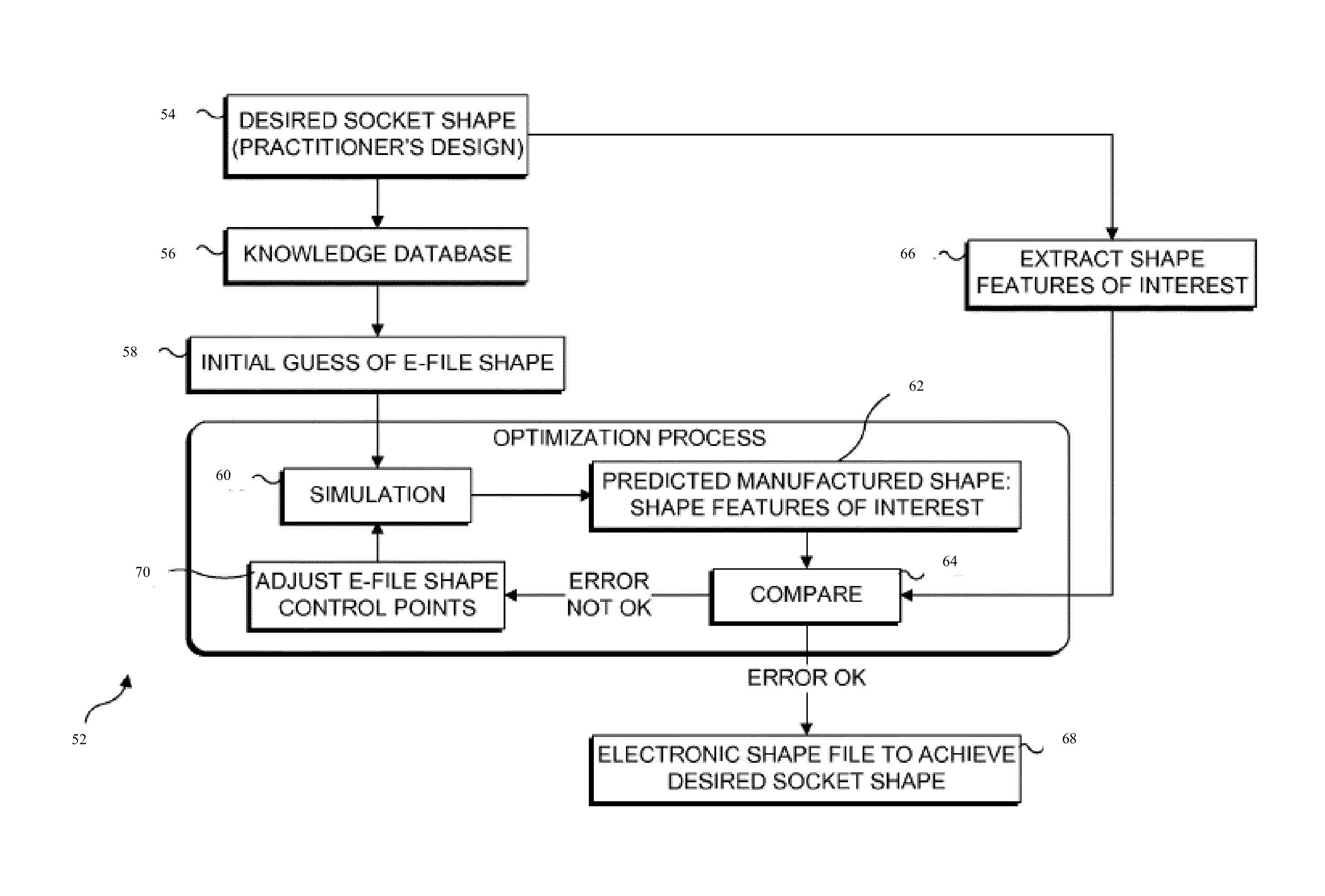
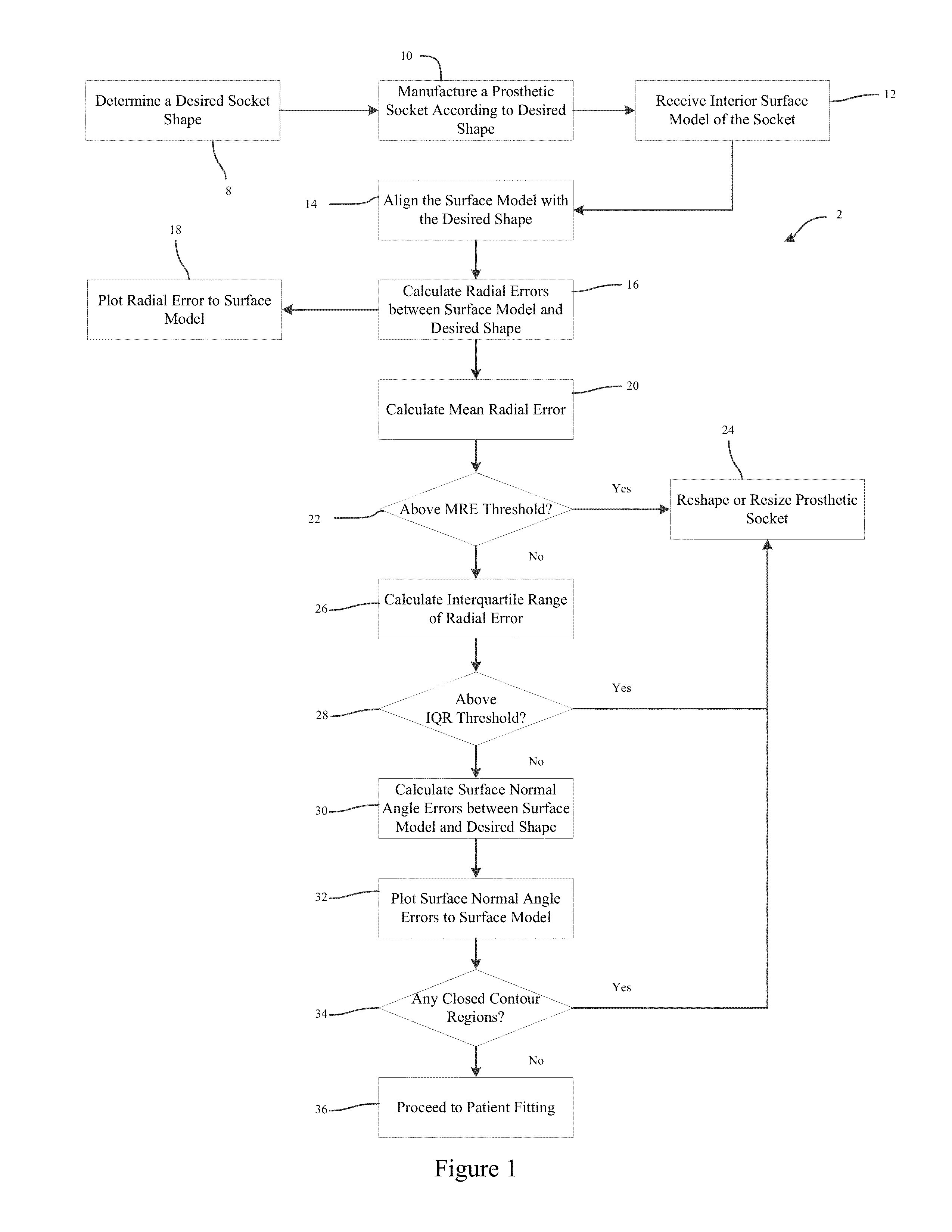
[0043]Computed metrics that have clinical meaning empower the practitioner and the industry with tools. The computed metrics developed here may help define how much computer-socket manufacturing error is allowable before it is clinically relevant to fit. The metrics may serve as tools for quantitative evaluation of manufactured socket quality. Sockets from different central fabrication facilities may be compared and, further, the same facility can test how different design variables affect quality. For example, the influence of different pre-form materials, carving speeds, or bit sizes on manufactured socket shape can all be tested. This insight should be useful to central fabrication facilities and their clients, and also to clinics using in-house CAD / CAM who seek to optimize clinical outcome of their socket manufacturing practices. It would also be interesting to use these tools to compare thermoplastic and laminated sockets. In some embodiments, the insight gained in this researc...
PUM
 Login to View More
 Abstract
Description
Claims
Application Information
 Login to View More