
Current conversion method and device, vehicle comprising such a device
- Summary
- Abstract
- Description
- Claims
- Application Information
AI Technical Summary
Benefits of technology
Problems solved by technology
Method used
Image

Examples
embodiment 10
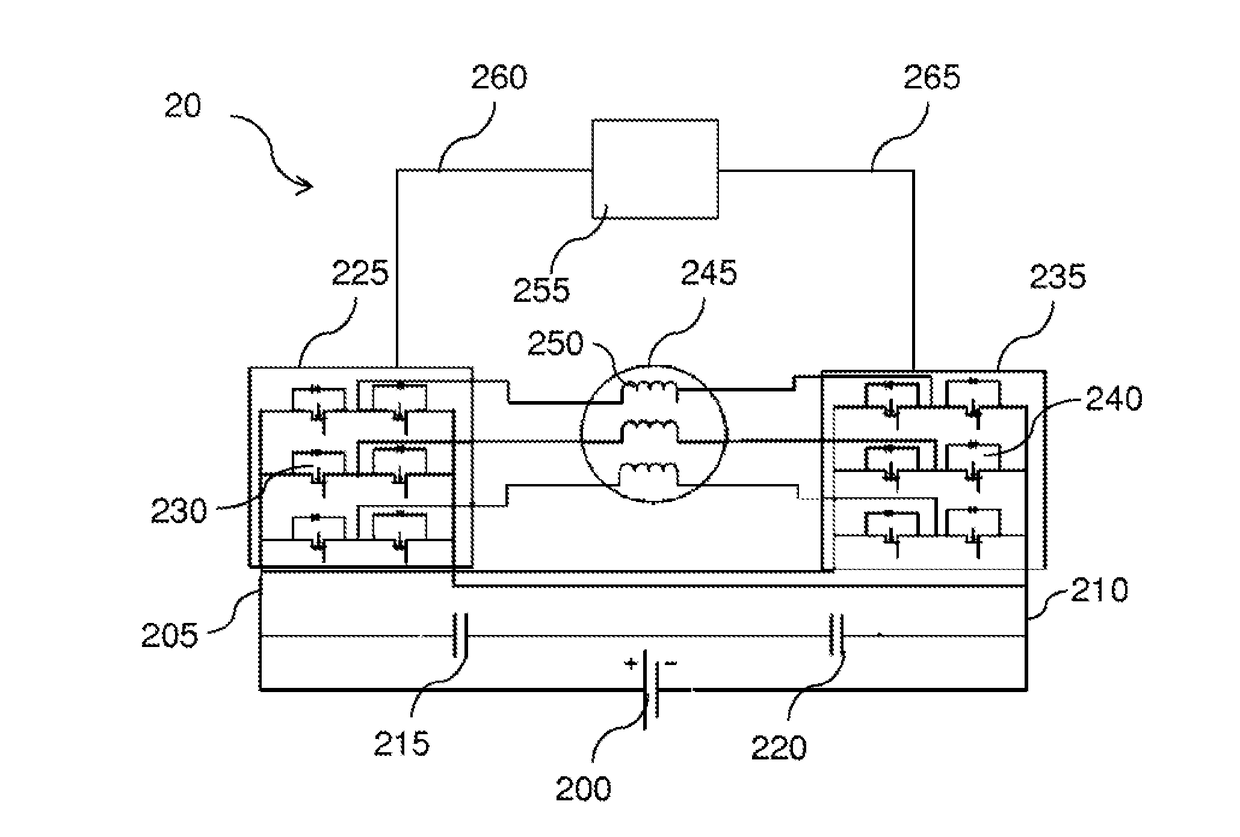
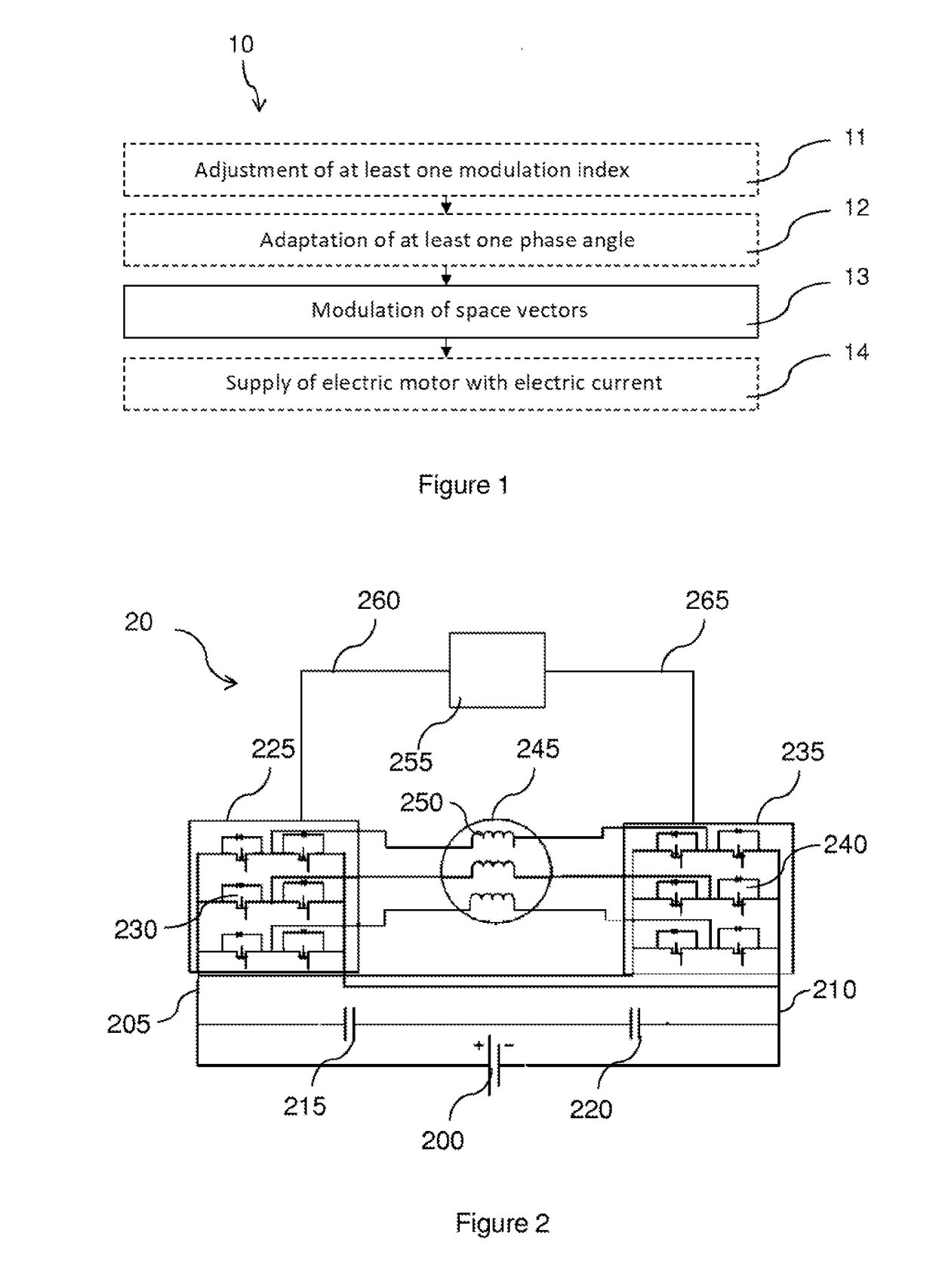
[0043]A specific embodiment 10 of a method that is the subject matter of the present invention is observed in FIG. 1. In FIG. 1, the steps in a dotted line correspond to the specific embodiments of the method that is the subject matter of the present invention. A specific embodiment of a device that is the subject matter of the present invention is observed in FIG. 2. The description which follows is the simultaneous description in FIGS. 1 and 2.
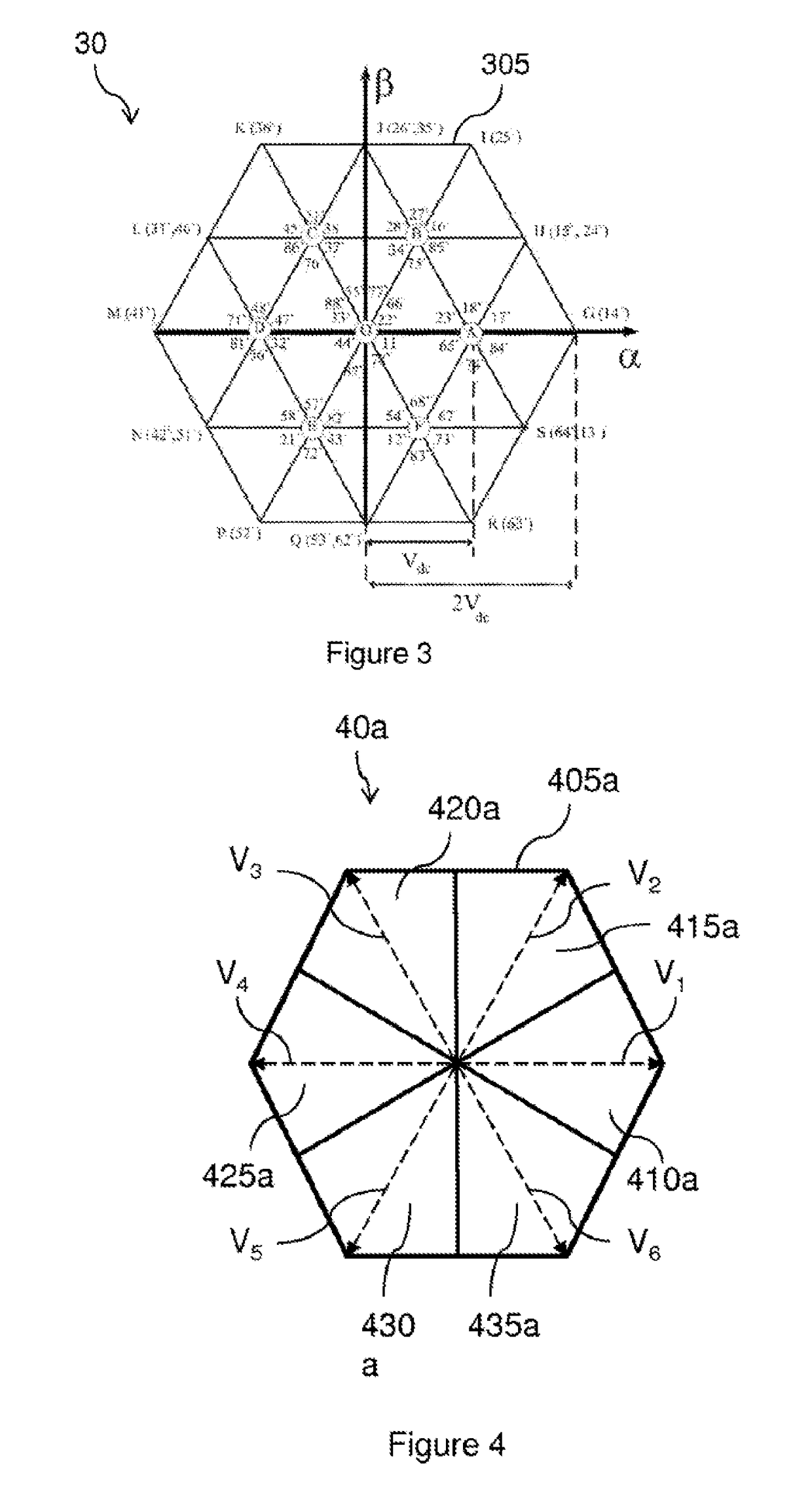
[0044]The method 10 that is the subject matter of the present invention is for an electrical device 20 comprising:[0045]a three-phase electrical motor 245 and[0046]two three-phase inverters, 225 and 235, each inverter being controlled by a modulation of at least six space vectors V1, V2, V3, V4, V5 and V6, non-zero (or SVM: acronym for “Space Vector Modulation”), the output voltage of each inverter being given by a space vector termed “reference space vector”.
[0047]The six space vectors, V1, V2, V3, V4, V5 V6 of each inverter, 225 and 235, a...
embodiment 50
[0102]A specific embodiment 50 of a vehicle that is the subject matter of the present invention is observed in FIG. 5.
[0103]The vehicle 50 can be any type of electric or hybrid vehicle, such as a car, a train or a tram, for example.
embodiment 20
[0104]The vehicle 50 comprises an embodiment 20 of a device that is the subject matter of the present invention. the device that is the subject matter of the present invention is preferably connected to the direct current supply means of the vehicle 50 and to a three-phase electric motor of the vehicle 50. The vehicle 50 comprises control means 255 of each inverter, 225 or 235, by an activation sequence, 260 or 265, of space vectors implementing a method 10 that is the subject matter of the present invention.
PUM
 Login to View More
 Abstract
Description
Claims
Application Information
 Login to View More