
Support Vector Machines in a relational database management system
a database management system and support vector technology, applied in the field of support vector machines in the relational database management system, can solve the problems of high the ranking of the entire dataset after each iteration, etc., and achieve the effects of reducing the computational cost of building svm models, improving efficiency, time consumption and data security
- Summary
- Abstract
- Description
- Claims
- Application Information
AI Technical Summary
Benefits of technology
Problems solved by technology
Method used
Image

Examples
Embodiment Construction
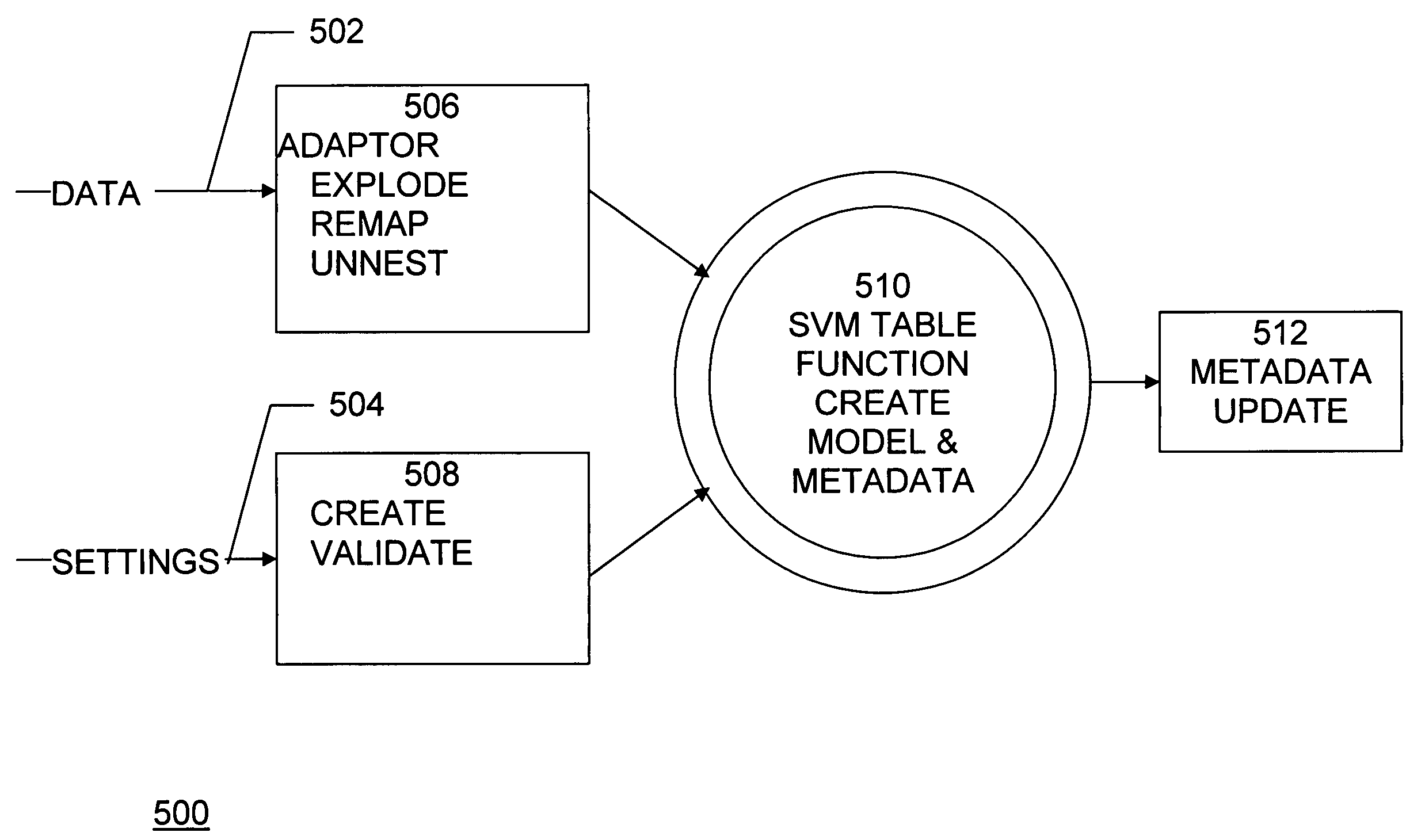
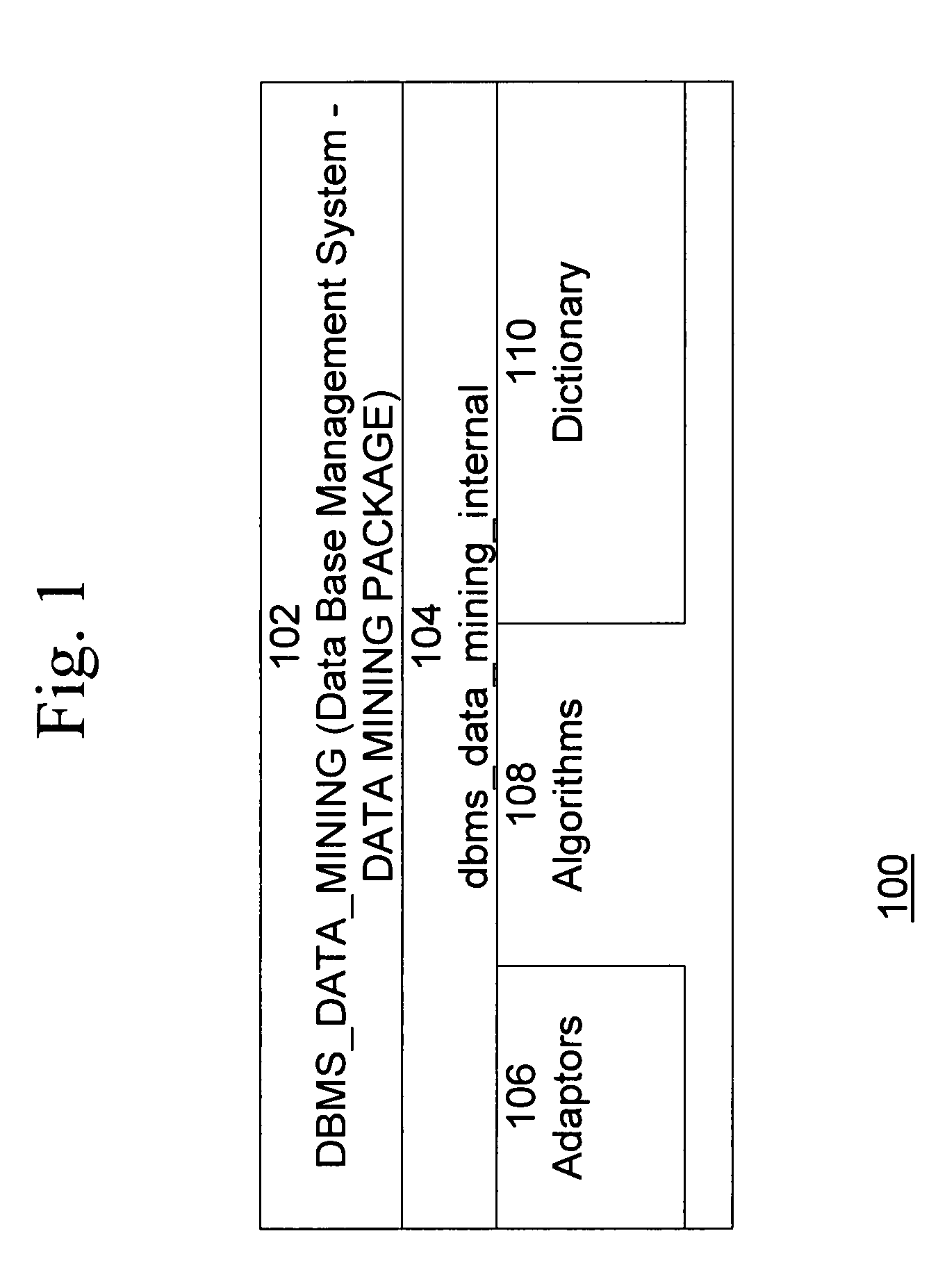
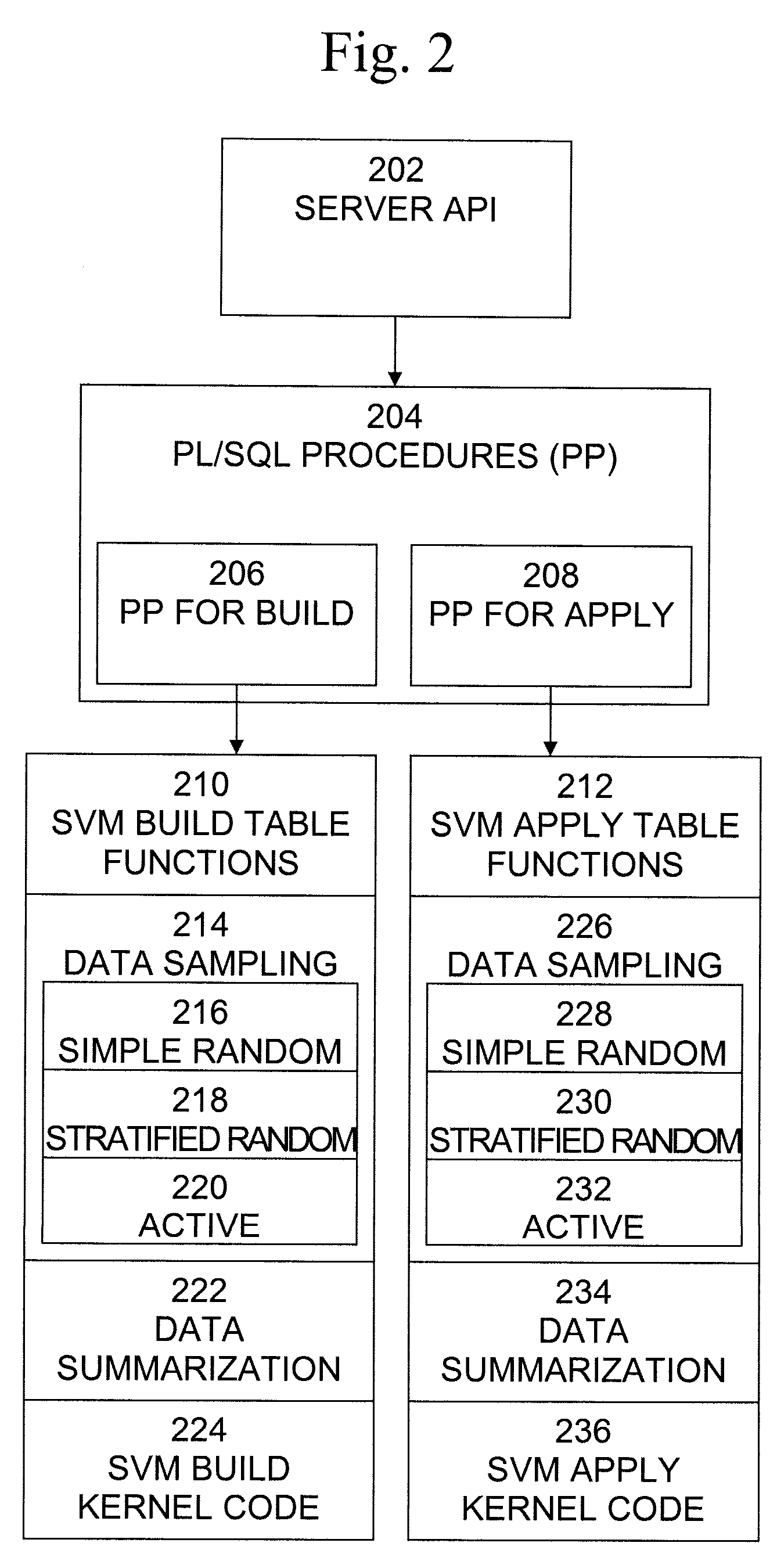
[0030]The present invention provides an implementation of SVM functionality integrated into a relational database management system (RDBMS). This improves efficiency, time consumption, and data security, reduces the parameter tuning challenges presented to the inexperienced user, and reduces the computational costs of building SVM models. The implementation of the present invention integrates SVM functionality with data mining functionality in an RDBMS. Preferably, the SVM functionality is implemented as a table function (trusted C callout) that is directly accessible via SQL. This table function is an internal API that can be directly invoked by internal users (e.g., currently used by text processing functions). The external API wraps the table function call in a PL / SQL procedure (or Java). The table function implementation facilitates integration with the core database functionality. The data source is a cursor and the original data can undergo a variety of transformations without...
PUM
 Login to View More
 Abstract
Description
Claims
Application Information
 Login to View More