
Routing method and system
a routing method and network technology, applied in the field of routing methods and systems for telecommunications carrier networks, can solve the problems of inefficient replacement of routing and constant check of traffic at various nodes, and achieve the effect of increasing efficiency
- Summary
- Abstract
- Description
- Claims
- Application Information
AI Technical Summary
Benefits of technology
Problems solved by technology
Method used
Image

Examples
Embodiment Construction
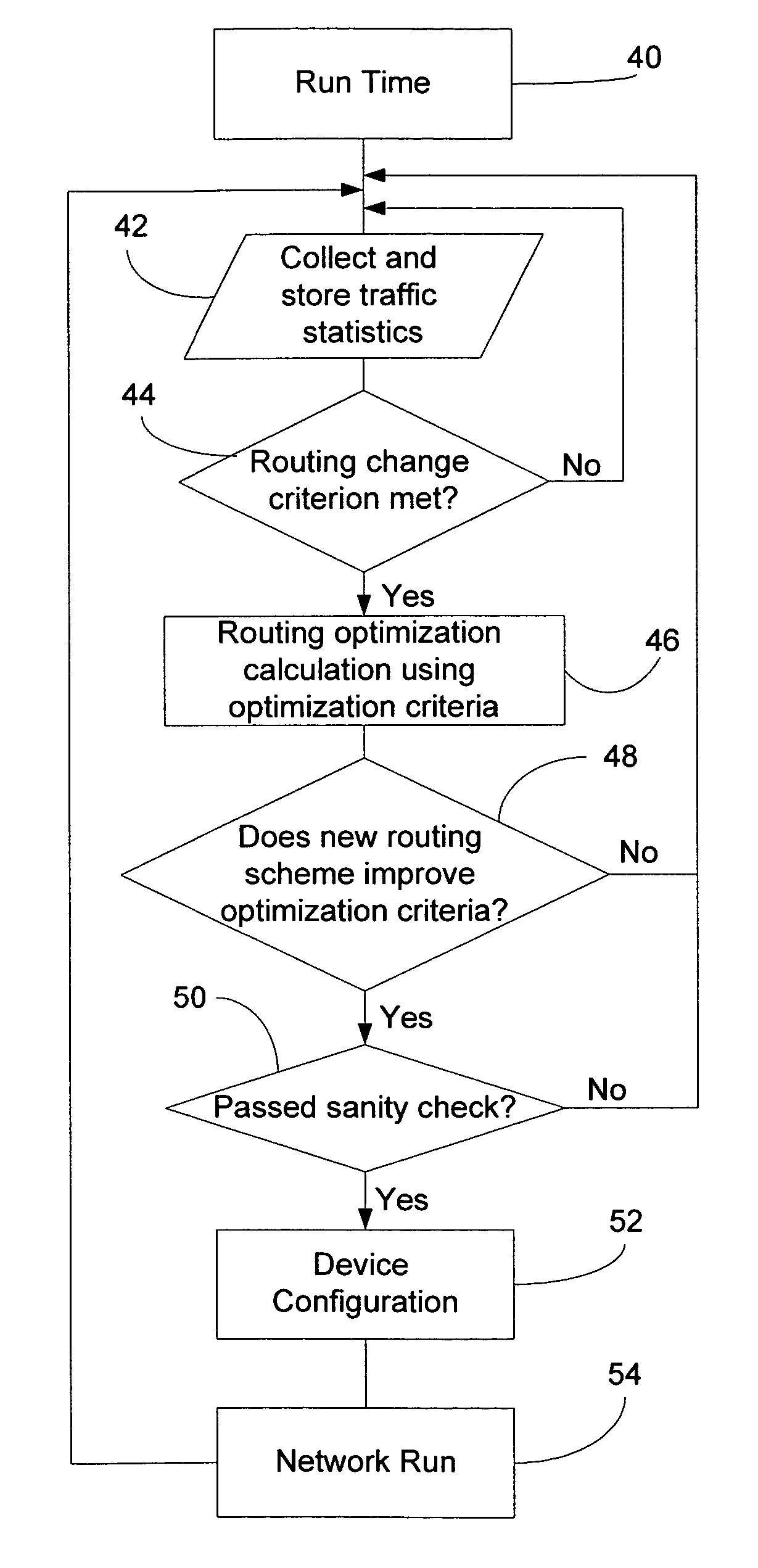
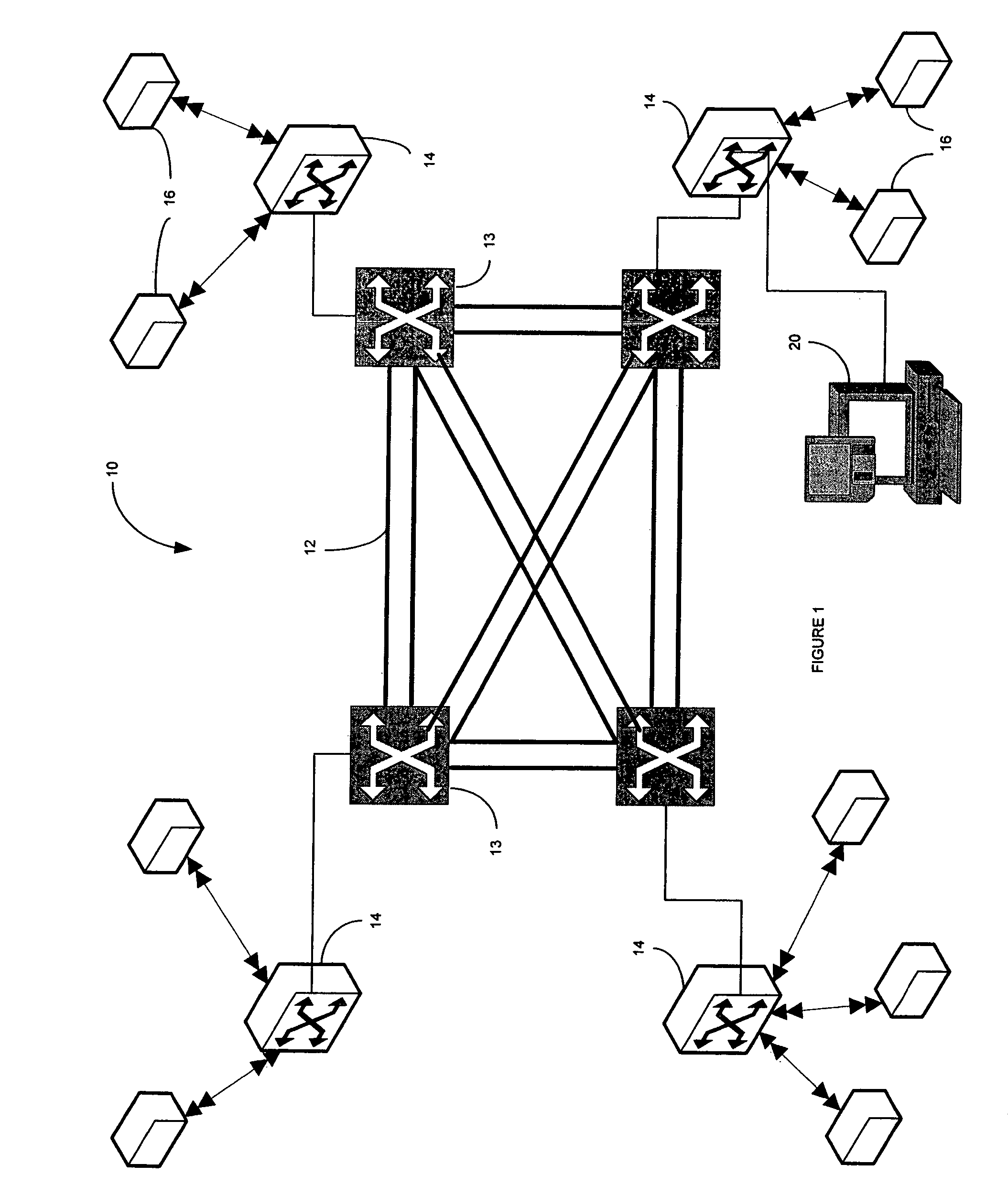
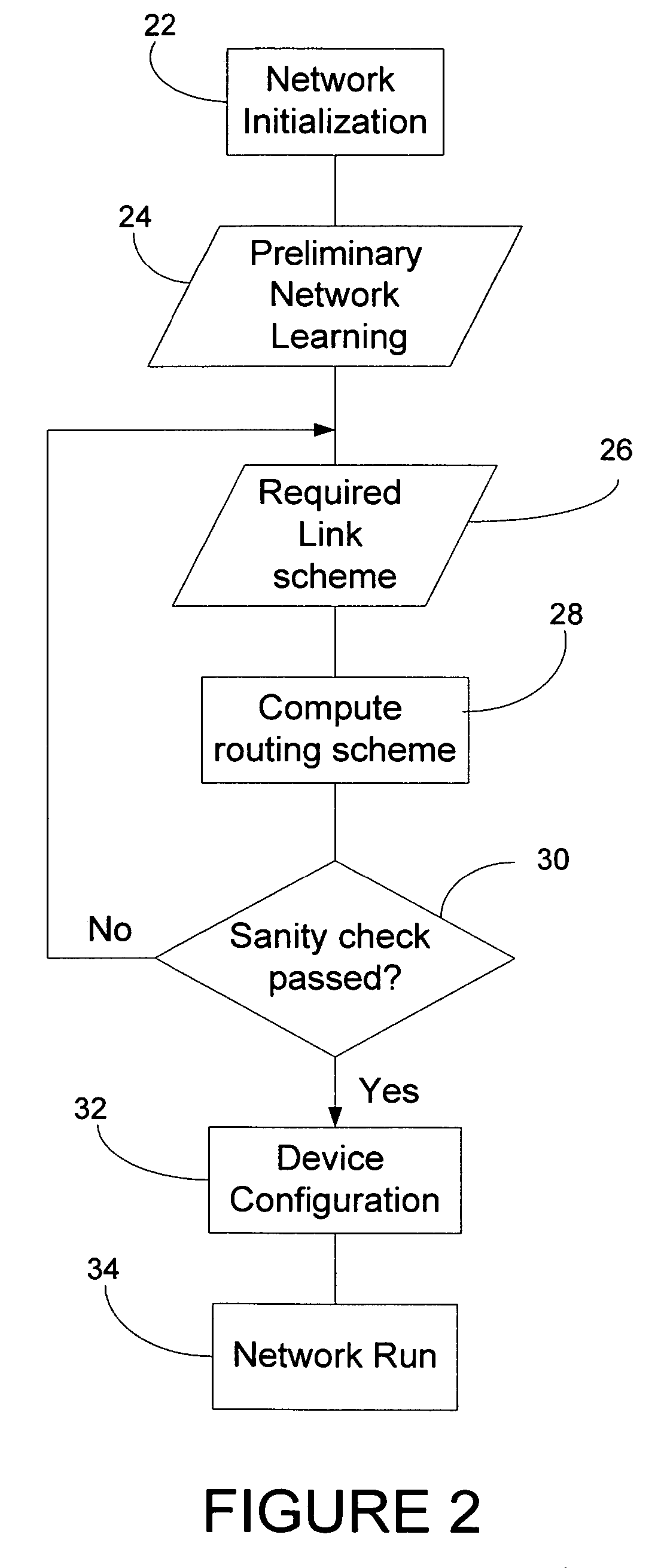
[0040]The present invention relates to a central routing system and method for packet or frame-based data flow through a telecommunications carrier network. In this system, all traffic through a core network is associated with one of a predefined set of flows (logical links) and physical links, each associated with specific source and destinations and, optionally, Quality of Service (QOS) requirements. It will be appreciated that these associations are “quasi-static”, that is, the flow routes are unchanging for a relatively long period of time. Thus, the routing scheme is generally changed only when the network changes. In addition, the routing scheme is changed when other pre-defined criteria are met, most particularly in response to network traffic statistics, which are calculated from network traffic data continuously collected by at least some of the network devices. The routing system utilizes an off-line algorithm which, when these criteria are met, computes and updates routin...
PUM
 Login to View More
 Abstract
Description
Claims
Application Information
 Login to View More