Method to diagnose and measure vascular drainage insufficiency in the central nervous system

a central nervous system and vascular drainage technology, applied in diagnostic recording/measuring, instruments, applications, etc., can solve problems such as no cure, and achieve the effects of reducing the magnitude of cognitive task-related bold signal modulation in gray matter, increasing activity, and increasing post-stimulus undershoo

US8571634B2Inactive Publication Date: 2013-10-29HUBBARD DAVID R
6 Cites 6 Cited by

Patent Information

Authority / Receiving Office
US · United States
Patent Type
Patents(United States)
Current Assignee / Owner
Publication Date
2013-10-29
Estimated Expiration
Not applicable · inactive patent

Smart Images

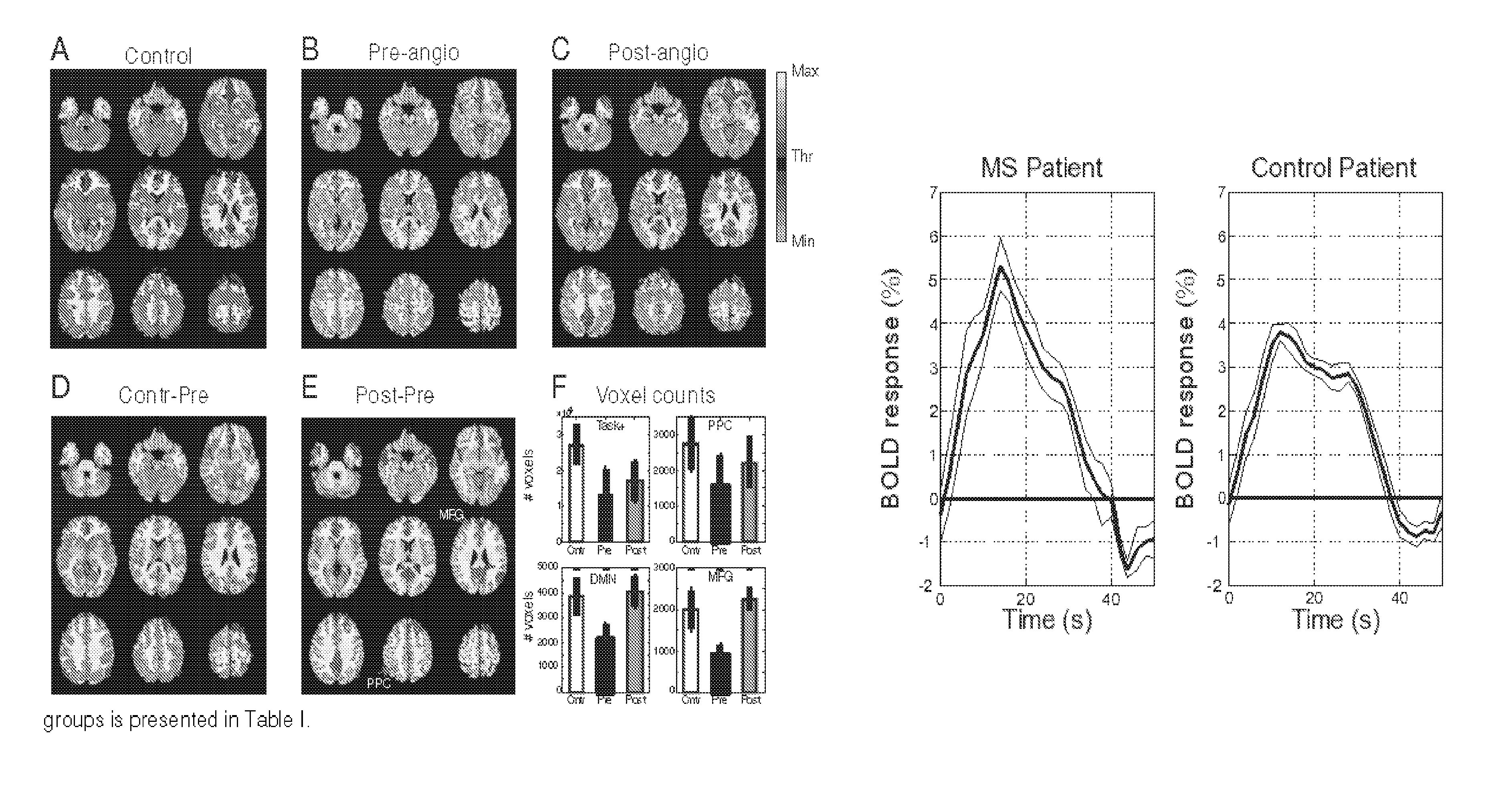
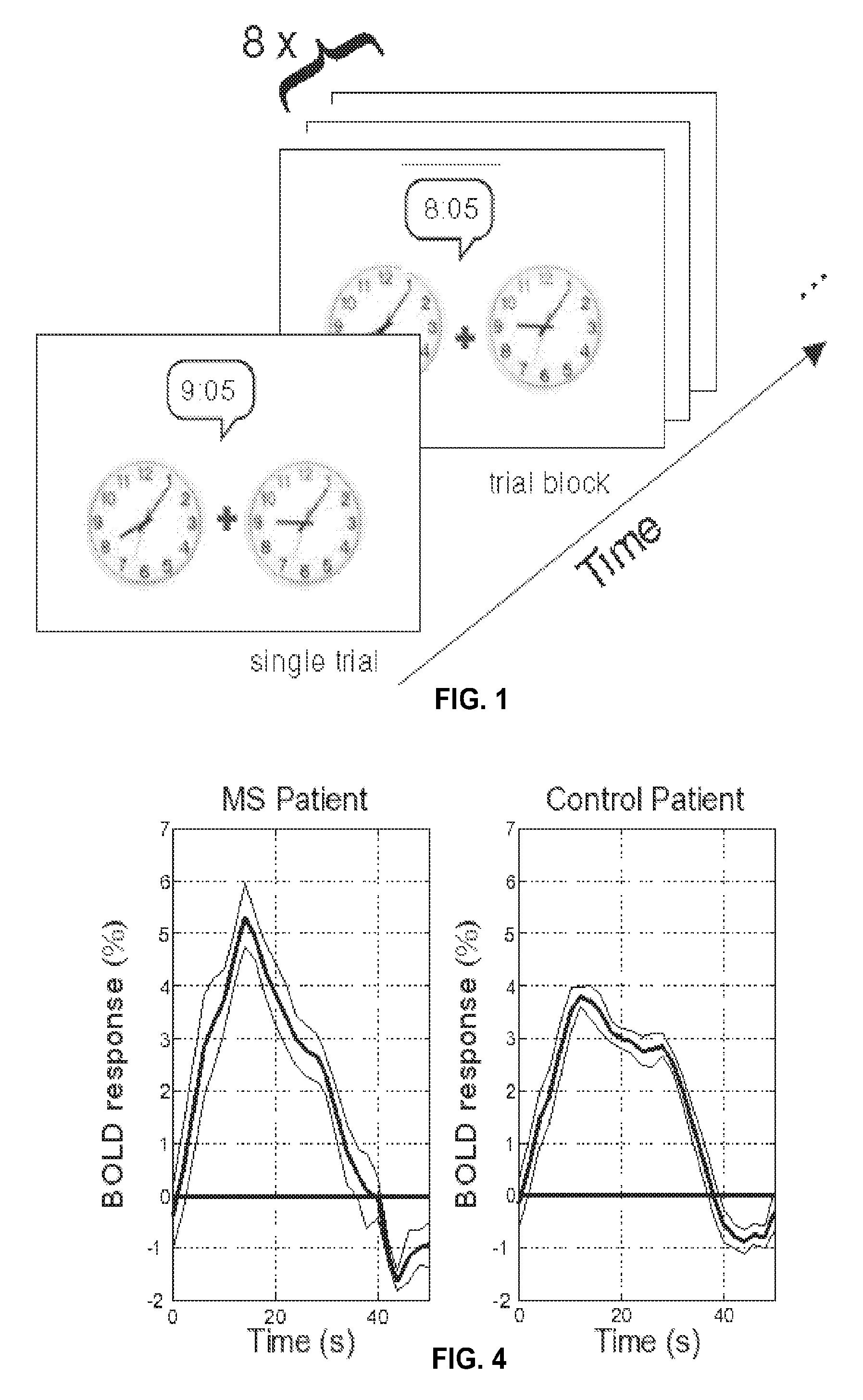
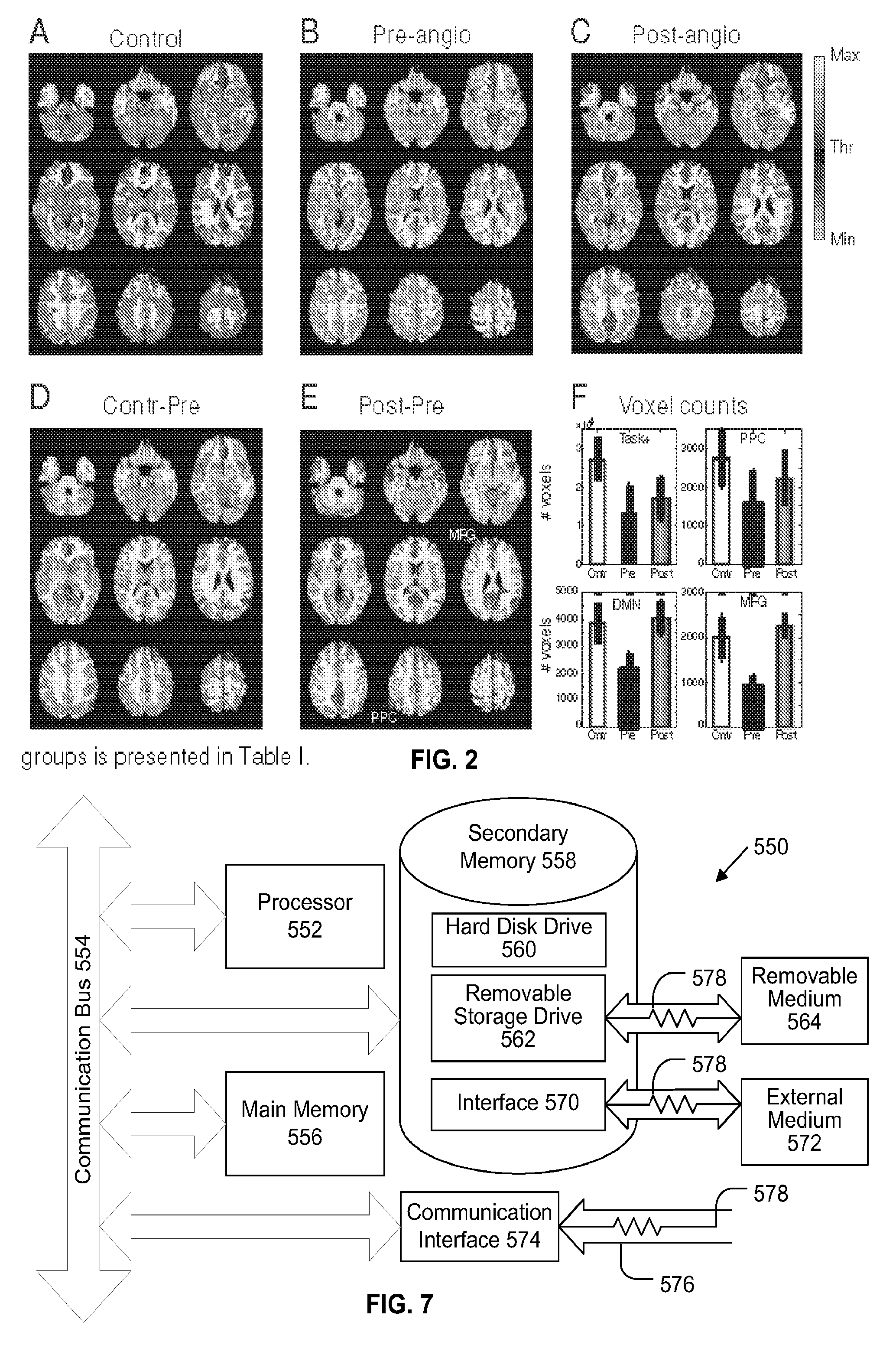
  • Figure 1
    Figure 1
  • Figure 2
    Figure 2
  • Figure 3
    Figure 3
Patent Text Reader

Abstract

Neurodegenerative diseases, such as multiple sclerosis, may be caused or aggravated by insufficient venous draining from the central nervous system. Functional MRI measures the surge of blood flow into localized regions of cerebral cortex in response to activation of those regions by performing visual, auditory or executive tasks. These fMRI measurements are based on blood-oxygen-level dependence. The resulting fMRI / BOLD data is converted to hemodynamic response data and analyzed to determine any abnormality in the hemodynamic response data. Vascular drainage insufficiency is identified in the presence of abnormal hemodynamic response data. Abnormal hemodynamic response data can be determined by a negative trough in a graph of the HDR data or by the duration, depth, or area of the negative trough.
Need to check novelty before this filing date? Find Prior Art

Description

[0001] The present application is the U.S. National Stage of international patent application no. PCT / US2011 / 044708 filed on 20 Jul. 2011, which claims priority to U.S. provisional patent application No. 61 / 367,059 filed 23 Jul. 2010, each of which is incorporated herein by reference in its entirety.BACKGROUND

[0002] 1. Field of the Invention

[0003] The present invention is generally related to functional magnetic resonance imaging and the hemodynamic response to cognitive stimuli and is more specifically related to diagnosing and measuring vascular drainage insufficiency in the central nervous system using fMRI and BOLD.

[0004] 2. Related Art

[0005] When the brain is active, it requires an increase in blood flow to the brain cells in the active region. The increase in blood flow typically occurs after a brief delay (e.g., 1-5 seconds) and usually peaks at around 4-5 seconds. After the peak, the increased blood flow washes out and typically exhibits a negative trough before returning to a no...

Examples

Embodiment Construction

[0021]Certain embodiments as disclosed herein provide for systems and methods to diagnose vascular drainage insufficiency in the central nervous system. For example, one method as disclosed herein provides for converting fMRI / BOLD obtained from a subject in response to a particular cognitive task into HDR data and then analyzing the HDR data to determine an abnormal HDR and thereby identify a vascular drainage insufficiency in the central nervous system based on the abnormal HDR response. Additionally, a negative trough in a graph of the HDR data can be used to determine the abnormal HDR and the duration, depth or area of the negative trough can be used alone or in combination to determine the abnormal HDR.

[0022]After reading this description it will become apparent to one skilled in the art how to implement the invention in various alternative embodiments and alternative applications. However, although various embodiments of the present invention will be described herein, it is und...