
Methods and compositions for treating trauma-hemorrhage using estrogen and derivatives thereof
a technology of traumatic injury and composition, applied in the direction of pharmaceutical non-active ingredients, pharmaceutical delivery mechanisms, organic active ingredients, etc., can solve the problems of severe blood loss in traumatic injury, and achieve the effect of improving the organ and cell viability of a transplanted
- Summary
- Abstract
- Description
- Claims
- Application Information
AI Technical Summary
Benefits of technology
Problems solved by technology
Method used
Image

Examples
example 1
1. Example 1
Female Sex Hormones Regulate Macrophage Function after Trauma-Hemorrhage and Prevent Increased Death Rate from Subsequent Sepsis
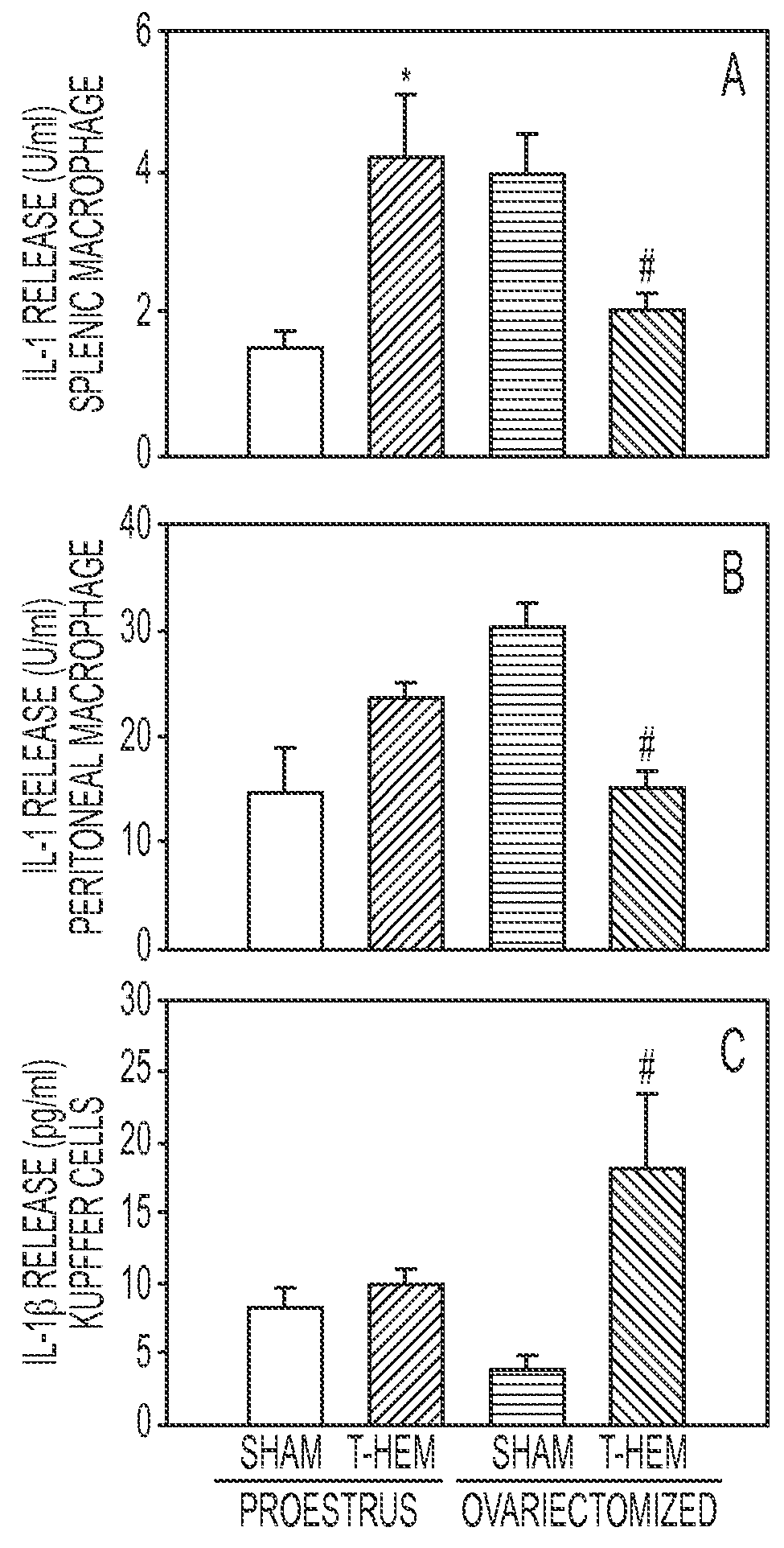
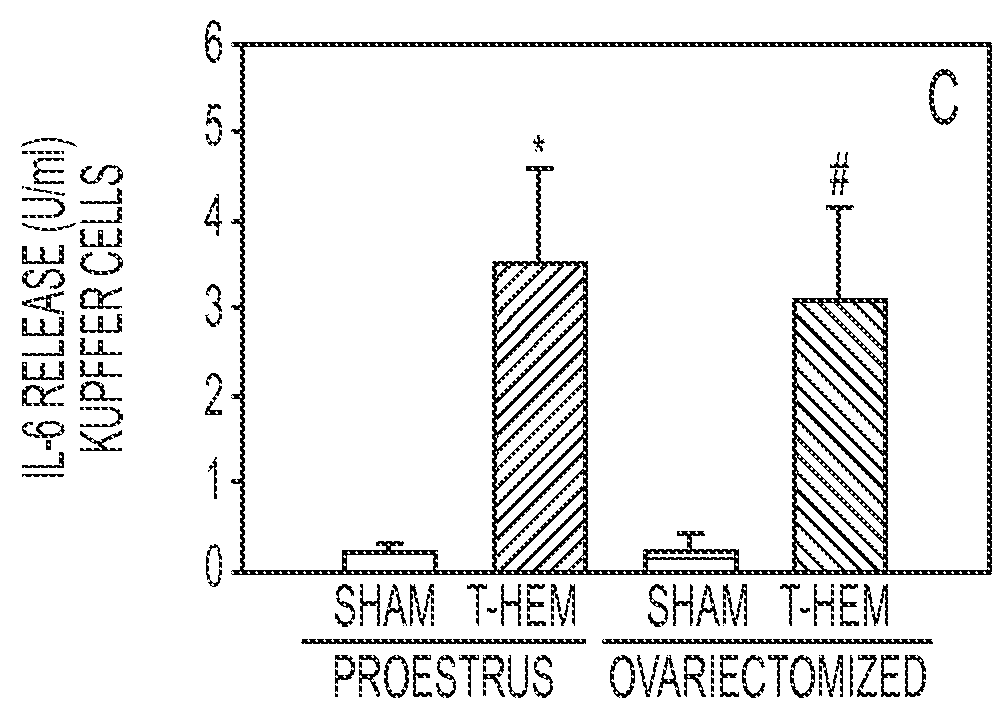
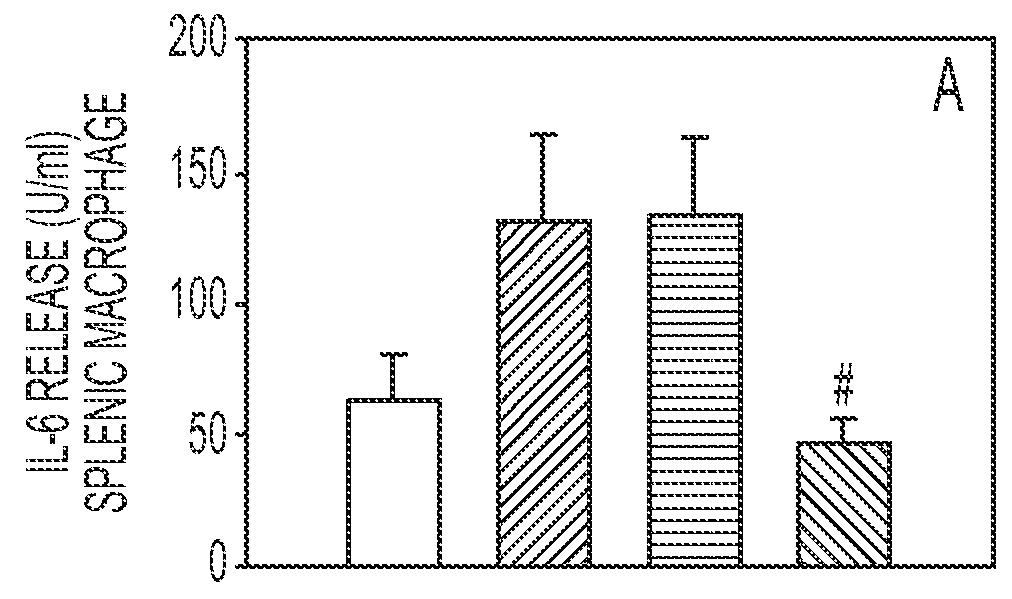
[0196]Circulating female sex hormones were reduced by ovariectomy of 8-week-old female CBA / J mice. Two weeks afterward, ovariectomy and proestrus sham-ovariectomy mice were subjected to laparotomy (i.e., soft tissue trauma) and hemorrhagic shock (35±5 mm Hg for 90 minutes, then resuscitated) or sham operation. Two hours afterward, splenic and peritoneal MΦ and Kupffer cells were isolated and cytokine production was assessed. In a second series of experiments, animals were subjected to sepsis by cecal ligation and puncture at 24 hours after trauma-hemorrhage or sham operation, and survival was assessed.
[0197]Release of interleukin-1 and interleukin-6 by splenic and peritoneal Mφ from proestrus mice was maintained after trauma-hemorrhage, whereas release of interleukin-1 and interleukin-6 by M from ovariectomized mice was depressed by approximatel...
example 2
2. Example 2
The Female Reproductive Cycle is an Important Variable in the Response to Trauma-Hemorrhage
[0239]Although immune functions in proestrus females are maintained after hemorrhage as opposed to decreased responses in males, it has previously been unknown whether such a sexual dimorphism also exists with regard to cardiovascular and hepatocellular functions under those conditions. To study this, male and female (estrus and proestrus) rats underwent a 5-cm midline laparotomy and were bled to and maintained at a mean blood pressure of 40 mmHg until 40% of the maximal bleed-out volume was returned in the form of Ringer lactate (RL). Rats were then resuscitated with four times the shed blood volume with RL. At 24 h thereafter, cardiac index; heart performance; hepatocellular function; and plasma estradiol, testosterone, and prolactin levels were measured. Cardiovascular and hepatocellular functions were depressed in males and estrus females (p<0.05) but were not depressed in proe...
example 3
3. Example 3
Estradiol Administration after Trauma-Hemorrhage Improves Cardiovascular and Hepatocellular Functions in Male Animals
[0273]Studies indicate that gender difference exists in the immune and cardiovascular responses to trauma-hemorrhage, and that male sex steroids appear to be responsible for producing immune and organ dysfunction, but it was previously unknown if sex steroids produce any salutary effects on the depressed cellular and organ functions in males following trauma and hemorrhage.
[0274]Adult male Sprague-Dawley rats underwent a midline laparotomy (i.e., trauma induction), and were bled to and maintained at a mean arterial pressure of 40 mmHg until 40% of the maximum bleed-out volume was returned in the form of Ringer's lactate (RL). Animals were then resuscitated with RL at 4 times the shed blood over 60 minutes. 17β-Estradiol (50 mg / kg) or an equal volume of vehicle was injected subcutaneously 15 minutes before the end of resuscitation. The maximal rate of ventr...
PUM
| Property | Measurement | Unit |
|---|---|---|
| time | aaaaa | aaaaa |
| time | aaaaa | aaaaa |
| time | aaaaa | aaaaa |
Abstract
Description
Claims
Application Information
 Login to View More