
Carbon-sulfur compound for positive electrode of lithium-sulfur battery and preparation and application of carbon-sulfur compound
A lithium-sulfur battery and composite technology, which is applied in the field of nanocomposite materials and its preparation, can solve the problems of low utilization rate of active material sulfur, restrictions on industrialized large-scale production, unsafe and environmentally friendly thiophene, etc., achieve good cycle stability, and benefit Diffusion and transport, the effect of improving electrochemical capacity
Patent Information
- Authority / Receiving Office
- CN · China
- Current Assignee / Owner
- Publication Date
- 2016-07-06
Smart Images
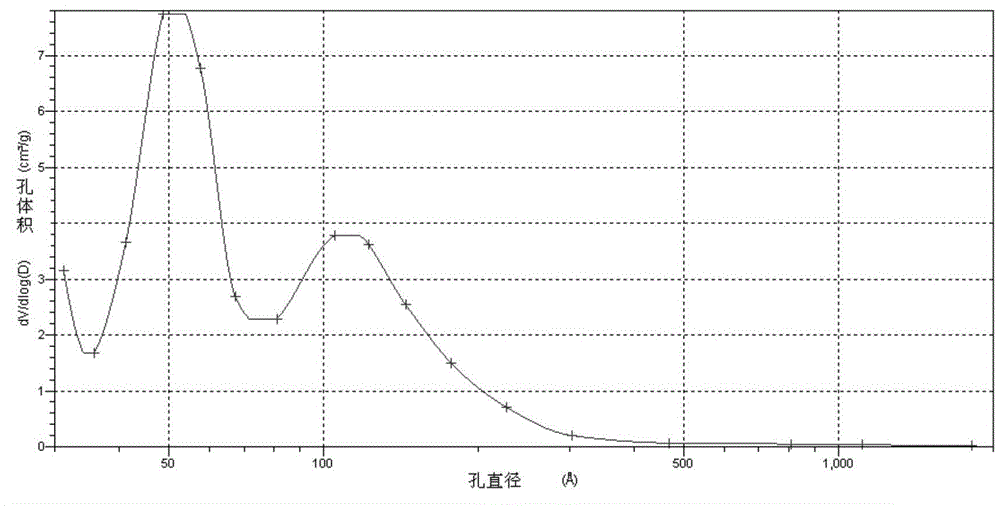
Figure 1 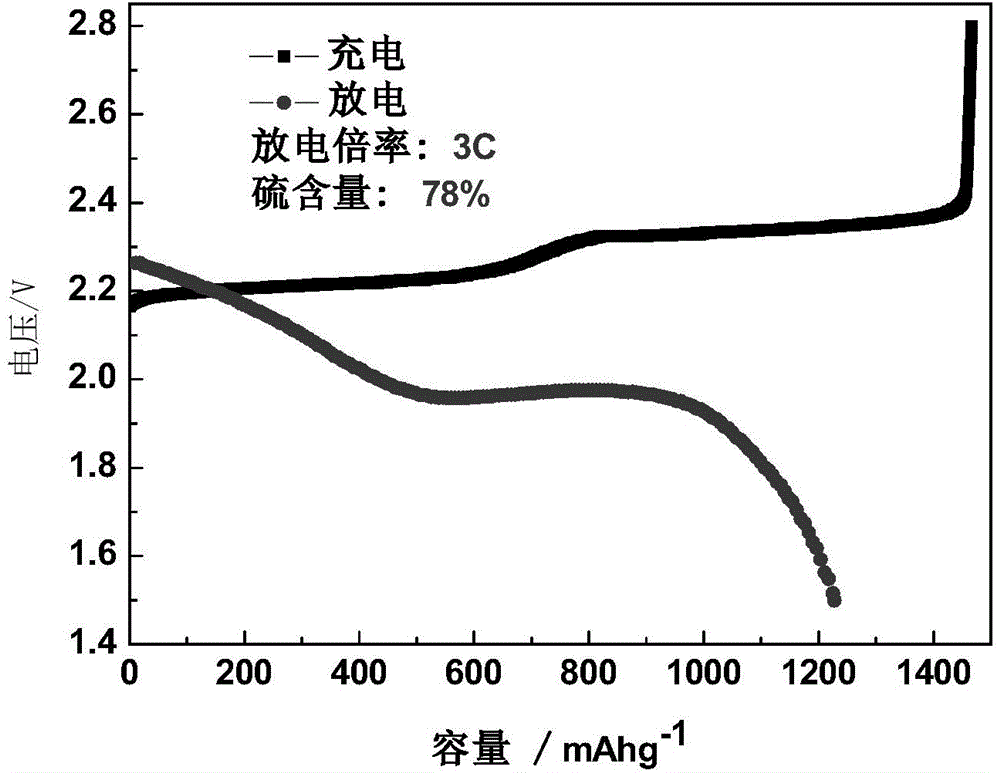
Figure 2 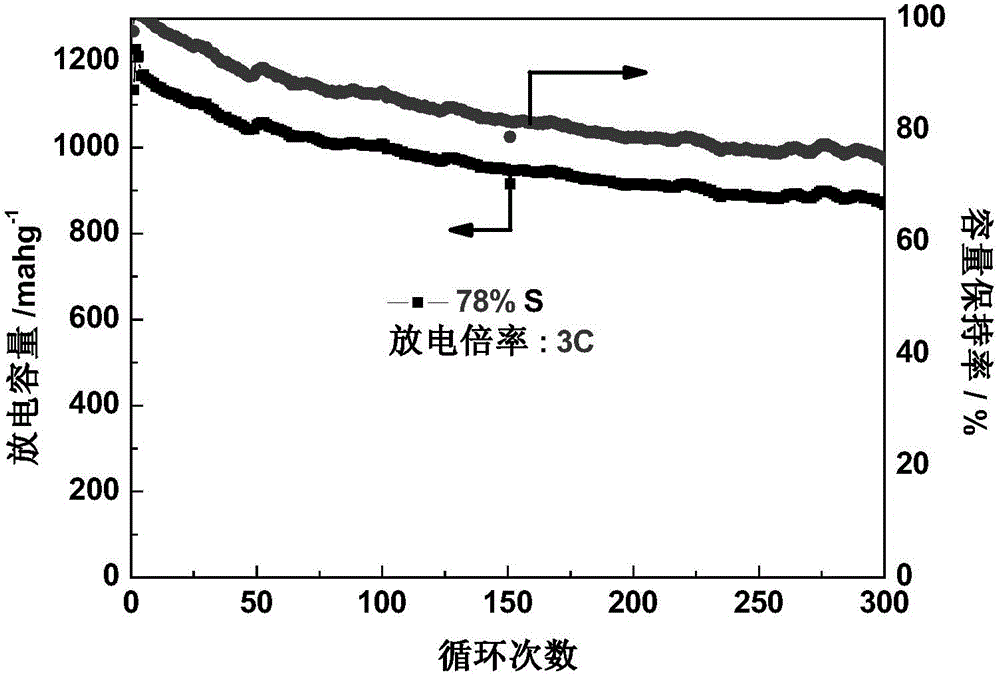
Figure 3
Abstract
Description
technical field
[0001] The invention relates to a nanocomposite material and a preparation method thereof, in particular to a carbon-sulfur compound suitable for the positive electrode of a lithium-sulfur battery and a preparation method thereof. Background technique
[0002] Lithium-sulfur battery is a secondary battery with metal lithium as the negative electrode and elemental sulfur as the positive electrode. Its specific energy can theoretically reach 2600Wh / kg, which is much larger than any commercial secondary battery currently used. In addition to high energy density, lithium-sulfur batteries also have the advantages of less environmental pollution, good safety performance, and the positive electrode material elemental sulfur has abundant sources and low price. Therefore, lithium-sulfur batteries will have broad application prospects in the field of new energy. As a power battery, it can be widely used in plug-in hybrid vehicles, electric vehicles, space vehicles, an...
Examples
Embodiment 1
[0044] Dissolve non-ionic surfactant P123 in ethanol, stir at 35°C to dissolve completely, and form solution A; wherein the mass ratio of surfactant to ethanol is 1:5, add 0.05M hydrogen to solution A Sodium oxide solution, adjust the pH value to 8, continue to stir for 1h to form solution B; add tetraethyl orthosilicate to solution B, stir for 1h to form solution C; wherein the mass ratio of surfactant to tetraethyl orthosilicate is 1:1; add 10nm 20% silica gel solution and 20% phenolic resin solution to solution C, and continue to stir for 3 hours to form solution D; wherein the mass ratio of P123 to silica gel solution is 1:1, the ratio of silica gel to phenolic resin The mass ratio is 1:1; the solution D is aged at 90°C for 12h to obtain powder E; the powder E is kept at 400°C for 2h and 800°C for 2h under nitrogen gas protection to obtain powder F; the obtained powder is used Soak and wash in 5% hydrofluoric acid solution for 12 hours, and dry at 80°C to obtain the carbon...
Embodiment 2
[0050] Dissolve non-ionic surfactant F127 in ethanol, stir at 40°C to dissolve completely, and form solution A; wherein the mass ratio of surfactant to ethanol is 1:5, add 1M hydroxide to solution A Sodium solution, adjust the pH value to 9, continue to stir for 1h to form solution B; add tetraethyl orthosilicate to solution B, stir for 1h to form solution C; wherein the mass ratio of surfactant to tetraethyl orthosilicate is 1 : 2; add 20nm40% silica gel solution and 20% phenolic resin solution to solution C, continue to stir for 3h, form solution D; wherein the mass ratio of F127 and silica gel solution is 1:1, the mass ratio of silica gel and phenolic resin The ratio is 2:1; the solution D is aged at 100°C for 24 hours to obtain powder E; the powder E is kept at a constant temperature of 350°C for 3 hours and 900°C for 3 hours under nitrogen gas protection to obtain powder F; the obtained powder is treated with 10 % hydrofluoric acid solution soaking and cleaning for 24 hou...
Embodiment 3
[0060] Dissolve non-ionic surfactant P123 in isopropanol, stir at 50°C to dissolve completely, and form solution A; wherein the mass ratio of surfactant to ethanol is 1:6, add 1M Potassium hydroxide solution, adjust the pH value to 11, continue to stir for 3 hours to form solution B; add methyl orthosilicate to solution B, stir for 3 hours to form solution C; wherein the mass ratio of surfactant to ethyl orthosilicate 1:3; add 30nm 40% silica gel solution and 40% phenolic resin solution to solution C, and continue to stir for 6 hours to form solution D; wherein the mass ratio of P123 to silica gel solution is 1:3, silica gel and phenolic resin The mass ratio of the solution D is 4:1; the solution D is aged at 150°C for 72h to obtain the powder E; the powder E is kept at a constant temperature of 350°C for 5h and 1000°C for 5h under the protection of nitrogen gas to obtain the powder F; the obtained powder Soak and wash in 1M sodium hydroxide solution at 80°C for 12 hours, and ...