
Salmonella phage and phage antibacterial composition and application thereof
A technology of Salmonella and Salmonella enteritidis, applied in the direction of phage, virus/phage, application, etc., can solve the problems of inappropriate heat treatment sterilization, inability to kill pathogens, cross-contamination, etc., and achieve strong bacteriostasis ability, wide pH application range, and effective high price effect
Patent Information
- Authority / Receiving Office
- CN · China
- Patent Type
- Patents(China)
- Current Assignee / Owner
- Publication Date
- 2018-06-29
Smart Images

Figure 1 
Figure 2 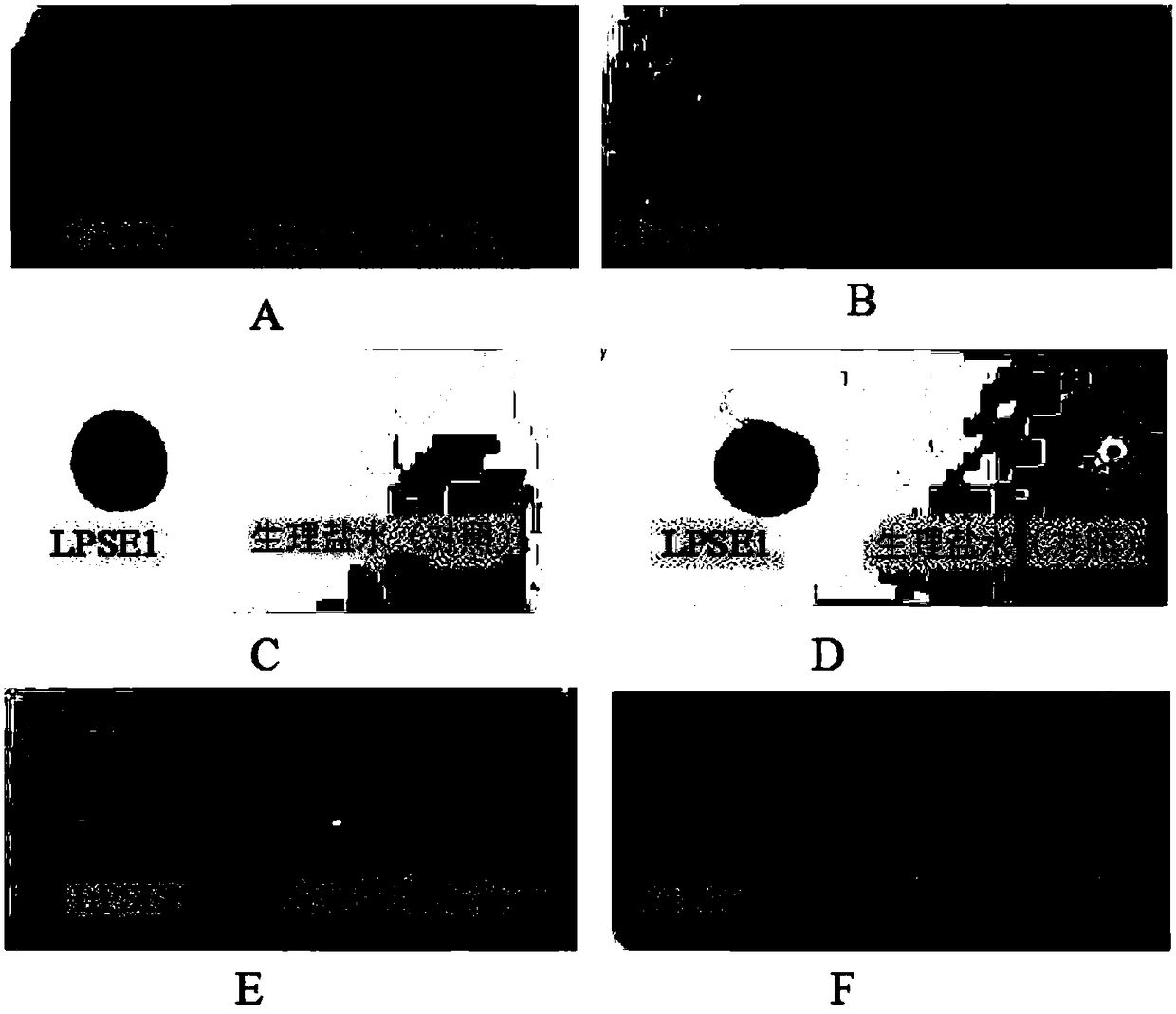
Figure 3
Abstract
Description
technical field
[0001] The invention relates to the field of food safety, in particular to Salmonella phages, phage antibacterial compositions and applications thereof. Background technique
[0002] According to the data of my country's foodborne disease detection system, food safety problems caused by foodborne microorganisms account for 43% of the total. Among them, the number of outbreaks of foodborne diseases caused by Salmonella accounts for 70%-80%. In the past ten years (2004-2015), the foodborne disease outbreak reports in various regions of the US Foodborne Disease Surveillance Network show that the global outbreak rate of foodborne diseases caused by Salmonella has increased year by year, and the outbreak ranks first. The World Health Organization (WHO) has listed Salmonella as a serious and moderately harmful food-borne pathogen and has established a Global Salmonella Surveillance Network (WHO-GSS) to strengthen the monitoring of Salmonella contamination. Salmon...
Examples
Embodiment 1
[0049] Screening, Purification and Preservation of Salmonella Phage
[0050] 1. Screening of Salmonella phage
[0051] Take 10 mL of sewage sample and filter it with a microporous filter with a diameter of 0.22 μm. Add them to 50mL sterilized Erlenmeyer flasks filled with 20mL 2×YT medium, and add 5mL of sensitive indicator bacteria cultured to the logarithmic phase. Shake culture at 37°C for 12-18 hours so that the phages that may exist in the sample can achieve the effect of proliferation and enrichment.
[0052] Centrifuge the above culture solution in a 50 mL centrifuge tube at 8000×g for 15 min at 4°C, and filter the supernatant with a 0.22 μL filter membrane. Add sterilized culture medium and logarithmic growth phase host bacteria solution to enrich repeatedly three times according to the above method. Preliminary verification by spotting method and coating method respectively: samples with obvious plaques were further adopted double-layer plate method, after gradient...
Embodiment 2
[0064] Determination of host spectrum:
[0065] In the experiment, 8 standard strains of Salmonella and 7 strains of other species were selected for host spectrum analysis of phage LPSE1 and LPST10, and the specific operations were as follows:
[0066] The host bacterial strains were cultured to the logarithmic phase. Take 100 μL of the above-mentioned bacterial solution in the logarithmic phase. When the temperature of the upper layer of agar drops to about 46 °C, take 3 mL of the upper layer of agar and mix it with the bacterial solution, and pour it into 15 mL of the lower layer of agar medium. Let it stand to dry for about 10 minutes. After the upper layer of medium solidifies, add 5 μL of each phage liquid dropwise, and take another 5 μL of normal saline as a control group, and observe overnight.
[0067] The results are shown in Table 1. "++++" "+++" "++" "+" "-" in the table means completely clear; clarified but with a faint background; clear areas are largely turbid;...
Embodiment 3
[0073] Electron Microscopic Observation of Phage
[0074] The phage stock solution was ultracentrifuged at low temperature at 50,000×g, resuspended in 1mL of SM buffer, and placed in an ice bath for 1-2 hours. Take 50 μL samples (10 8 -10 10 pfu / mL) and 50 uL of phosphotungstic acid (phosphotungstic acid, PTA) with a volume fraction of 2% and pH 7.0 were dropped on the parafilm. Gently remove the copper mesh, place it in the sample droplet and let it settle for 5-10min, then absorb the excess liquid. Take out the copper mesh and let it stand for 5 minutes. When the suspension on the copper mesh is about to dry but not completely dry, use tweezers to place the copper mesh in phosphotungstic acid (PTA) dye for 3 minutes, absorb the excess liquid, and let it dry naturally. After drying completely, observe the morphology of the phage under a transmission electron microscope, and measure its size with the software Digital Micrograph Demo 3.9.1.
[0075] The result is as Figur...