
A Salmonella enteritidis phage lpse28 and its application in food
A technology of Salmonella enteritidis and Salmonella, applied in Salmonella enteritidis phage LPSE28, liquid eggs, application of Salmonella enteritidis phage LPSE28 in food and milk system, can solve the problem of misjudgment of phage and achieve good cracking effect and good antibacterial effect , good stability effect
Patent Information
- Authority / Receiving Office
- CN · China
- Patent Type
- Patents(China)
- Current Assignee / Owner
- Publication Date
- 2021-01-05
Smart Images
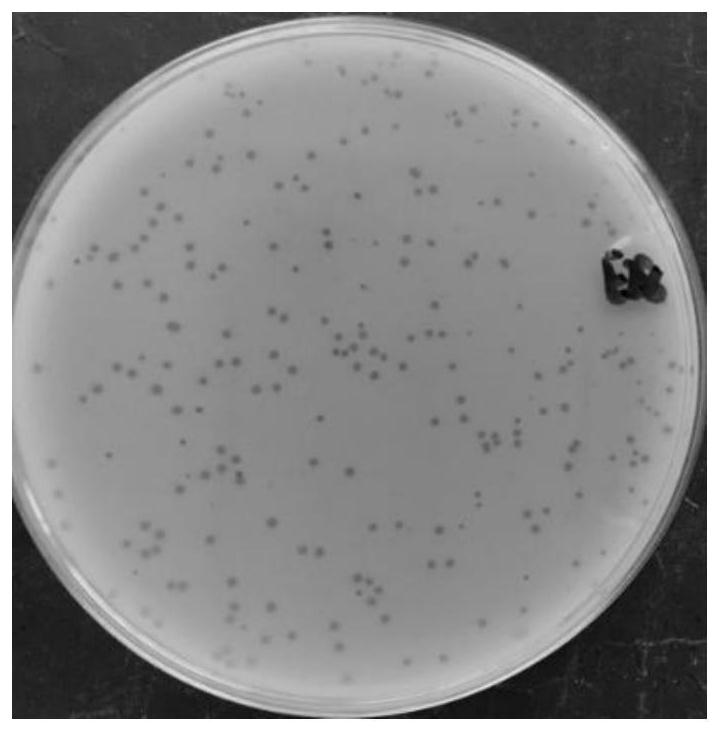
Figure 1 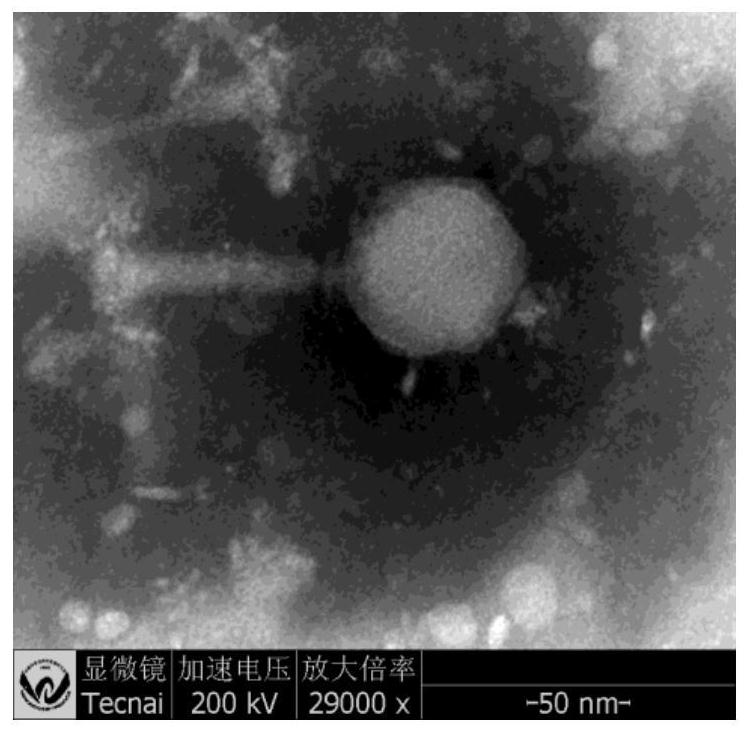
Figure 2 
Figure 3
Abstract
Description
Technical field
[0001] The present invention relates to the field of food safety, in particular to a Salmonella enteritidis phage LPSE28, and also relates to the application of Salmonella enteritidis phage LPSE28 in food. The phage is particularly suitable for liquid egg and milk systems.Background technique
[0002] Salmonella, especially Salmonella enteritidis, is very easy to contaminate eggs, milk, and meat, and is one of the most common pathogens that cause food poisoning. Among the food poisoning cases caused by bacteria worldwide, Salmonella is the second in the total number of food poisoning incidents caused. The proportion of food poisoning caused by Salmonella in food-borne diseases in China is as high as 70%-80%. Salmonella enteritidis is more vigorous and is the most common pathogen in poultry eggs and dairy products.
[0003] Beginning in the late 1980s, Salmonella enteritidis became one of the main food-borne pathogens. Salmonella enteritidis can colonize the reproductive organs...
Examples
Embodiment 1
[0043]A method for the isolation and screening of Salmonella enteritidis phage LPSE28, the steps are:
[0044](1) Sample collection
[0045]The sewage sample came from the Jiufengshan Chicken Farm in Wuhan City, Hubei Province.
[0046](2) Screening of Salmonella phage
[0047]Take 10 mL of sewage sample and filter with 0.22μm microporous filter. Put 20mL sterilized TSB medium (tryptone soy broth medium, the composition of the medium is: tryptone 17.0g / L, soy peptone 3.0g / L, sodium chloride 5.0g / L, Dipotassium hydrogen phosphate 2.5g / L, glucose 2.5g / L, pH value 7.3±0.2; the method of use of this medium is: weigh 30.0g of TSB medium with the above ingredients, heat and stir to dissolve in 1000mL distilled water, and aliquot In a test tube or other suitable container, autoclave at 121°C for 20 minutes in a 50 mL sterile centrifuge tube, and add 5 mL of sensitive indicator bacteria in the logarithmic growth phase (cultivation for 6-8 hours). Shake culture at 37°C for 12-18h to proliferate the phag...
Embodiment 2
[0060]Example 2: Determination of the host profile of phage LPSE28
[0061]The test selected 8 standard Salmonella strains (Salmonella enteritidis ATCC13076, SJTUF10978, SJTUF10984, SGSC4901; Salmonella typhimurium ATCC14028, ATCC13311; Salmonella pullorum CVCC534; Salmonella paratyphi B CMCC50094 and 30 other species of Salmonella enteritidis (LK5-3820; Salmonella enteritidis) Salmonella typhimurium CT18, Ty2, ST-8, UK-1,490,1344; Salmonella pullorum C79-3; Escherichia coli D41, H10417, K12, DH5α and Salmonella enteritidis resistant strains 1490, 2194, 2195, 2324, 2211 , 2247, 2302, 2428; Salmonella typhimurium resistant strains 893, 1893, 2069, 2088, 2238, 2395, 2459, 2511; Oranienburg Salmonella resistant strain 4835; Corvallis Salmonella resistant strain 2031) To analyze the host profile of phage LPSE28, the specific steps are as follows:
[0062]The above-mentioned strains (8 standard Salmonella strains and 30 other species strains) were cultivated to the logarithmic phase. Take 100μ...
Embodiment 3
[0068]Example 3: Electron microscopic observation of phage LPSE28
[0069]Phage LPSE28 stock solution (The preparation method of bacteriophage LPSE28 stock solution is: inoculate Salmonella enteritidis ATCC13076 in a 3mL liquid TSB bacterial bottle, incubate at 37℃ for about 6 hours, take 100μL of the above bacterial solution in 10mL fresh TSB, and then add 100μL of phage LPSE28 stored at 4℃ After mixing, incubate in a shaking incubator at 37°C for 12-18h to proliferate the phage. Take 5mL of proliferation solution in a centrifuge tube, centrifuge at 1000g for 10min to remove bacterial debris, and filter the supernatant with a 0.22μm filter membrane to obtain the phage stock solution) by 50000× g. After ultracentrifugation at 4°C, resuspend in 1 mL of 0.1M ammonium acetate buffer and ice bath to obtain samples. Take 20 μL samples (1010-1011pfu / mL) and 20 uL of 2% phosphotungstic acid (PTA) with a volume fraction of 2% and pH 7.0 were dropped onto the parafilm. Take the copper mesh gent...