
Asian Zika virus RT-RIA/CRISPR-Cas12a detection kit and detection method thereof
A detection kit and technology for Zika virus, applied in the field of detection, can solve the problems of high requirements for primer-probe combination screening without substantially improving detection sensitivity, and achieve simple instrument requirements, good specificity and good repeatability. Effect
Patent Information
- Authority / Receiving Office
- CN · China
- Patent Type
- Applications(China)
- Current Assignee / Owner
- Publication Date
- 2021-06-22
Smart Images
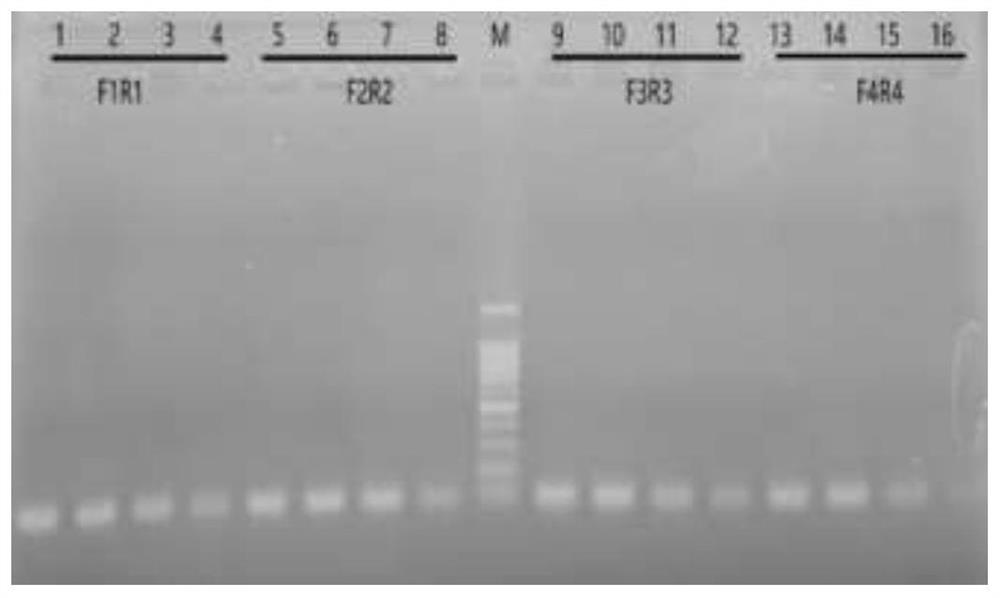
Figure 1 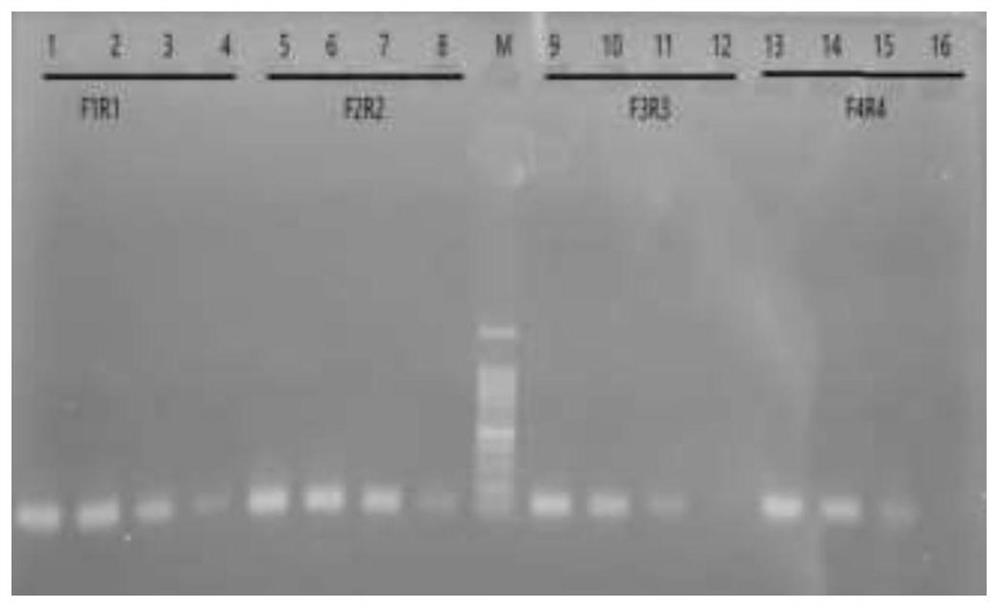
Figure 2 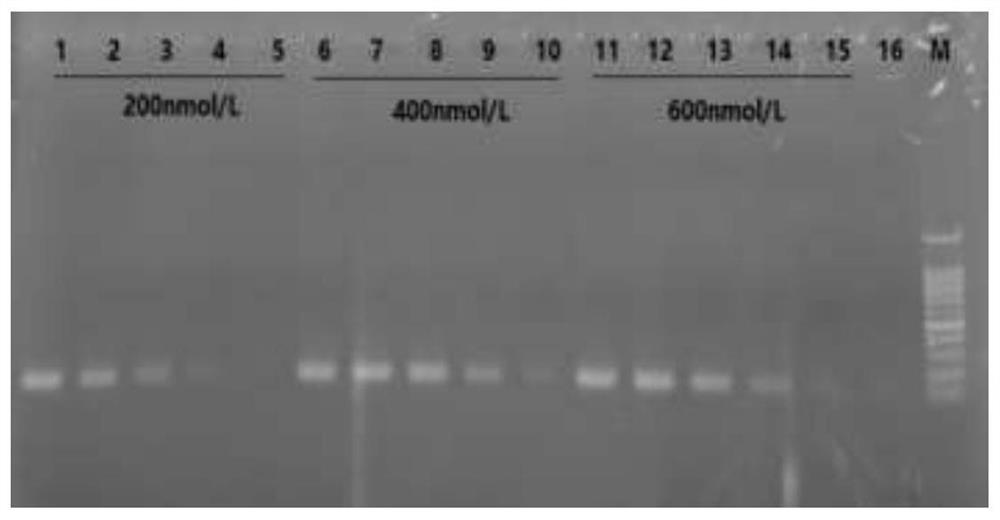
Figure 3
Abstract
Description
technical field
[0001] The invention relates to the technical field of detection, in particular to an Asian Zika virus RT-RIA / CRISPR-Cas12a detection kit and a detection method thereof. Background technique
[0002] Zika virus (Zika Virus, ZIKV) is an important mosquito-borne virus, belonging to the family Flaviviridae and the genus Flavivirus. The genome is single-stranded positive-sense RNA, the diameter of the virus particle is 40-50nm, and the transmission medium is Aedes mosquito. As of March 2018, a total of 84 countries around the world have reported cases of ZIKV infection. In February 2016, my country confirmed the first case of imported ZIKV infection in mainland China [1] , followed by imported cases in Guangdong, Zhejiang, Beijing and other places [2] . The virus has a tendency to gradually spread in Southeast Asia and other regions. The warm and humid southern regions of my country are very suitable for the growth and reproduction of mosquitoes, resulting in...
Examples
Embodiment 1
[0114] Example 1: Design and screening of RT-RIA primers
[0115] According to the results of bioinformatics analysis combined with literature reports, the Asian and African Zika virus genome sequences, as well as dengue virus types I-IV, yellow fever virus, West Nile virus, Japanese encephalitis virus and type C were downloaded from the NCBI database. Hepatitis virus genome sequences were compared with MEGA6.06 biological software, and the conserved region of the non-coding structural protein gene NS5 of Asian Zika virus was selected as the target gene to design primers, and primer premier5.0 software was used to design primers according to Twist principles: primers The 3 to 5 nucleotides at the 5' end of the primer should avoid polyguanine; the 3 bases at the 3' end are guanine and cytosine, which contribute to the stable combination of the polymerase and can improve the amplification performance of the primer; It is best not to have special sequences, such as long strings o...
Embodiment 2
[0122] Embodiment 2: Optimization of reaction conditions
[0123] (1) RT-RIA primer concentration optimization
[0124] Set 3 different primer concentration levels (concentrations are respectively: 200nmol / L, 400nmol / L, 600nmol / L), use the ZIKV pseudovirus standard substance (1.0×10 7 copies / mL, 1.0×10 6 copies / mL, 1.0×10 5 copies / mL and 1.0×10 4 copies / mL) and 10-fold serial dilutions (10ng / μL, 1ng / μL, 100pg / μL, and 10pg / μL) of human serum RNA and negative controls were used as test samples for RT-RIA reaction, and the amplified product was used in 1.5% agar Glycogel electrophoresis was used to detect the effect of different primer concentrations on the amplification results.
[0125] Results: Different concentrations of RPA primers affected the amplification sensitivity of ZIKV and β-actin. When the final concentration of RPA primers was 200nol / L, the detection sensitivity of ZIKV and β-actin genes was low, and the detection sensitivity of ZIKV pseudovirus was 10 5 cop...
Embodiment 3
[0138] Embodiment 3: performance evaluation
[0139] (1) Sensitivity test
[0140] Take ZIKV pseudovirus standard 2.0×10 3 copies / mL, 1.0×10 3 copies / mL, 5.0×10 2 copies / mL) and 250×10 2 The copies / mL and the negative control were the samples to be tested, and each concentration sample and the negative control were repeated 10 times, and the constructed RPA / CRISPR-Cas12a method was used for detection to determine the detection sensitivity.
[0141] The experimental results show that when the ZIKV pseudovirus concentration is 250copies / mL, only 3 times of 10 repeated detection results are positive, and the positive rate is 30% (3 / 10); when the ZIKV pseudovirus concentration is not less than 500copies / mL, the detection The results were all positive, and the detection rate was 100% (10 / 10) (see attached Figure 7 ). Therefore, the RT-RIA / CRISPR-Cas12a fluorescence detection system constructed in this study has a detection sensitivity of 500 copies / mL for ZIKV, that is, 1.5 ...