
Novel antibacterial and fungicidal peptide in which lysine and tryptophan residues are repeated, and use thereof
Patent Information
- Authority / Receiving Office
- US · United States
- Current Assignee / Owner
- Publication Date
- 2014-10-16
- Estimated Expiration
- Not applicable · inactive patent
Smart Images
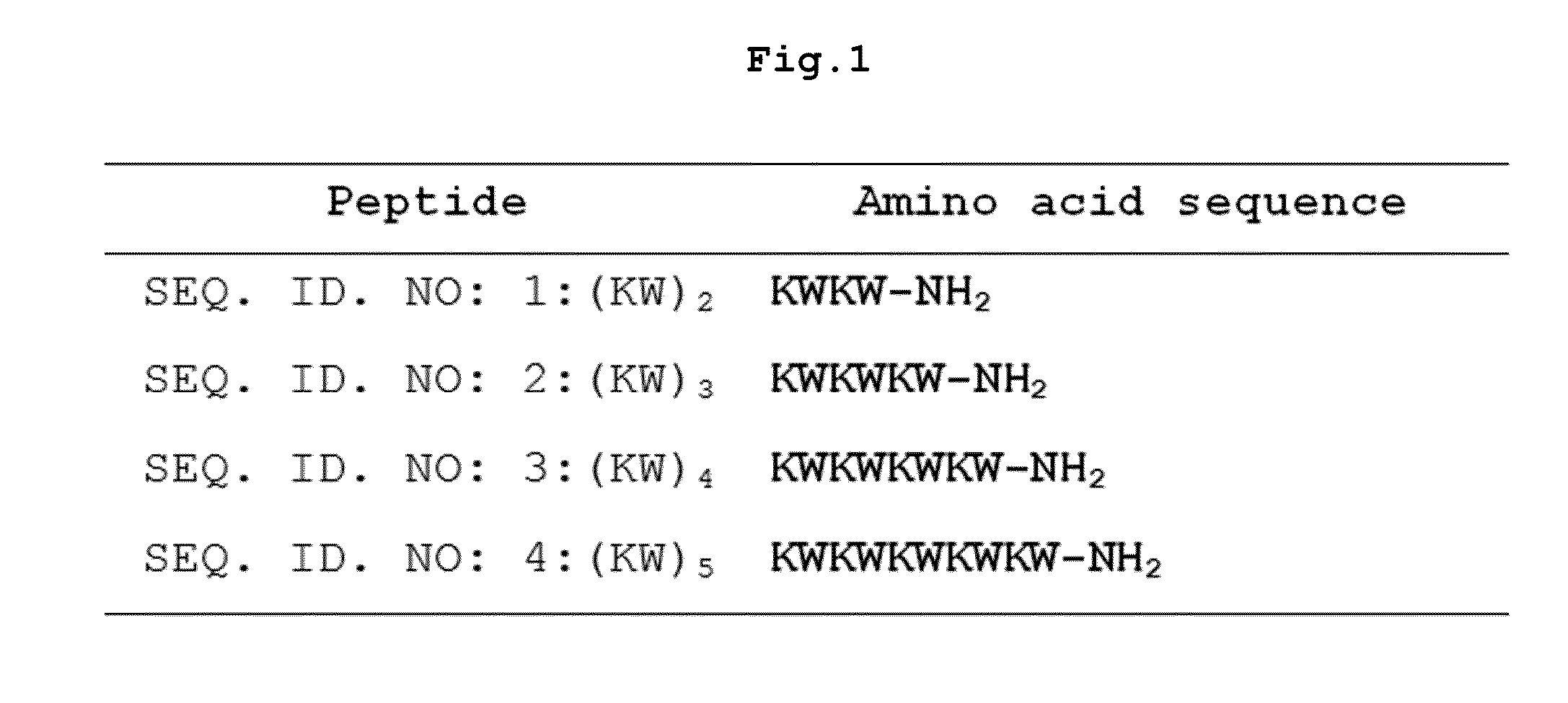
Figure 1 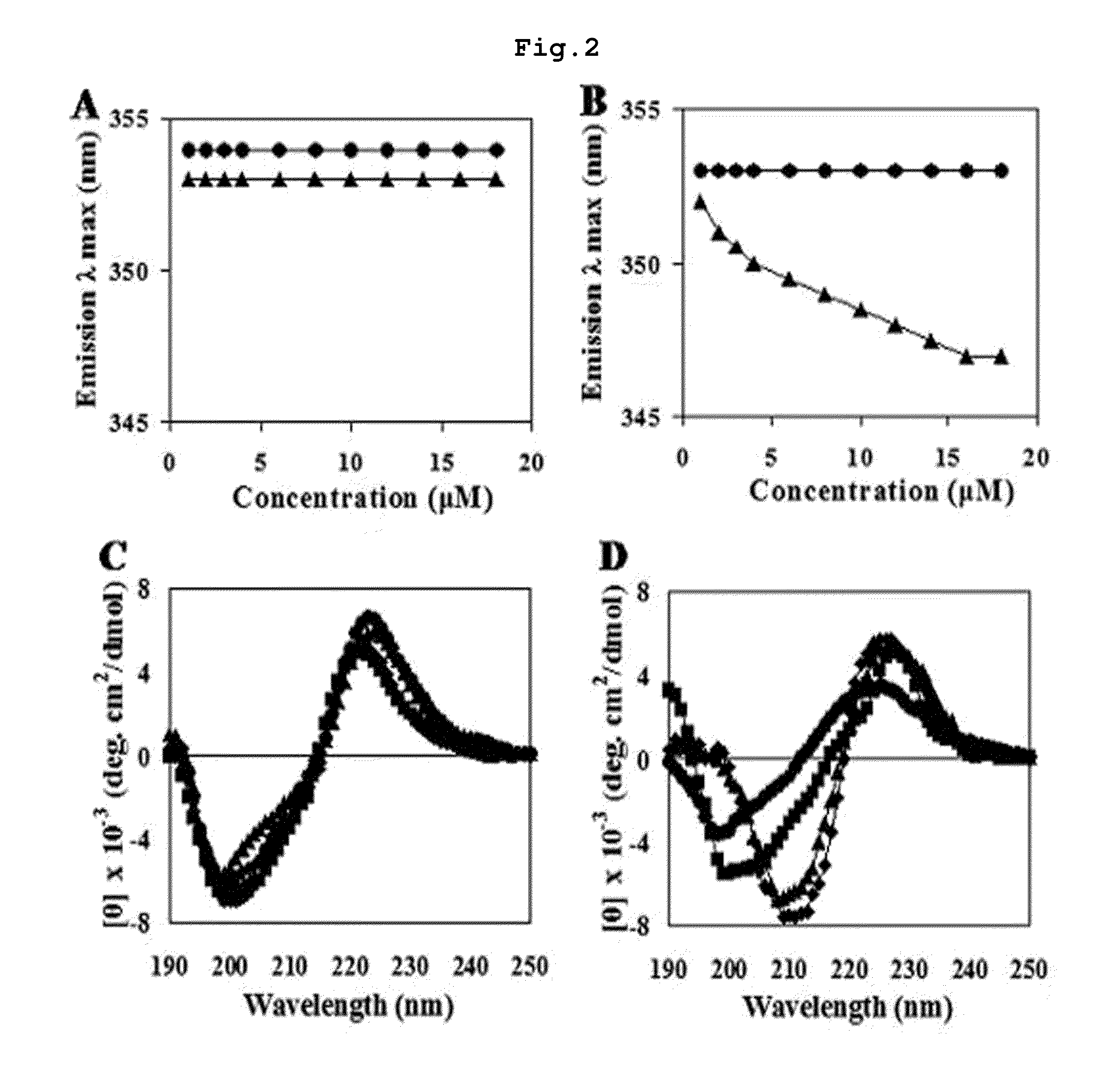
Figure 2 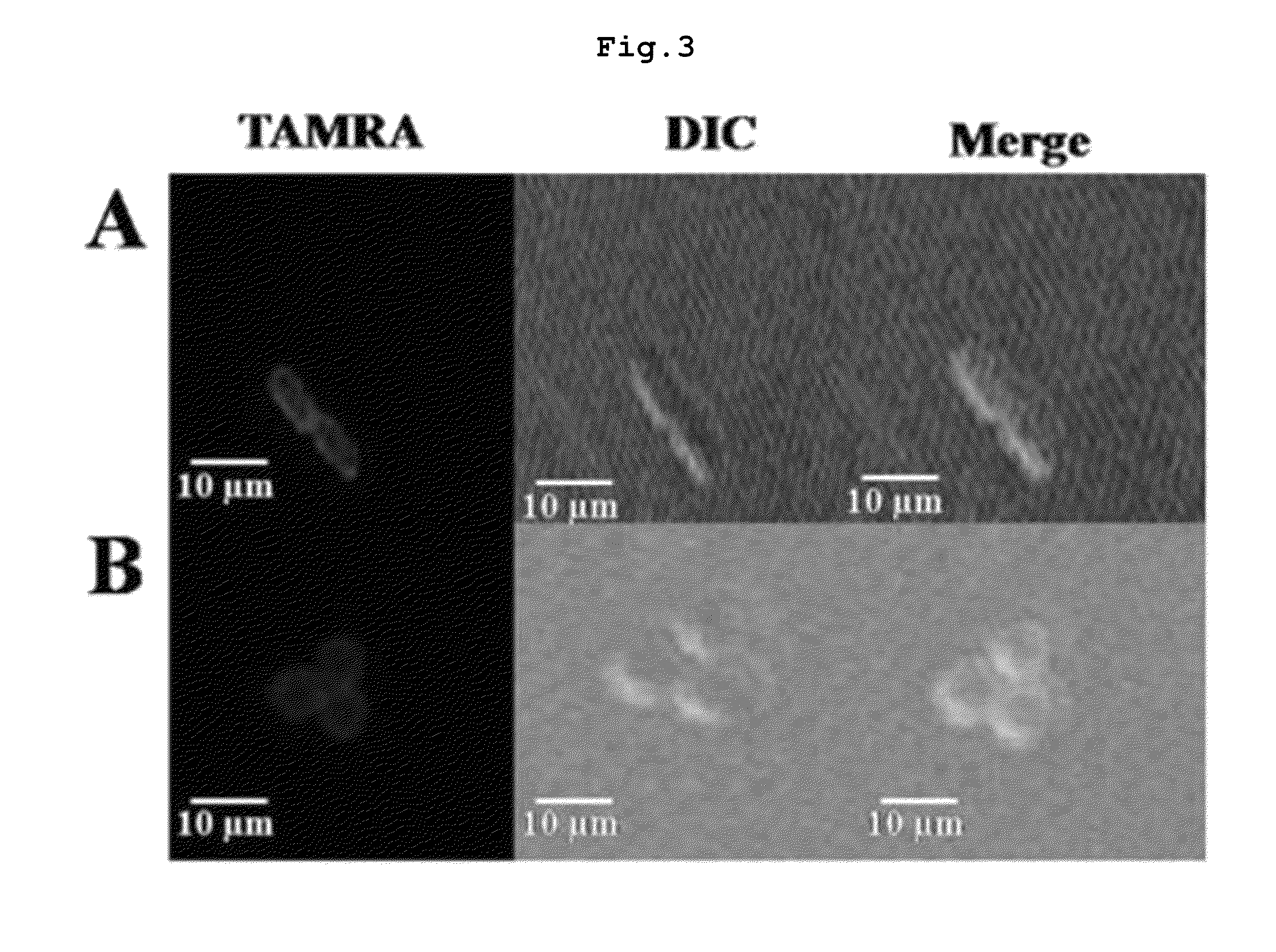
Figure 3
Abstract
Description
BACKGROUND OF THE INVENTION
[0001] 1. Field of the Invention
[0002] The present invention relates to a novel antibiotic peptide in which lysine and tryptophan residues are repeated and an antibacterial and fungicidal pharmaceutical composition comprising the same as an active ingredient.
[0003] 2. Description of the Related Art
[0004] The bacterial infection is one of the most common and lethal causes of human disease. Unfortunately, misuse or overuse of antibiotics brought antibiotic resistance of bacteria. In fact, the period that it takes for bacteria to show resistance against a new antibiotic is much shorter than the period for the development of a novel antibiotic or analogues thereof. For example, fatal bacteria Enterococcus faecalis, Mycobacterium tuberculosis and Pseudomonas aeruginosa have raised their resistance against almost every antibiotics developed so far (Stuart B. Levy, Scientific American, 46-53, 1998).
[0005] Tolerance against antibiotics is different from resistance agai...
Examples
example 1
Peptide Synthesis, Separation and Purification
[0116]To synthesize the peptide having the repeats of lysine and tryptophan, the present inventors used Merrifield's liquid-solid method (Merrifield, R B., J. Am. Chem. Soc., 85, 2149, 1963) using Fmoc (9-fluorenylmethoxy carbonyl) as the amino acid protecting group. Particularly, Rink Amide MBHA-Resin was used as a starting material for the peptide having —NH2 type C-terminal, and Fmoc-amino acid-Wang Resin (Wang Resin) was used as a starting material for the peptide having —OH type C-terminal. The peptide chain extension via Fmoc-amino acid coupling was performed by DCC (N-hydroxybenzo triazole(HOBt)-dicyclo-hexycarbodiimide) method. After Fmoc-amino acids at N-terminal of each peptide were coupled, Fmoc group was eliminated by using NMP (20% piperidine / N-methylpyrolidone) solution, followed by washing with NMP and DCM (dichoromethane) several times and drying over nitrogen gas. TFA (trifluoroacetic acid)-phenol-thioanisole-H2O-triisop...
example 2
Measurement of Antibacterial Activity of Peptide
Measurement of MIC in Bacteria
[0118]To measure the antibacterial activity of the peptide prepared in Example 1, the present inventors measured MIC, the minimal concentration that can keep the strain without being divided. For the measurement of antibacterial activity, Gram-positive bacteria selected from the group consisting of Bacillus subtilis, Staphylococcus aureus and Listeria monocytogenes, Gram-negative bacteria selected from the group consisting of Escherichia coli, Psedomonas aeruginosa and Salmonella typhimurium, and antibiotic-tolerant strains selected from the group consisting of E. coli (E. coli CCARM 1229, 1238), Salmonella (S. typhimurium CCARM 8007, 8009, 8013) and Staphylococcus (S. aureus CCARM 3089, 3090, 3108, 3114, 3126) were used. After cultured in optimal media, the strains were diluted at the density of 2×10⁵ cells / ml, which were then inoculated on microtitrate plates. The peptide synthesized in Example 1 and th...
example 3
Measurement of Cytotoxicity of Peptide
[0124]To investigate whether or not the peptide of the present invention had cytotoxicity, the present inventors investigated hemolytic activity of the peptide. Particularly, human erythrocytes were diluted in phosphate buffered saline (PBS, pH 7.0) at the concentration of 8%, to which the peptide 2-fold diluted from 200 μM / well was added, followed by reaction at 37° C. for 1 hour. Centrifugation was performed at 1,000 g and the level of hemoglobin included in the supernatant was measured by measuring OD414. To examine hemolysis, 1% triton X-100 was added to human erythrocytes, followed by measuring absorbance of the supernatant. The hemolytic activity of 1% triton X-100 was regarded as 100%, with which hemolytic activity of each antibacterial peptide was compared. The result was presented by the numbers calculated by the following mathematical formula 1.
hemolysis=(absorbance A absorbance B / absorbance A−absorbance B)×100 [Mathematical Formula 1...