
Detection of nucleic acid differences using combined endonuclease cleavage and ligation reactions
Patent Information
- Authority / Receiving Office
- US · United States
- Current Assignee / Owner
- Publication Date
- 2007-04-03
Smart Images
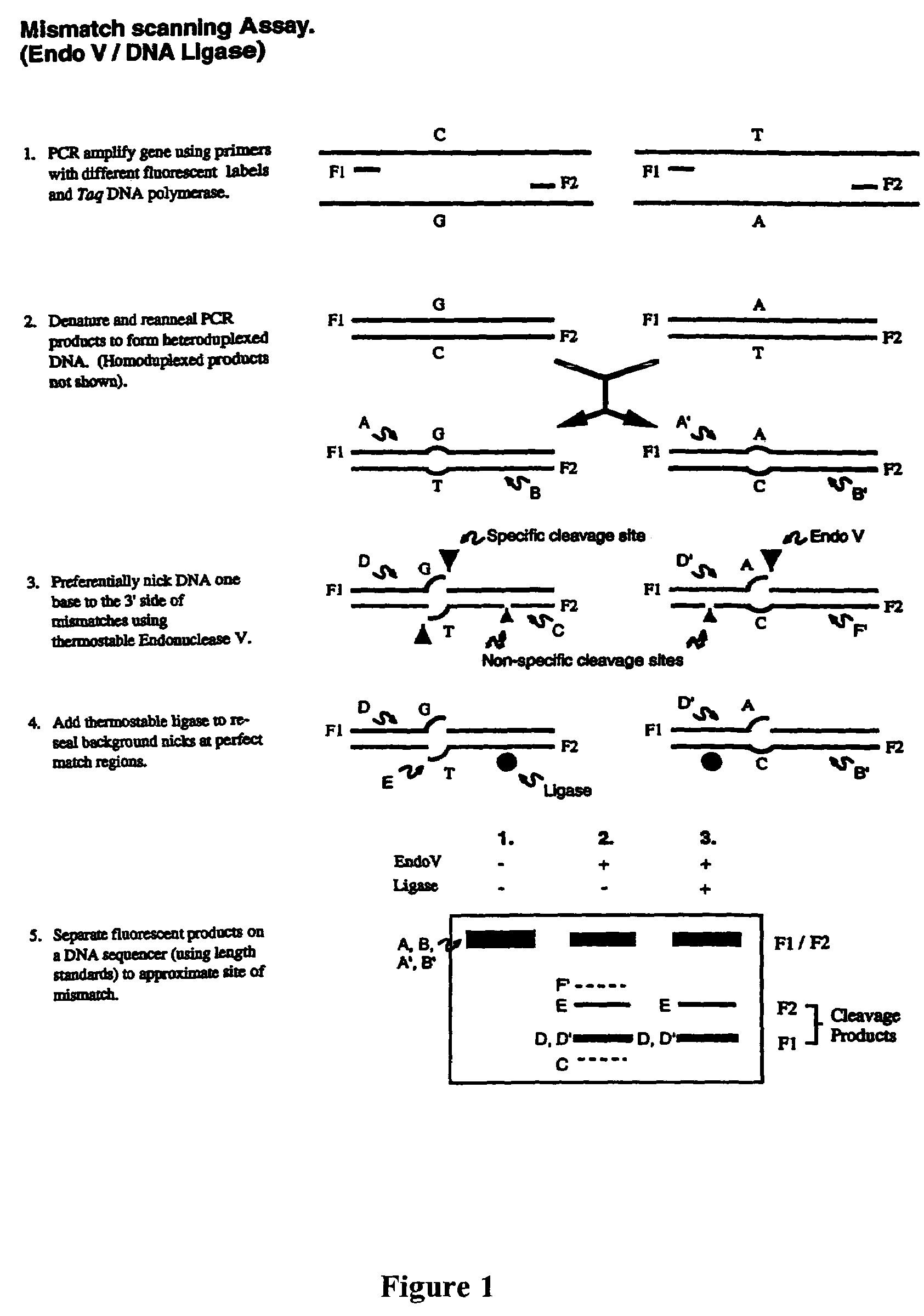
Figure 1 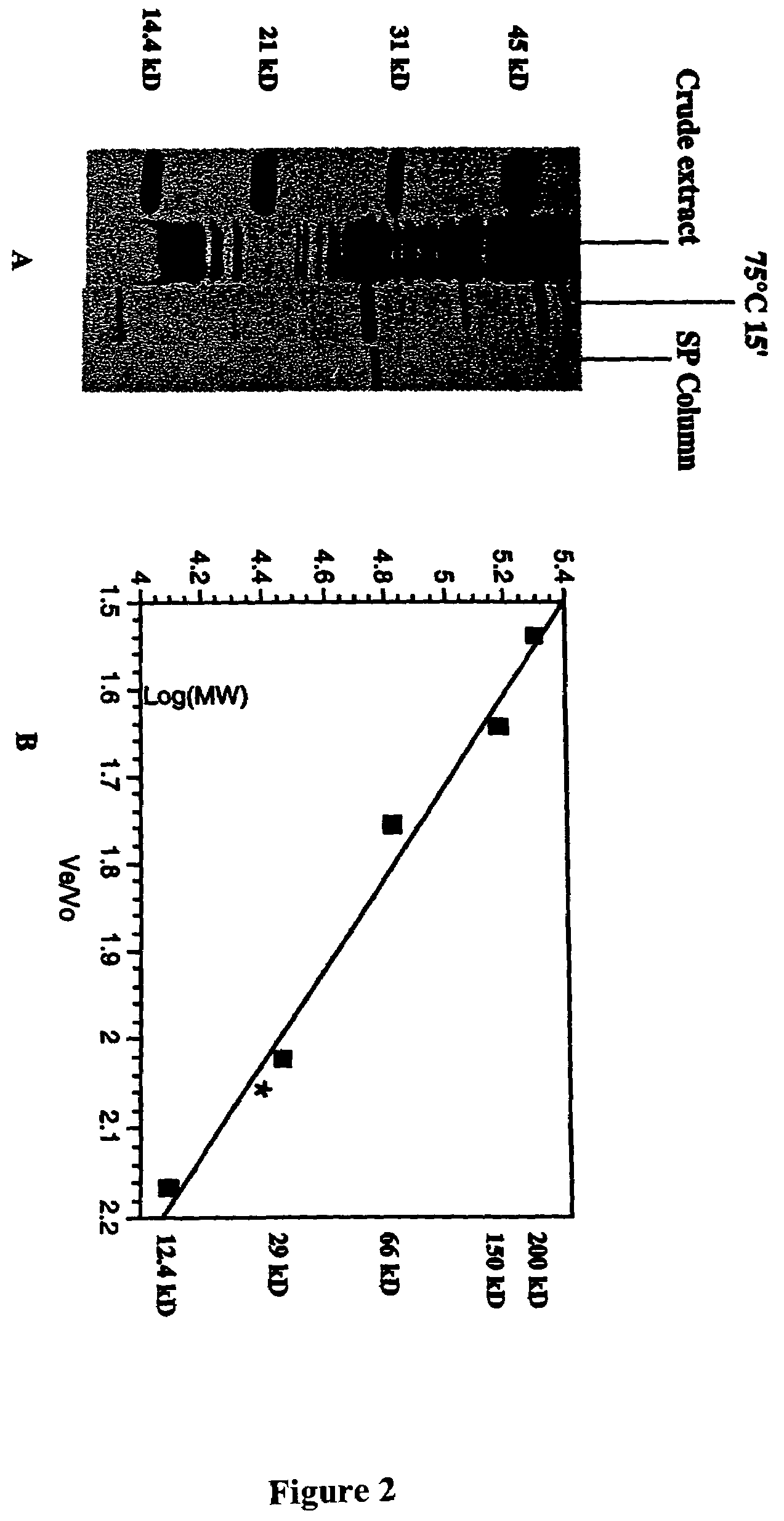
Figure 2 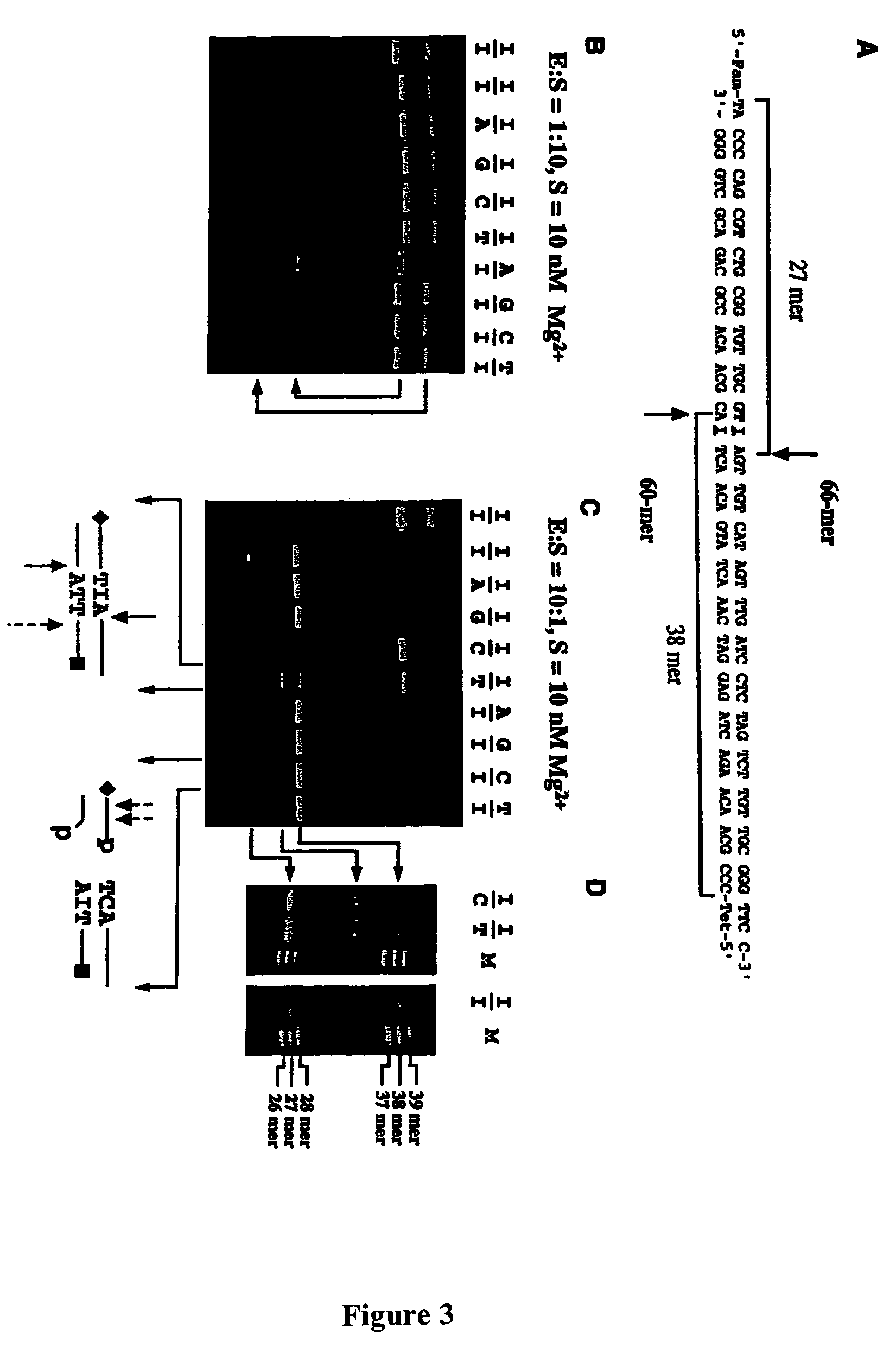
Figure 3
Abstract
Description
[0001] This application claims benefit of U.S. Provisional Patent Application Ser. No. 60 / 250,435, filed Dec. 1, 2000.
[0002] The present invention arose from research sponsored by the National Institutes of Health under Grant Nos. ROI-CA 65930 and ROI-CA 81467. The United States Government may have certain rights.FIELD OF THE INVENTION
[0003] The present invention relates to detecting nucleic acid differences using combined endonuclease (“endo”) cleavage and ligation reactions.BACKGROUND OF THE INVENTIONDetection of DNA Sequence Variation
[0004] There is a great need in both basic and clinical research to identify DNA sequence variations with high efficiency and accuracy. The current techniques for detection of such variation can be divided into two groups: 1) detection of known mutations or polymorphisms and 2) detection of unknown mutations or polymorphisms (also referred to as mutation scanning). A variety of effective methods have been developed for detecting known mutations and polym...
Examples
example 1
Reagents, Media, and Strains
[0081]All routine chemical reagents were purchased from Sigma Chemicals (St. Louis, Mo.) or Fisher Scientific (Fair Lawn, N.J.). deoxynucleotide, BSA, and ATP were purchased from Boehringer-Mannheim (Indianapolis, Ind.). Deoxyoligonucleotides were ordered from Integrated DNA Technologies Inc. (Coralville, Iowa). HiTrap SP columns were purchased from Amersham-Pharmacia Biotech (Piscataway, N.J.).
[0082]Restriction enzymes, T4 DNA ligase and DNA polymerase I (Klenow fragment) were purchased from NewEngland Biolab (Beverly, Mass.). DNA sequencing kits, PCR kits, and GENESCAN-500 (TAMRA) Size Standard were purchased from Applied Biosystems Division of Perkin-Elmer Corporation (Foster City, Calif.). Pfu DNA polymerase, PCR buffer and TaqPlus Precision PCR kit were purchased from Stratagene (La Jolla, Calif.). Protein assay kit was obtained from Bio-Rad (Hercules, Calif.).
[0083]FB medium (one liter) consisted of 25 gram Bacto tryptone, 7.5 gram yeast extract, 6 ...
example 2
Plasmid Construction, Cloning, Expression, and Purification of Thermotoga maritima Endonuclease V
[0086]Through BLAST searches (Altschul, S. F., et al., J. Mol. Biol., 215(3):403–10 (1990), which is hereby incorporated by reference), a putative open reading frame of 225 amino acid has been identified in the Thermotoga maritima genome that shows 34% sequence identity to the E. coli endonuclease V gene. To prove that this, Tma ORF indeed encodes an endonuclease V, it was cloned and overexpressed in E. coli.
[0087]The putative endonuclease V gene (nfi) from Thermotoga maritima was amplified by PCR using forward primer EV.Tma.01A (5′ GGA GGG AAT CAT ATG GAT TAC AGG CAG CTT CAC A 3′ (SEQ. ID. No. 3), the NdeI site is underlined) and reverse primer EV.Tma.02R (5′ GCG CCT GGA TCC ACT AGT TCA GAA AAG GCC TTT TTT GAG CCG T 3′ (SEQ. ID. No. 4), the SpeI and BamHI sites are underlined). The PCR reaction mixture (100 μl) consisted of 50 ng of Thermotoga maritima genomic DNA, 10 μM of forward pri...
example 3
Oligonucleotide Substrates Preparation
[0093]E. coli endonuclease V demonstrates high activity with double-stranded DNA strands containing deoxyinosine-deoxyinosine or deoxyinosine-base mismatch. Yao, M. and Kow, Y. W., J. Biol. Chem., 269(50):31390–96 (1994), which is hereby incorporated by reference. This general characteristic of endo V was used in order to functionally identify the purified Tma endo V enzyme. A double-stranded oligonucleotide containing a base mismatch was designed as a substrate to monitor for cleavage activity by the purified enzyme. FIG. 3A shows a simple assay system using two differentially labeled fluorescent oligonucleotides. The top strand is labeled with 6-FAM and the bottom strand is TET labeled. The mismatch position of the deoxyinosine nucleotide is off-center so that nicked products do not comigrate on a denaturing polyacrylamide gel. The differential double labeling allows the nicking events on both strands to be easily observed and distinguished on...