
Compositions and methods involving MDA-7 for the treatment of cancer
A technology of MDA-7, composition, applied in the direction of biochemical equipment and method, chemical instrument and method, drug combination, etc.
- Summary
- Abstract
- Description
- Claims
- Application Information
AI Technical Summary
Problems solved by technology
Method used
Image

Examples
Embodiment 1
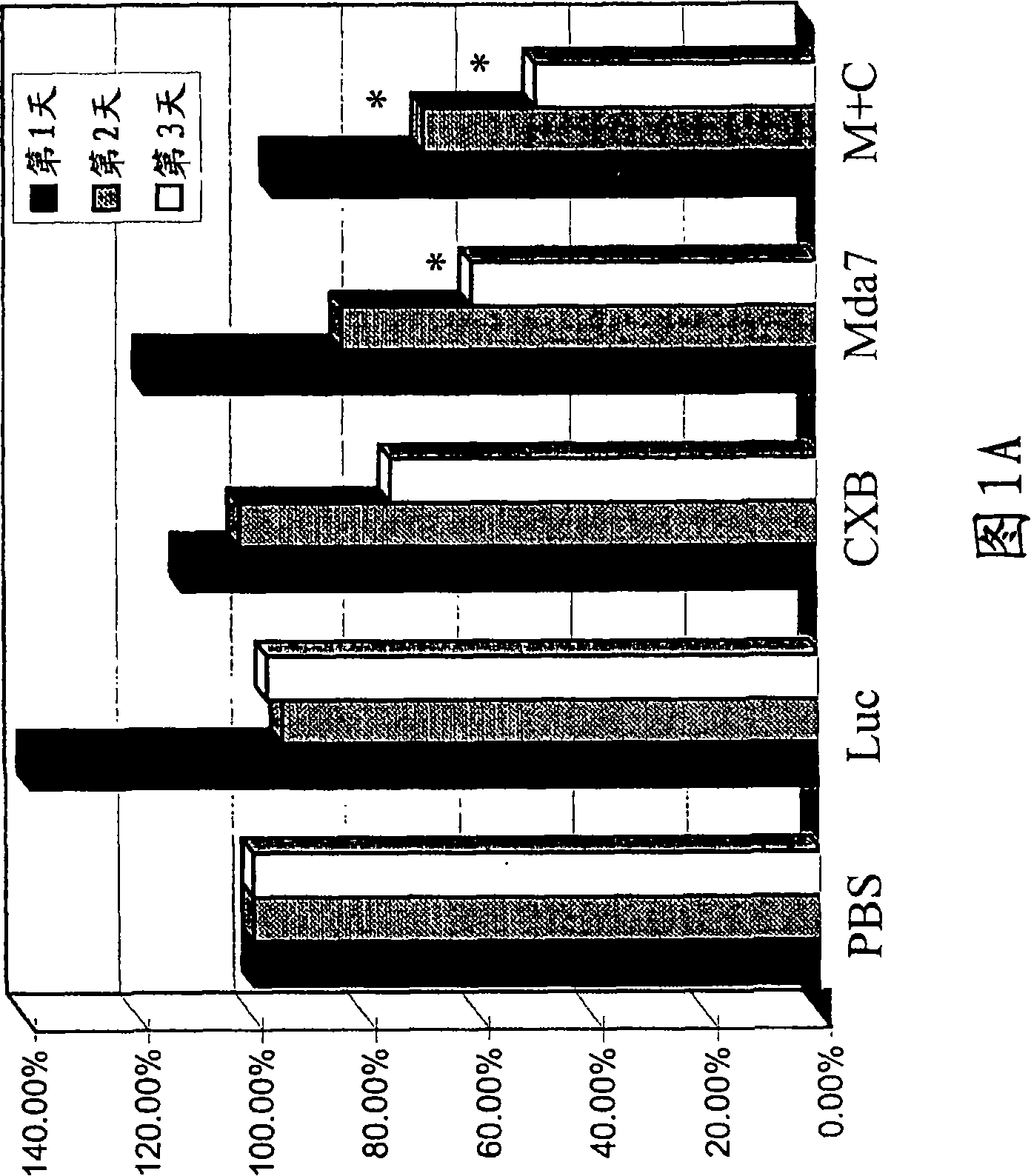
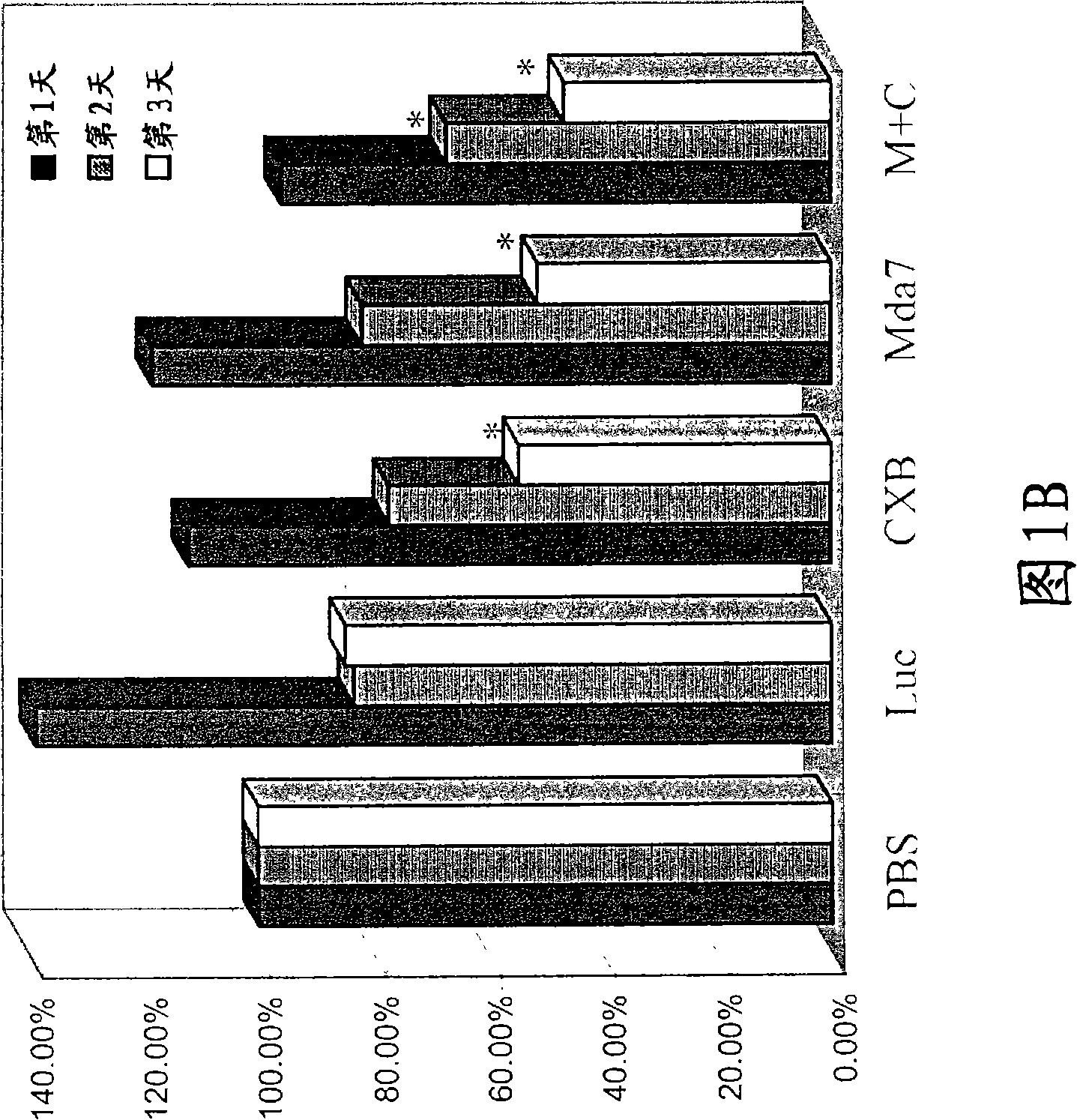
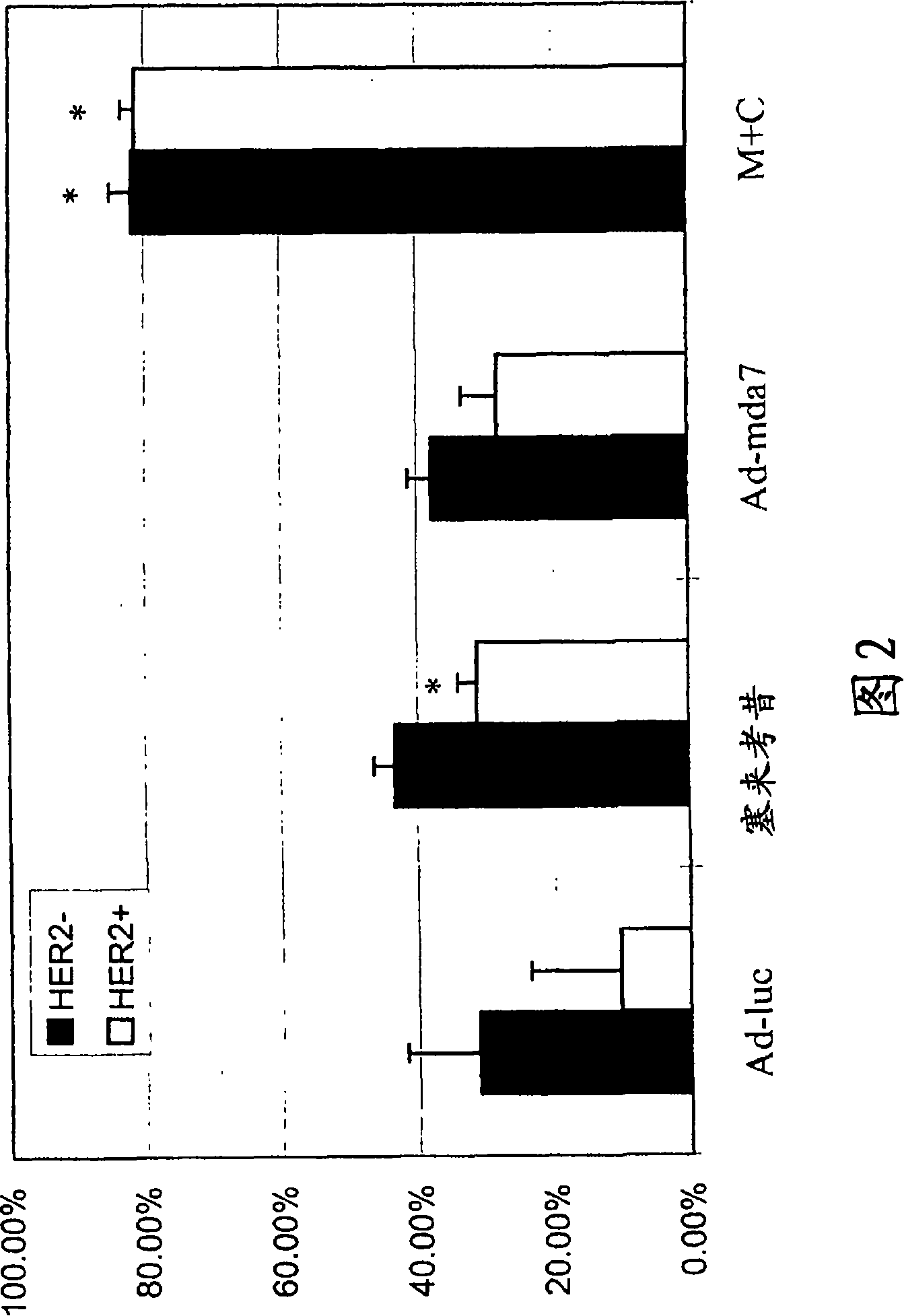
[0472] The synergistic tumoricidal effect of celecoxib and AD-MDA7
[0473] A. Materials and methods
[0474] 1. Cell lines
[0475] The estrogen receptor-positive MCF7 cells (MCF7 / Her18 cells) genetically engineered to express increased HER-2 / neu levels are a gift from Dr. Mien-Chie Hung. MDA-MB-436 human breast cancer cells that are estrogen receptor negative and non-overexpressing HER-2 / neu were obtained from the American Type Culture Collection (ATCC, Manassas, Virginia). Place the cells in a humid 37°C, 5% CO 2 Cultured in a high sucrose DMEM / F-12 medium supplemented with 10% fetal bovine serum and 10mM L-glutamine, 100U / ml penicillin and 100μg / ml streptomycin (GIBCO Invitrogen Corporation, Grand island, NY) .
[0476] 2. Adenovirus Transduction and Celecoxib Treatment
[0477] A recombinant adenovirus vector with mda-7 gene (Ad-mda7) and luciferase reporter gene (Ad-luc) was obtained from Introgen Therapeutics (Introgen Therapeutics, Houston, TX). For MCF7 / Her18 and MDA-MB...
Embodiment 2
[0510] Radiosensitization by MDA7 and Celecoxib
[0511] A. Materials and methods
[0512] Before radiation, MDA-MB-436 and MDA-MB-468 human breast cancer cells were pretreated with or without Ad-mda7 alone, celecoxib alone or a combination of the two substances for 3 days. (See Example 1) Exposure to different doses of radiation. The cells were tested for colony formation survival to compare the radiosensitizing effects of three different treatments. Perform flow cytometry and cell cycle analysis to evaluate cell cycle changes and induction of apoptosis. Statistical evaluation was performed by Student’s test.
[0513] B. Results
[0514] The clonogenic survival test showed that the combination of Ad-mda7 and celecoxib significantly enhanced the radiosensitization of tumor cells in both breast cancer cell lines. Kill tumors at 50% of sublethal doses (ie, 50% less than celecoxib (50μM for MB436 and 30μM for MB468) and Ad-mda7 (1,000 for MB436 and 2,000 multiplicity of infection (...
Embodiment 3
[0516] Use geldanamycin and its analogs to enhance the cell killing effect of AD-MDA7
[0517] A. Materials and methods
[0518] 1. Cell lines and reagents
[0519] The A549 and H460 human lung cancer cell lines were obtained from the American Type Culture Collection. Place all cells in 5% CO 2 The atmosphere was maintained at 37°C under RPMI 1640 supplemented with 10% fetal bovine serum, 10 mM glutamine, 100 units / ml penicillin, and 100 μg / ml streptomycin (Life Technologies, Inc., Grand Island, NY). Geldanamycin (GA) was obtained from Calbiochem (San Diego, CA). 17-allyl-aminogeldanamycin (17AAG) was a gift from Dr. NguyenDao (National Cancer Institute, Bethesda, MD). 17AAG was prepared as a 10 mM mother liquor in DMSO (Sigma Chemical Co., St. Louis, MO), and then stored at -20°C. The final working solution is diluted in the culture medium so as to contain less than 0.01% DMSO. All experiments using this compound were performed under low light conditions.
[0520] 2. The produc...
PUM
 Login to View More
 Abstract
Description
Claims
Application Information
 Login to View More