
Medicinal laser printing system
A laser printing and laser printer technology, applied in the field of medical laser printing systems, can solve problems such as affecting image clarity, misleading patients' pathology, and strong pollution, and achieve the effects of improving image forming quality, avoiding misoperation, and avoiding pollution.
- Summary
- Abstract
- Description
- Claims
- Application Information
AI Technical Summary
Problems solved by technology
Method used
Image


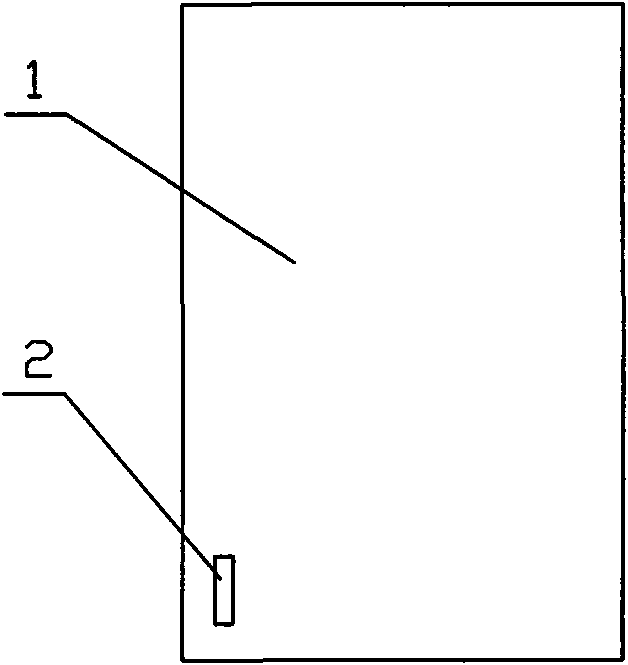

Examples
Embodiment Construction
[0012] Below in conjunction with accompanying drawing, the present invention is described in further detail:
[0013] The CT machine of the present invention uses an X-ray beam to scan a layer of a certain thickness of a certain part of the human body, and the detector receives the X-rays that pass through the layer, converts them into visible light, converts them into electrical signals from photoelectric conversion, and then undergoes analog / digital conversion. The digital signal is converted into a digital signal by the computer and processed by the computer; after computer processing, the output image is sent to the clipboard for use in several program formats, and can be displayed through BMP, JPEG, PNG, TIF and other types of graphic files; the computer is also equipped with pathological analysis software. The diagnostic report is automatically generated through the scanned information, and can be saved and backed up.
[0014] After the preliminary image obtained through...
PUM
 Login to View More
 Abstract
Description
Claims
Application Information
 Login to View More