Progressive addition ophthalmic lens and preparation method thereof
What is AI technical title?
AI technical title is built by PatSnap AI team. It summarizes the technical point description of the patent document.
A progressive multi-focal, ophthalmic lens technology, applied in glasses/goggles, optics, instruments, etc., can solve problems such as not providing a clear vision range
Active Publication Date: 2015-05-27
SUZHOU UNIV OF SCI & TECH +2
View PDF10 Cites 0 Cited by
Summary
Abstract
Description
Claims
Application Information
AI Technical Summary
This helps you quickly interpret patents by identifying the three key elements:
Problems solved by technology
Method used
Benefits of technology
Problems solved by technology
The Chinese invention patent with the publication number CN102043258 only increases the clear vision range of the far and near vision areas through an optimization method, and does not propose the size of the clear vision range
Method used
the structure of the environmentally friendly knitted fabric provided by the present invention; figure 2 Flow chart of the yarn wrapping machine for environmentally friendly knitted fabrics and storage devices; image 3 Is the parameter map of the yarn covering machine
View more
Image
Smart Image Click on the blue labels to locate them in the text.
Viewing Examples
Smart Image
Click on the blue label to locate the original text in one second.
Reading with bidirectional positioning of images and text.
Smart Image
Examples
Experimental program
Comparison scheme
Effect test
Embodiment 1
[0060] In this embodiment, the lens radius R of the lens to be processed is 36 mm, the refractive power of the far zone is 4 diopters, the refractive power of the near zone is 6 diopters, and the addition amount of the lens power is 2 diopters. The predetermined lens h=36mm, the distance L=18mm between A and the center point O of the lens. The lens material has a refractive index of 1.523.
[0061] According to the above-mentioned principles of the present invention, the design steps of the lens are as follows:
[0062] 1. Solve equations (2)
[0063] have to, , , , , , and the rest are zero.
[0064] According to the formula (3), the meridian power of the progressive multifocal ophthalmic lens is obtained is formula (11):
[0065] (11).
[0066] See attached figure 2 , which is the meridian power of the progressive multifocal ophthalmic lens obtained according to formula (3) Distribution diagram; the unit of the x-axis is mm, and the unit o...
Embodiment 2
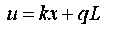
[0078] In this embodiment, lens parameters and design steps are the same as in Embodiment 1. The form of the surrounding boundary conditions in step 2 is to take the curved boundary conditions, using the formula (8) Formal expression, where, is the longitudinal coordinate of the lens, is an adjustable coefficient, is the adjustable number of polynomial terms. In this embodiment, the symmetry of the two sides is represented by a polynomial of degree 5, the top side is a polynomial of degree 6, and the bottom side is a polynomial of degree 10. coefficient The order of magnitude is ,the remaining coefficient of order of magnitude .
[0079] See attached Figure 8 , which are the boundary graphs of u at the top (far-viewing side), bottom (near-sighting side) and side respectively in this embodiment.
[0080] According to the boundary conditions provided in this embodiment, the smooth transition value of u between the square boundary and the area connecting the ...
the structure of the environmentally friendly knitted fabric provided by the present invention; figure 2 Flow chart of the yarn wrapping machine for environmentally friendly knitted fabrics and storage devices; image 3 Is the parameter map of the yarn covering machine
Login to View More
PUM
Login to View More
Abstract
The invention relates to a progressive addition ophthalmic lens and a preparation method thereof. A distant vision zone of the lens has a constant focal power in a range having an about 120-degree flare angle upwards, the deviation is smaller than 0.25 diopters, and the center width of the zone is at least 32mm. The astigmatism in a near vision zone is smaller than 0.25 diopters, and the center width of the zone is at least 10mm. The zone with the constant focal power is substantially superposed with the zone with astigmatism smaller than 0.25 diopters. According to the invention, the contour line distribution is obtained by using a numerical method to dissolve Laplace's equation, and surface rise data of the lens to be processed can be obtained by designing the focal power distributions on the contour line and the meridian line cooperatively. The lens provided by the invention can effectively improve object observing definition and comfort of wearers.
Description
technical field [0001] The invention relates to the design and preparation method of a progressive multifocal ophthalmic lens with a large far-sighted area and a near-sighted area. The designed lens can be used to manufacture a progressive lens by grinding a free-form surface, and can also manufacture a progressive lens mold and a progressive lens at the same time. Batch mold hot-melt forming progressive lens. Background technique [0002] Progressive multifocal ophthalmic lenses can meet the needs of distance vision and near vision at the same time, and avoid the defects of bifocal lenses such as visual breakage when switching between distance vision and near vision. Therefore, progressive multifocal ophthalmic lenses are widely used. See attached figure 1 , The surface of progressive multifocal ophthalmic lenses is divided into 1 far zone, 2 gradient channels (or intermediate transition zone), 3 near zone and 4 astigmatism zone. The far vision zone is located in the wide...
Claims
the structure of the environmentally friendly knitted fabric provided by the present invention; figure 2 Flow chart of the yarn wrapping machine for environmentally friendly knitted fabrics and storage devices; image 3 Is the parameter map of the yarn covering machine
Login to View More
Application Information
Patent Timeline
Application Date:The date an application was filed.
Publication Date:The date a patent or application was officially published.
First Publication Date:The earliest publication date of a patent with the same application number.
Issue Date:Publication date of the patent grant document.
PCT Entry Date:The Entry date of PCT National Phase.
Estimated Expiry Date:The statutory expiry date of a patent right according to the Patent Law, and it is the longest term of protection that the patent right can achieve without the termination of the patent right due to other reasons(Term extension factor has been taken into account ).
Invalid Date:Actual expiry date is based on effective date or publication date of legal transaction data of invalid patent.





 Login to View More
  Login to View More