
Multi-grid precondition method for fast acquiring complex target radar echoes
A radar echo and multi-grid technology, which is applied in the fields of instrumentation, computing, and electrical digital data processing, can solve the problem of limited improvement in computing efficiency
- Summary
- Abstract
- Description
- Claims
- Application Information
AI Technical Summary
Problems solved by technology
Method used
Image

Examples
Embodiment Construction
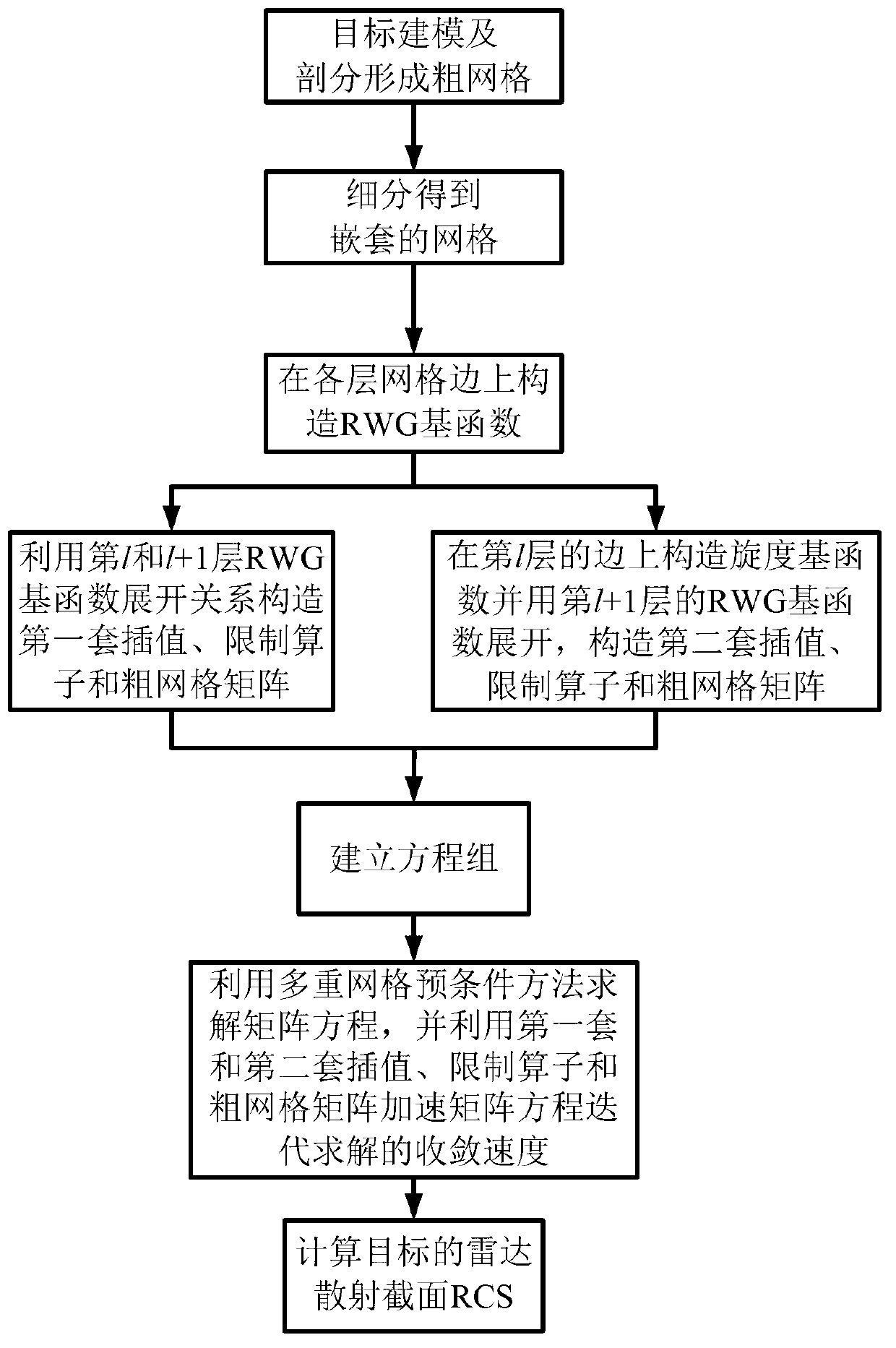
[0043] combine figure 1 , the multi-grid preconditioning method for the rapid acquisition of complex target radar echoes of the present invention, the steps are as follows:
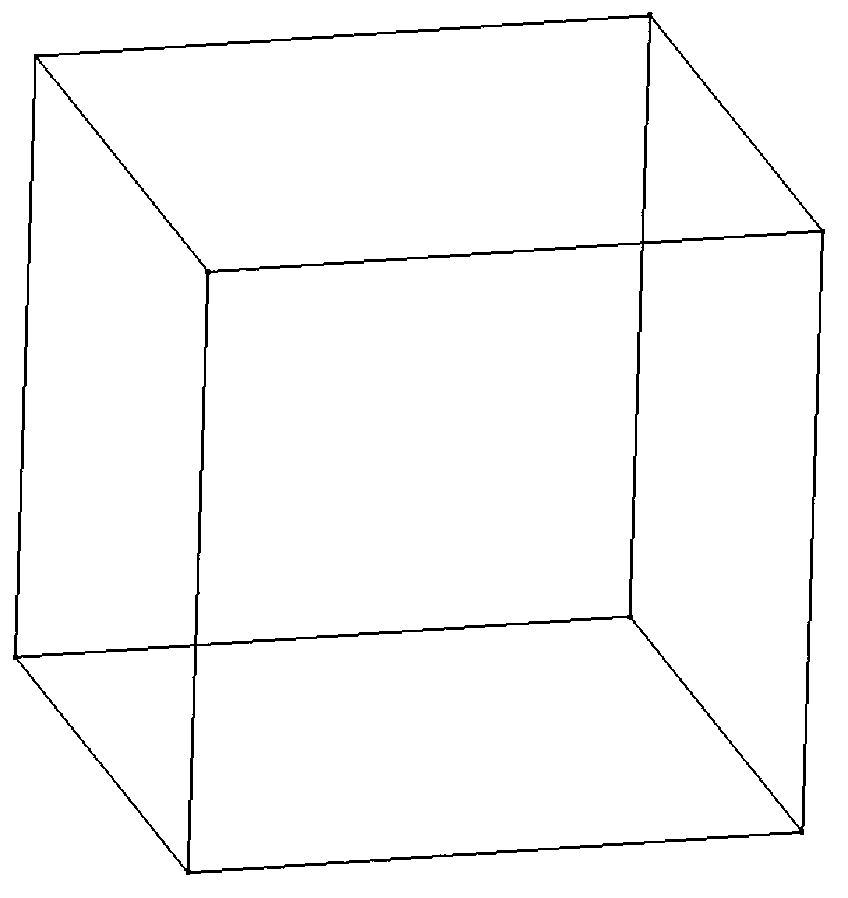
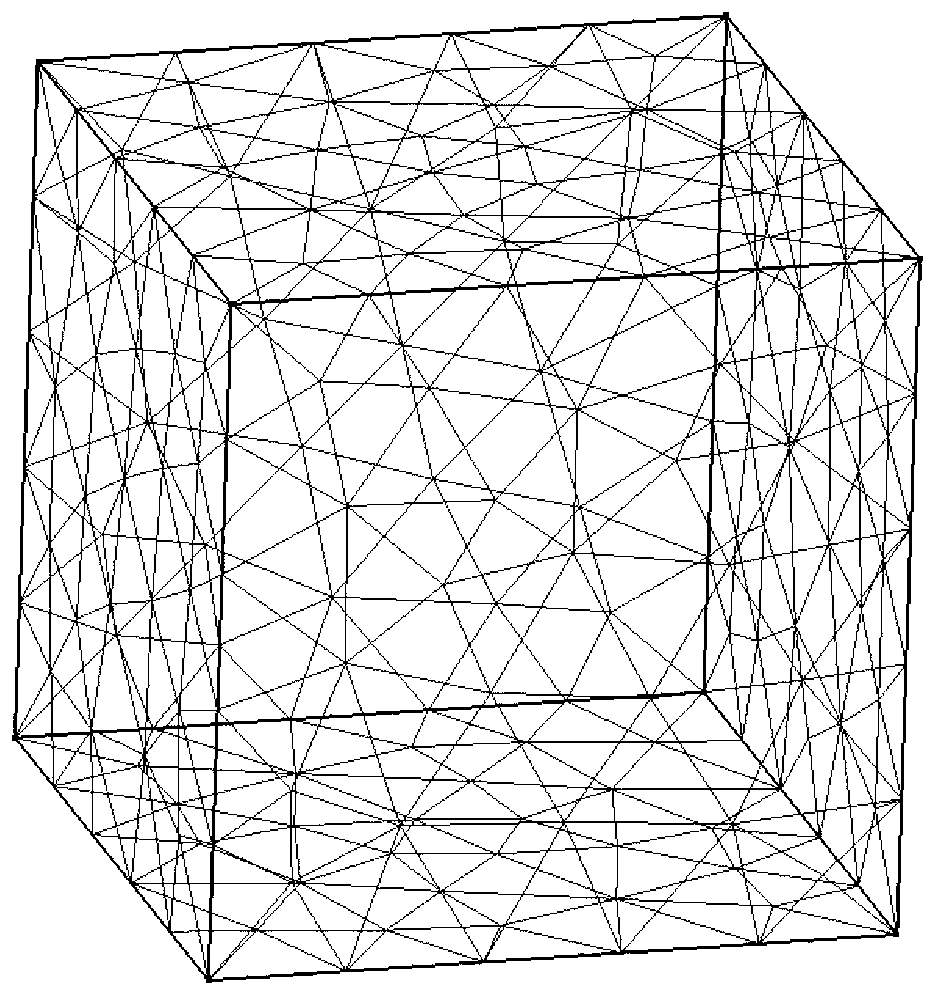
[0044] In the first step, the object is modeled and subdivided to form a coarse mesh, such as figure 2 The schematic diagram of any target structure is shown, and the target surface is subdivided using the triangular mesh subdivision algorithm, and the following is obtained: image 3 As shown in the grid, the coarse grid and structural information of the target are obtained, including the vertex number, vertex coordinates and the numbers of the three sides of each triangular unit; The grid is a layer 1 grid.
[0045] The second step is to subdivide the coarse grid to obtain a nested grid, that is, to connect the midpoints of the three sides of each triangular unit obtained in the first step to form 4 small triangular units, and use the same method for each A small triangular unit continues to be subdi...
PUM
 Login to View More
 Abstract
Description
Claims
Application Information
 Login to View More