
Two-phase outer rotor type switched reluctance motor
A technology of switched reluctance motor and outer rotor, which is applied in the direction of synchronous motor used for single-phase current, etc. It can solve the problems that traditional switched reluctance motors cannot realize self-starting, etc., and achieve the effect of low cost, cost reduction and loss reduction
- Summary
- Abstract
- Description
- Claims
- Application Information
AI Technical Summary
Problems solved by technology
Method used
Image

Examples
Embodiment Construction
[0032] Hereinafter, preferred embodiments of the present invention will be described in detail with reference to the accompanying drawings.
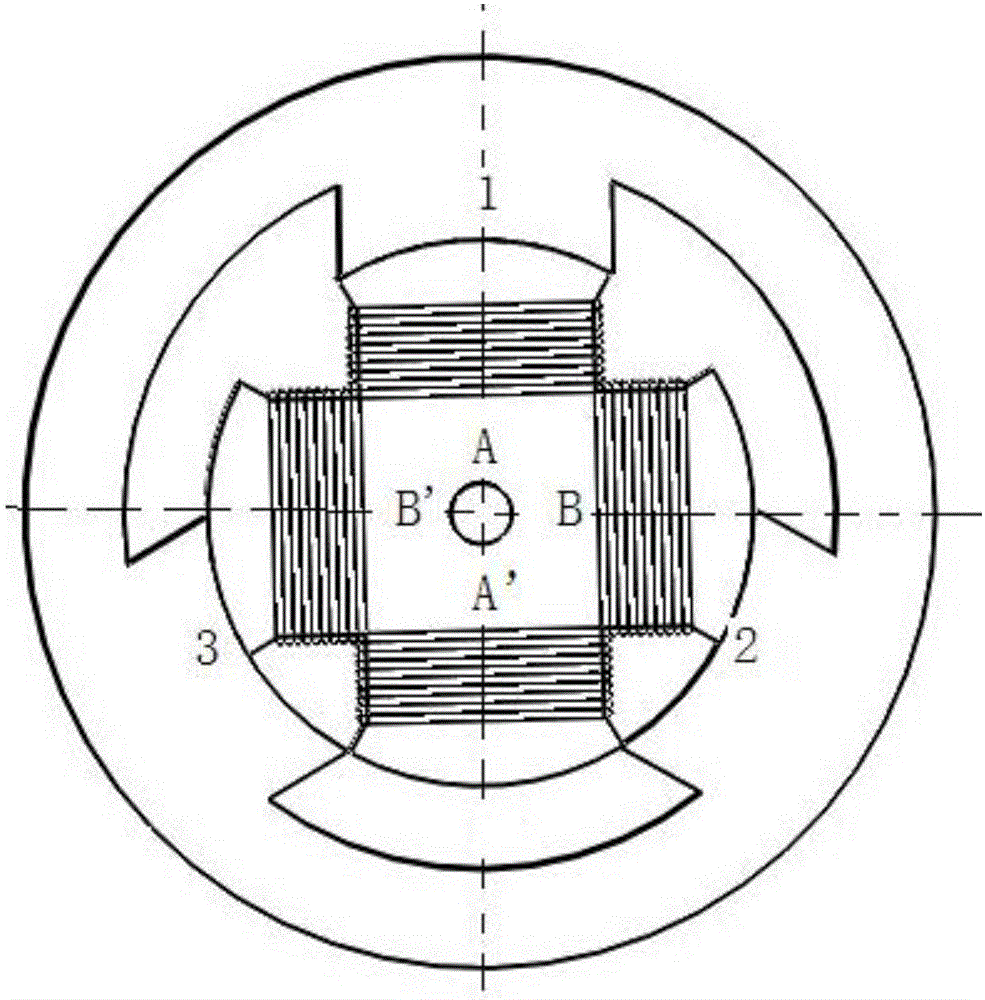
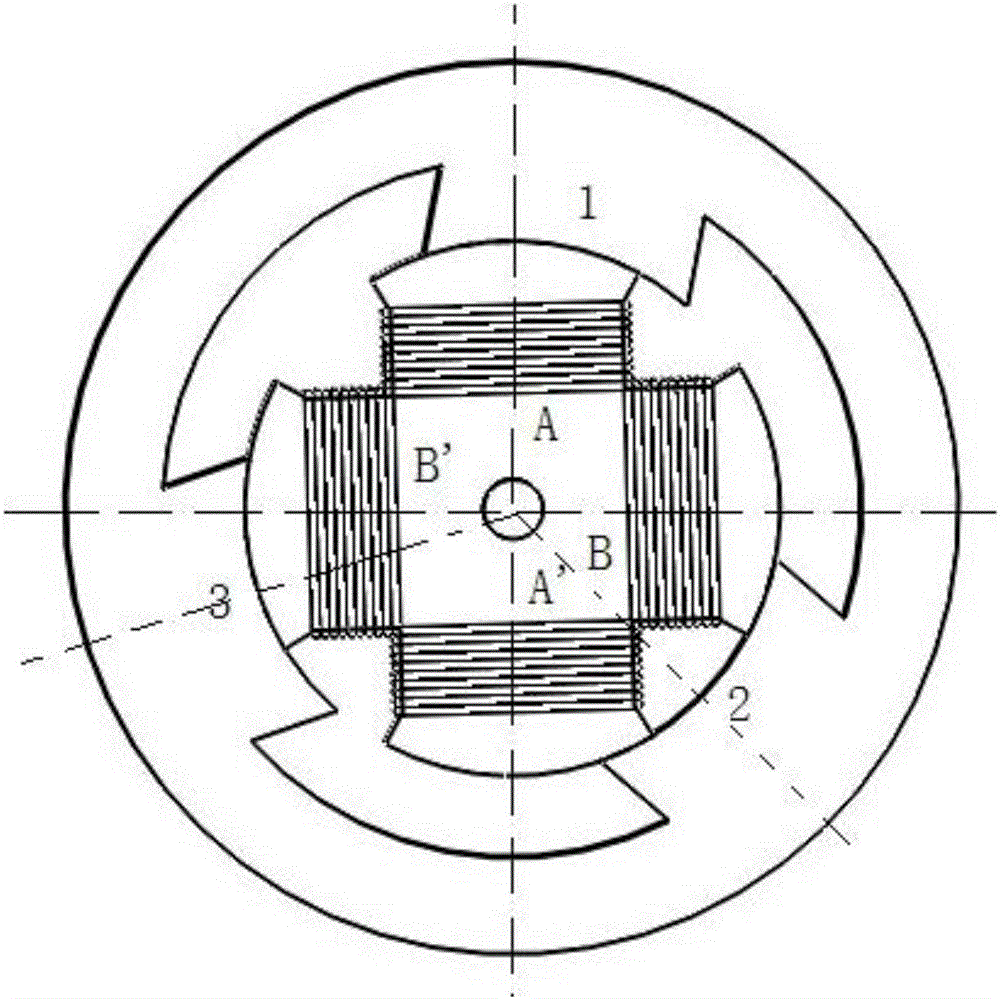
[0033] Such as figure 1 As shown, a two-phase outer rotor switched reluctance motor according to the present invention includes a rotor and a stator, the rotor is arranged outside the stator, the rotor has no brushes, no windings, and no permanent magnets. Three tooth poles 1, 2, 3 protrude inside, and the three tooth poles protrude at equal intervals along the inner peripheral surface of the rotor, and the outer ring of the stator is provided with four tooth poles corresponding to the rotor , forming a double-salient pole structure with the rotor, each pole of the stator is equipped with concentrated windings A, A', B, B', and the coils AA' and BB' on the two radially opposite poles form a phase Stator winding, four coils form a two-phase stator winding.
[0034] Assume that the initial positions of rotor salient poles 1, 2, and 3 are...
PUM
 Login to View More
 Abstract
Description
Claims
Application Information
 Login to View More