
Technology for eliminating static electricity of polyvinyl chloride powder
A technology of polyvinyl chloride powder and polyvinyl chloride powder, which is applied in the field of conveying and packaging process of polyvinyl chloride, can solve the problems of full bag dust, scattering, affecting the environment, etc., and achieves small change range, reduction of renovation cost, and environmental improvement. Effect
- Summary
- Abstract
- Description
- Claims
- Application Information
AI Technical Summary
Problems solved by technology
Method used
Image

Examples
Embodiment
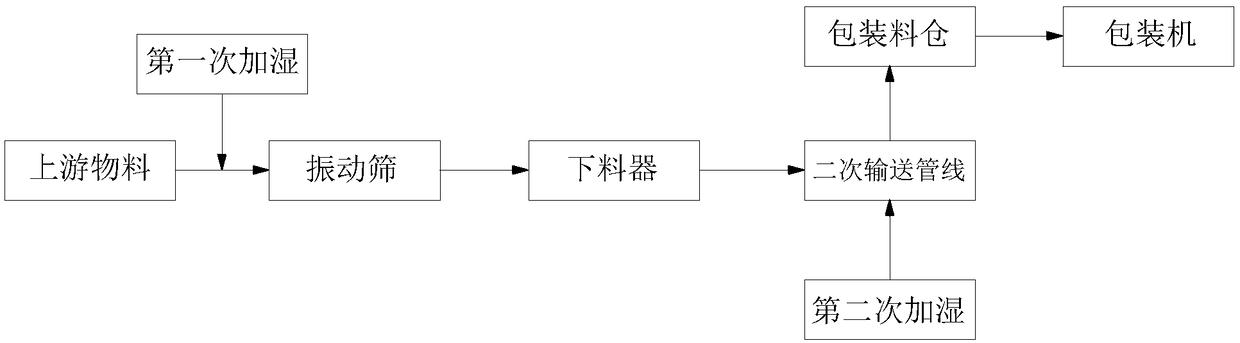
[0034] A process for eliminating static electricity of polyvinyl chloride powder, such as figure 1 As shown, the system used includes a vibrating screen, a feeder, a secondary conveying pipeline, and a packaging silo connected in sequence. The inlet pipeline of the vibrating screen is provided with a first humidification device, and the secondary conveying pipeline is provided with an atomization device. The inlet of the first humidifying device is connected to the first steam pipeline, the inlet of the atomizing device is connected to the second steam pipeline, and the spraying direction of the atomizing device is perpendicular to the flow direction of polyvinyl chloride.
[0035] The air-dried polyvinyl chloride powder from the upstream is humidified for the first time in the inlet pipe of the vibrating screen, then vibrating and sieving, and then fed to the secondary conveying pipeline, and the polyvinyl chloride powder in the secondary conveying pipeline undergoes the secon...
PUM
 Login to View More
 Abstract
Description
Claims
Application Information
 Login to View More